

A razor-thin victory for the Colombian right
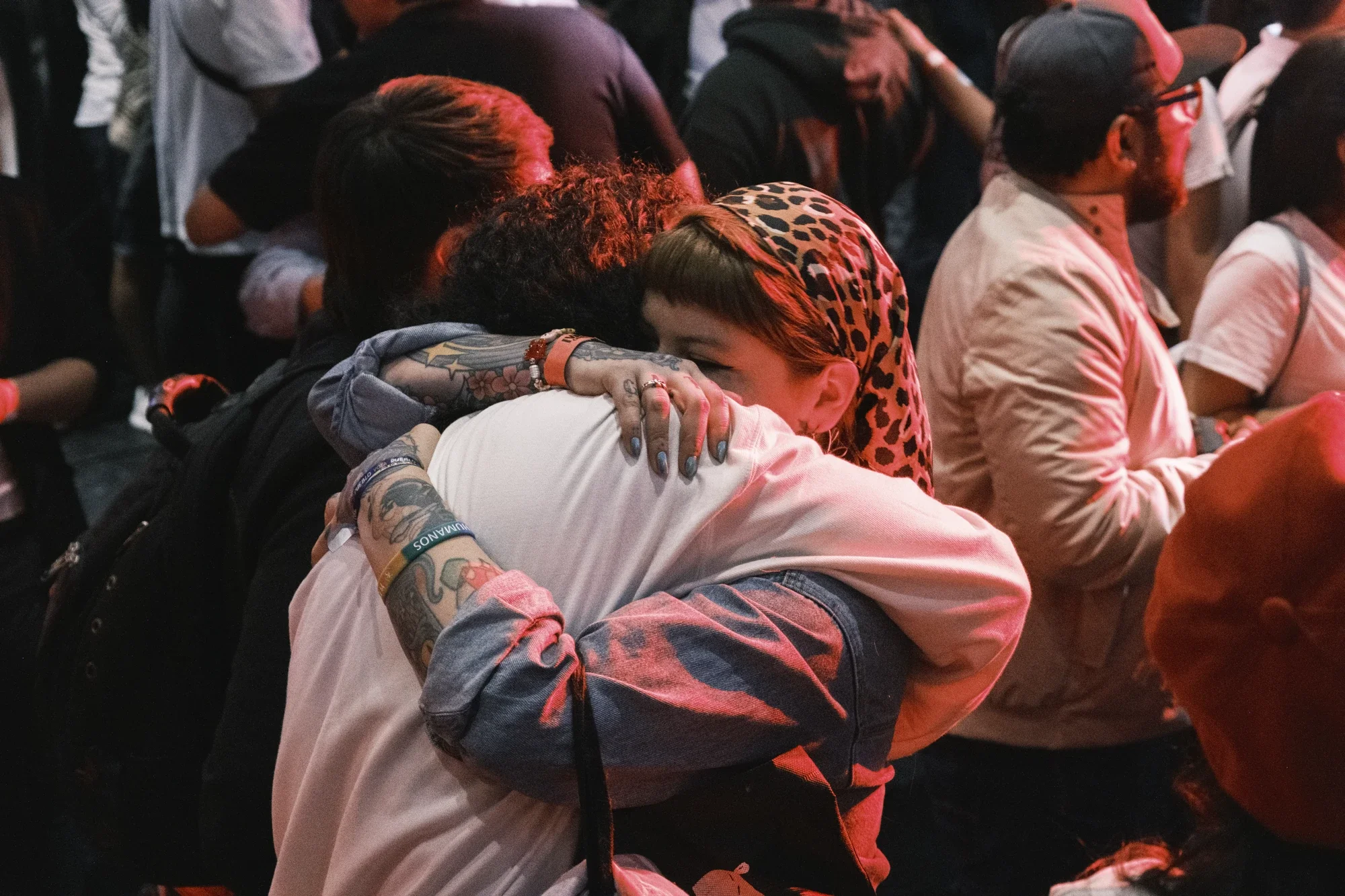
Two young people hug each other minutes after hearing the preliminary vote count, which showed a narrow victory for the far-right candidate, Abelardo de la Espriella. June 21, 2026. Bogotá, Colombia. © Marina Sardiña.
Opinion • Sandra Rátiva Gaona • June 26, 2026 • Leer en castellano
On Sunday, June 21, Colombian voters went to the polls to vote in the second round of the presidential election. That same night, after an intense campaign, Abelardo de la Espriella and the political and media apparatus supporting him proclaimed victory based on preliminary results.
Iván Cepeda and Aida Quilcue’s campaign waited for the official tally from electoral magistrates before acknowledging the final result of the runoff. On the morning of June 24, after a tense wait, the candidate for the Historic Pact and the Alliance for Life accepted the results and acknowledged his electoral defeat.
According to the Registrar’s Office, De la Espriella won the election with 49.66 percent of the votes, while Cepeda secured 48.70 percent, and blank ballots accounted for 1.62 percent. The margin of less than 1 percent between the two candidates, along with widespread allegations of vote-buying and tampering during vote-counting, led both Cepeda and President Gustavo Petro to question the final result.
But the Colombian electoral system—despite the issues raised by the president—enjoys enormous legitimacy. The progressive administration led by Petro secured victory four years ago under the same system. The most striking thing to emerge from this runoff was that the difference in votes was the smallest in Colombian history since 1958.
Losing by 250,000 votes (0.96 percent) is still losing—and we’ll be feeling the electoral hangover for several weeks—but the data is eye-opening.
The left and grassroots political movements received nearly 13 million votes, the highest total in Colombian history. As recently as 20 years ago, the left lost the presidential race by 2.6 million votes (22 percent of the total at the time) against Álvaro Uribe Vélez.
Two Colombias
In my previous column, I mentioned how striking it is that, ever since the 2016 referendum on peace, the same electoral map has appeared repeatedly. It is a map that highlights the country’s polarization and inequality.
On the one side are the supporters of the political project for peace, justice, and progressivism, who are concentrated in regions where war, drug-trafficking violence, illegal mining, and a lack of schools, hospitals, roads, and clean drinking water are part of daily life, as well as working-class areas of Cali and Bogotá.
And on the other are those who support a political movement that prioritizes security, freedom, and traditional values. These voters are concentrated in regions that have achieved a basic standard of living—regions we might call “normalized” in their infrastructure, connectivity, and institutional services. Among them, Medellín, the Santander region, and the affluent neighborhoods of Bogotá stand out.
This suggests that rather than ideological polarization (as some analysts argue), we are experiencing a marked historical and economic divide. The political platform represented by Cepeda is focused on regions plagued by structural inequality, while De la Espriella’s program looks to the United States.
These differences are also reflected in how people engage in social and political life.
In the three weeks between the first round and the runoff, the whole country went into campaign mode. The campaign behind De La Espriella, who is also called “The Tiger,” reinforced its digital presence and used artificial intelligence to produce content accusing Cepeda of being a guerrilla and disparaging vice-presidential candidate Quilcue for her Indigenous background and lack of academic credentials. It intensified attacks against the Petro administration’s mistakes, including the failure of the “Total Peace” initiative, corruption scandals, and the country’s fragile fiscal situation.
Meanwhile, the Alliance for Life campaign reversed its digital retreat (which had characterized it up until the first round) and toned down some of its key promises, such as its push for a National Constituent Assembly. It also entered into policy dialogues with centrist candidates who had advanced to the runoff.
At the same time, we saw groups of young people painting murals and raising awareness on public transportation, organizing rallies that turned into impromptu concerts, setting up community kitchens in working-class neighborhoods, holding gatherings in small towns and cities, and creating all kinds of stickers, memes, videos, reel posts, podcasts, and designs printed on Colombian national football team jerseys.
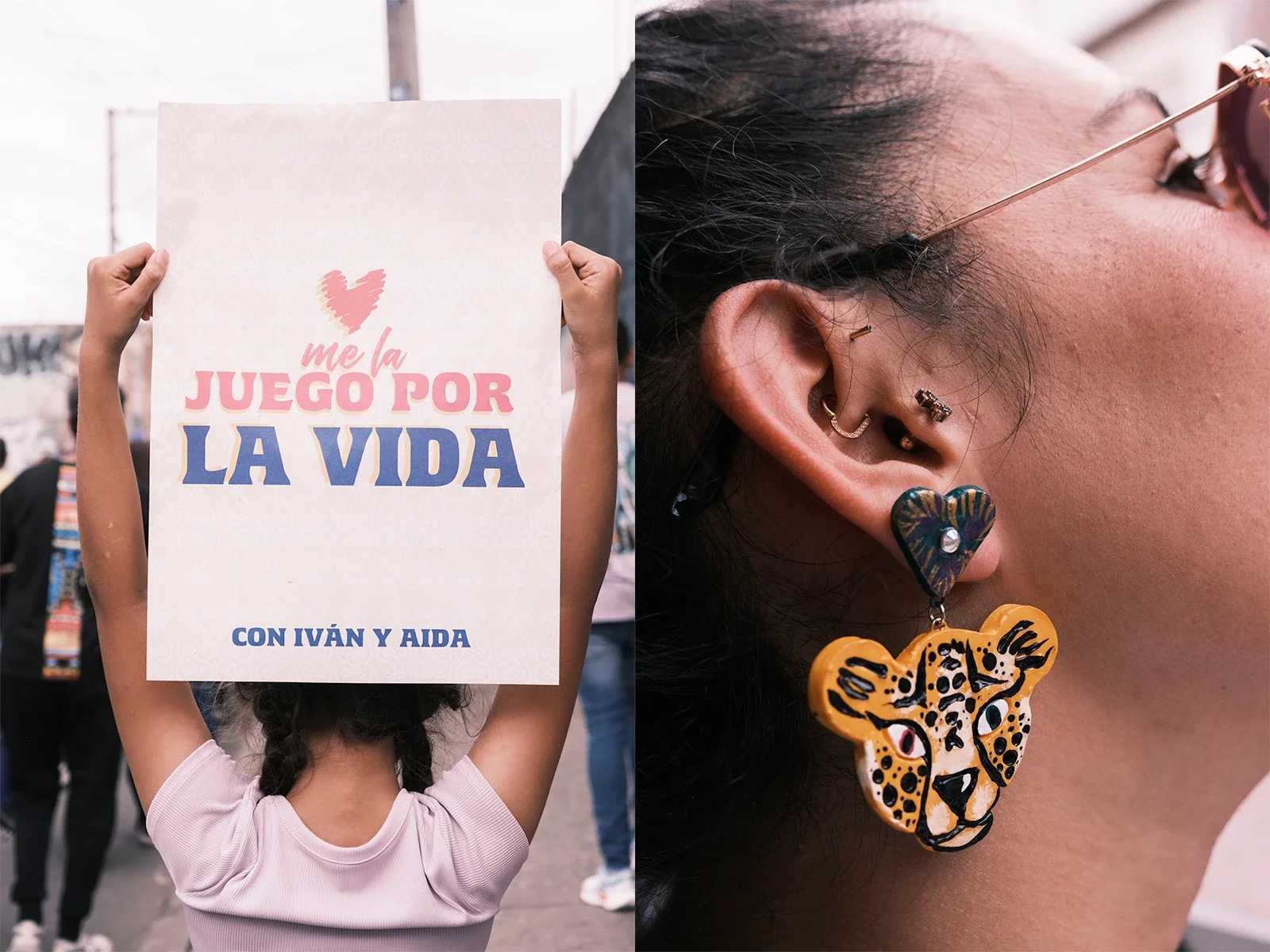
A girl holds a poster that reads: “I’m taking a chance on life,” the slogan of Iván Cepeda’s campaign during a march organized by social collectives the day before Colombia’s presidential runoff election, in Bosa, Bogotá. June 20, 2026. © Marina Sardiña.
Electoral progress amid structural barriers
The statistics covering the period from the peace referendum to these elections are important to consider, not because the country’s elections are the center of political life, but because the data reveal a series of key changes.
Today, Colombian society feels compelled to engage in politics—which could be a sign that ending the war is a viable option—and this marks a fundamental shift in and of itself. There were no violent incidents reported on election day. In a country that has endured an armed conflict for over 70 years, elections have historically been periods of extreme armed tension.
In this context, there are also changes to celebrate. The left is participating in institutional politics with strong representation via a normalized electoral process. There has been a decline in political violence, and new approaches to politics have been consolidated.
These advances confirm that the social organizing and mobilization of recent decades, the 2016 peace agreement with the FARC, as well as the construction of an institutional political project have helped mitigate some of the structural causes of war and inequality.
What has not changed—and what continues to be a massive historical debt and a form of structural, racist, and classist violence—is that millions of people remain unable to vote.
The saddest and most moving part of election day was watching thousands of people on social media as they organized themselves and pooled resources—for gasoline and transportation, including on pack animals—to make their way down from the mountains and the upper reaches of the rivers in Chocó, Caquetá, Cauca, Nariño, Putumayo and elsewhere in order to reach their polling stations.
These folks, who are seeking to live in peace—not subsidies, land, or roads, just to live in peace—are caricatured by the mainstream media as individuals who are being forced to vote. That suggestion is another form of disparagement.
Mainstream journalists and political analysts label these voters “the rifle vote” from their offices in Bogotá and their homes in Miami. But these voters not only deserve the respect and regard of the rest of the country: they deserve a public apology for being unable to exercise their basic right to participate in elections.
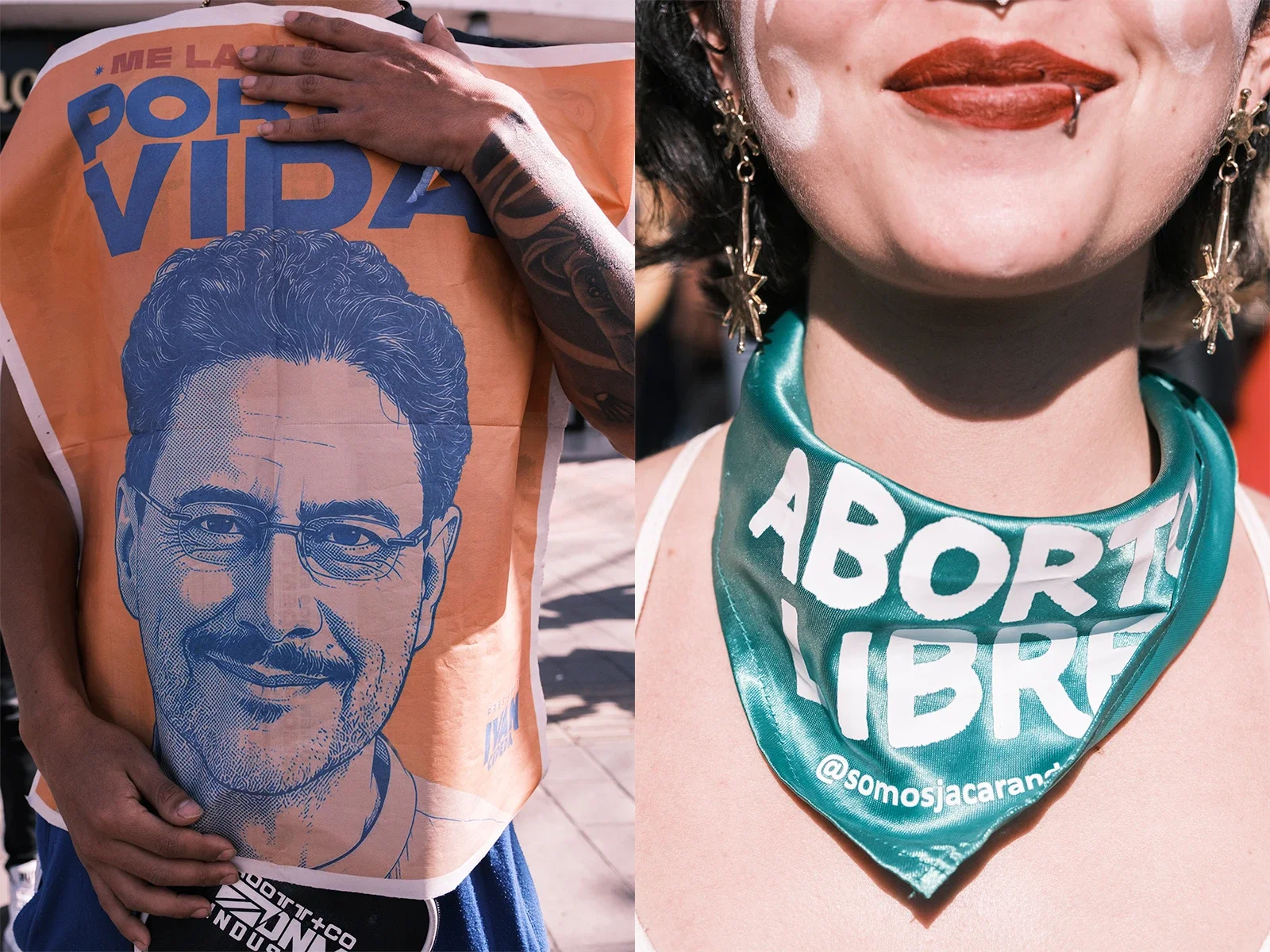
The day before the presidential runoff, hundreds of people took to the streets in the locality of Bosa. Their march was organized by the political collective Creamos in support of Iván Cepeda. June 20, 2026. Bogotá, Colombia. © Marina Sardiña.
Domesticated right-wing forces
In considering the results in Peru and Colombia, we can trace US interference in the region through its influence on elections, as well as economic blackmail and military pressure.
A pattern is taking hold, and although it was entirely predictable, it remains deeply troubling.
First, because these US interventions represent both a new phase and a new form in the model of accumulation, in which Latin American elites and right-wing forces become the subordinate link in the chain of dominant global elites. These are elites for whom freedom and democracy are incompatible: free-market capitalism is their sole priority.
It is clear that the electoral right wing represents only one part of the social and political strategy to impose a certain kind of order by force—an order in a region that holds the largest oil reserves, the highest quality reserves of strategic minerals, and an enormous pool of cheap labor, as well as markets for both debt and digital consumption.
So while today we celebrate liberal democracy in Colombia (even though we do so after having lost), it is important to remain vigilant in the face of a president-elect who has US citizenship. De la Espriella voted for Donald Trump and has openly promised to reduce the size of the state by up to 40 percent to provide guarantees for foreign investments so they can “frack to their hearts’ content.”
I believe there’s a second reason for concern: we can view this interference as a reaction to the demands of popular movements that have championed an anti-neoliberal and people-centered agenda in recent years.
From the social uprisings in Puerto Rico, Nicaragua, Chile, Colombia, and Ecuador, to the recent protests by grassroots communities in Bolivia, in José Antonio Kast’s Chile and Claudia Sheinbaum’s Mexico (with their timid responses to teachers and the searching mothers).
All these movements are linked to issues that were never fully resolved, not even by the 20th-century dream of the welfare state. They worsened under neoliberalism, and even after this second progressive cycle in the region, basic living conditions are lacking.
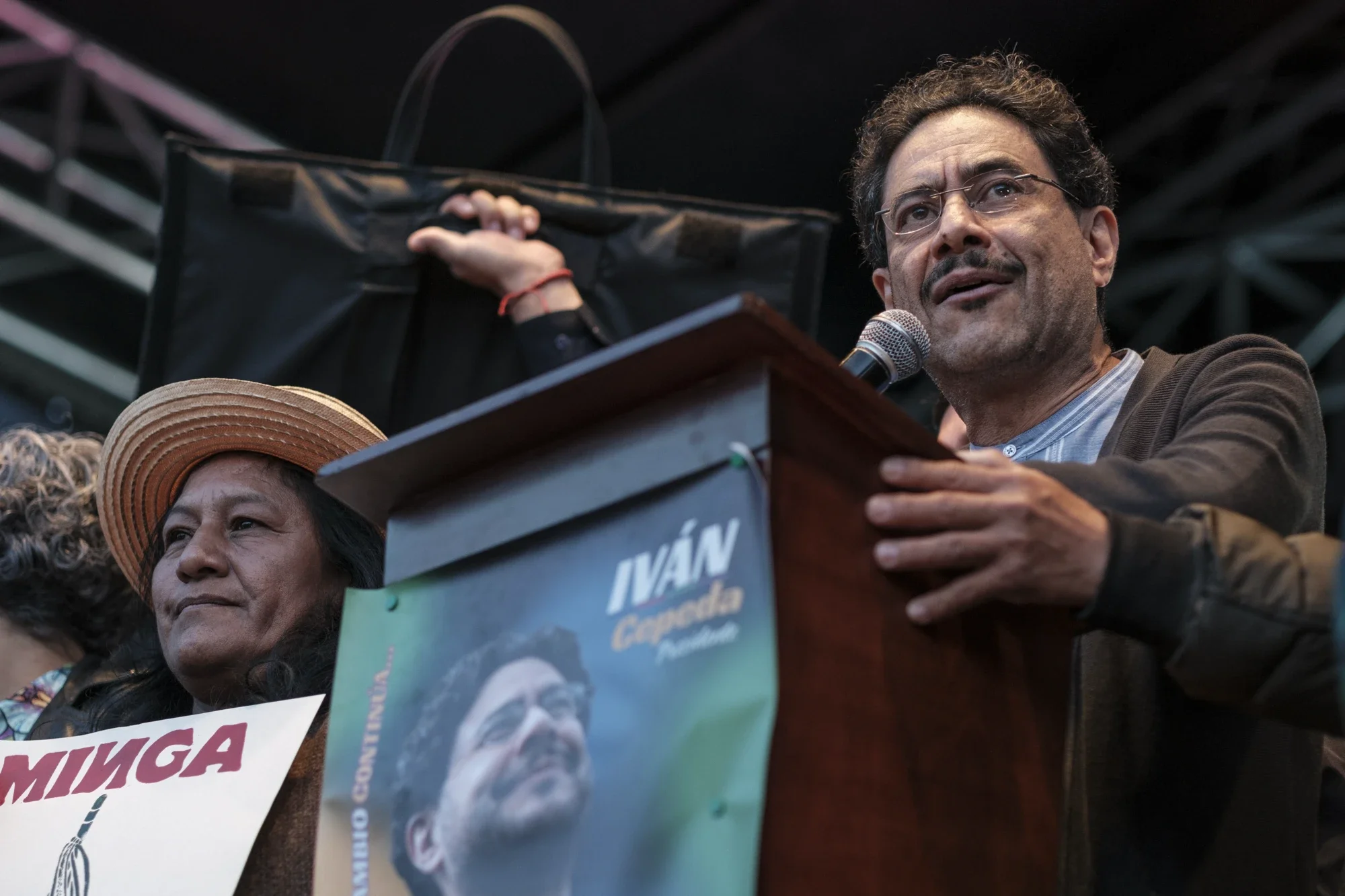
Iván Cepeda, the left-wing candidate for the Colombian presidency, alongside his running mate, Indigenous authority Aida Quilcué, at a campaign event in Ciudad Bolívar, Bogotá, on March 21, 2026. © Marina Sardiña.
Healthcare as a social care system, education as a mechanism for social mobility and improving quality of life, affordable housing rents or the possibility of owning a home, pensions as an earned right, work itself as a condition for a dignified and autonomous life—all remain unfulfilled promises.
The convergence of global elites who see markets everywhere and societies whose basic needs remain unmet creates a scenario in which we may end up as customers of an even more unequal and perverse system.
Undoubtedly, we are facing a moment in which a struggle is unfolding on an even greater scale, in which territories and the social fabric remain at risk, and in which new algorithms and the subjectivities of digital customers now threaten not only democracy but life itself.