

Taking the long view on abortion in Mexico
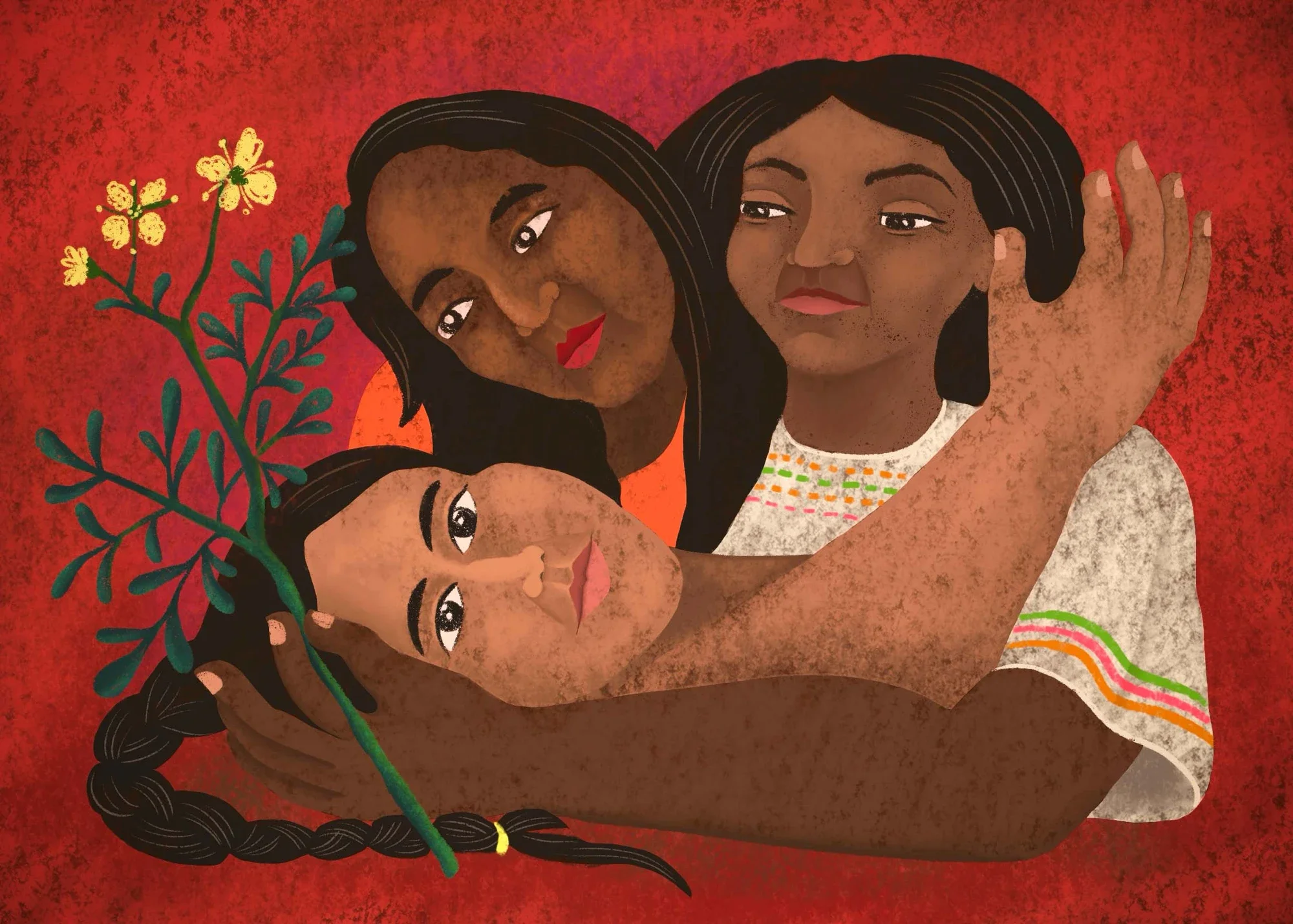
Ilustración digital para Ojalá por @Pazconadie.
Book review • Rina Rossi • June 25, 2026 • Leer en castellano
In September 2021, against the backdrop of a sea of green handkerchiefs worn by Latin American feminists who advocated for reproductive justice, Mexico’s Supreme Court unanimously ruled that criminalizing abortion is unconstitutional.
But has abortion in Mexico always been criminalized, stigmatized, and denounced, or was it tolerated and practiced, or somewhere in the middle? Nora Jaffary’s new book, Abortion in Mexico: A History, probes this question and offers a sweeping account of the practice’s long history.
In just 122 pages, Jaffary analyzes abortion history in Mexico from 1519 to 2000. She argues that courts and ordinary people generally tolerated abortion up until the passage of the Federal District’s 1871 penal code. This modernized abortion law, punishing women for having abortions, setting terms for imprisonment for women who aborted while exempting punishment if pregnancy or childbirth threatened their lives.
Early debates surrounding the legality or morality of abortion were justified through the protection of familial and women’s sexual honor. It has only been since the late 20th century that opposition focused on questions of fetal personhood.
In examining the long durée, Abortion in Mexico, published by University of Nebraska Press, highlights the differences between Mexican people’s actions and attitudes toward abortion over the past five centuries.
A history of policing reproductive rights
Jaffary is a seasoned Latin Americanist, historian of gender, and professor based at Concordia University in Montréal. Abortion in Mexico is the product of years of research about the history of reproductive rights and practices in Mexico. Her 2016 book Reproduction and its Discontents in Mexico examines Mexican attitudes and practices on abortion, conception, pregnancy, infanticide, and reproductive medicine from 1750 to 1905. In it, she analyzes myriad court cases, ecclesiastical texts, and medical literature accessed in Mexico City, Mérida, Oaxaca, Puebla, and Tlaxcala. She uses such research in her most recent monograph as well.
The first section of Abortion in Mexico spans 1519 to 1870, from the colonial period to the first few decades following independence up until the passage of the Federal District’s penal code. Jaffary argues that between the viceregal period and the first few decades after Mexico’s independence, the prosecution of abortion did not change much. Mexican courts analyzed abortion cases using Las Siete Partidas, the 13th-century law code of Castilian King Alfonso X. Though the code’s penalty for abortion was death, few courts found women guilty of the crime and generally did not sentence them to prison for more than six years.
Jaffary notes that sentences for abortion before the 1870s were rare, and rooted in assuring a baby’s baptism to ensure salvation, rather than fetal personhood. The condemnation of abortion in this period, according to the author, was not an issue “of great import” among state representatives, religious authorities, or the general public.
Ingesting plant abortifacients was the most common way to end pregnancy in the 18th century and before. Jaffary writes that “midwives, herbalists, healers, and laywomen possessed extensive knowledge about abortion across this long time period.”
Mexico City’s 1871 penal code banned corporal punishment against women who had abortions, exempted punishment for such women when her life was endangered from childbirth or pregnancy, and spelled out terms for imprisonment based on the harm that an extramarital or premarital affair would have on her family’s honor.
These changes led to more convictions for abortion than in earlier decades, as well as an increase in the advancement of surgical techniques for abortion.
The book’s last section spans 1931 to the end of the 20th century. Jaffary finds that abortion laws in Mexico during this period kept many of the same aspects of the 1871 penal code, including stipulating that courts must assess pregnant women’s sexual honor to decide the severity of their penalty. The Federal District amended the penal code in 1931 to outlaw punishment for women who aborted due to rape. Jaffary writes that there was a decrease in the rates of abortion denunciation beginning in the mid-century up until the liberalization of abortion law nationwide in 2000.
The mid-20th century was a key time in this history, which Jaffary asserts was marked by a change in the dominant position of abortion among medical officials in the country. Though the medical field had previously publicized performing surgical abortions, they grew more critical of the practice, objecting to abortion using Catholic doctrine to defend their positions. She argues that aside from the Church’s influence on medical professionals, it had a “fairly insignificant role” in changing abortion legislation in the 20th century.
That remained true until the 1990s, when Catholic lay organizations rose as lobbyists and political actors. According to Jaffary, it was only then that debates surrounding abortion began to center around fetal personhood due to Catholic organizing following Mexico City’s decriminalization of first-trimester abortions in 2007. The success of these groups is reflected in the passage of laws in 17 state legislatures declaring that human life begins at conception.
By the 1980s, Mexican feminist groups helped shape the liberalization of abortion law in state penal codes, but as Jaffary notes, these did not result in significant legal changes until 2000. Abortion in Mexico highlights the impact of four decades of Mexican feminist organizing on public opinion.
“The feminist notion that women are people and as such, possess the right to make fundamental decisions about their bodies, economic lives, and families has affected the Mexican public in broad and substantial ways, including on the issue of abortion,” Jaffary writes.
The 2021 Supreme Court ruling declared criminalizing abortion unconstitutional, in reference to a law in Coahuila that threatened women who aborted with up to three years of prison.
Regardless of the fact that court’s ruling is federal, it is up to individual states to adjust their penal codes. This is similar to how the United States Supreme Court’s 2022 overturning of the constitutional right to abortion decreed in Roe v Wade left decision-making on abortion access up to individual states, which triggered an increase in state abortion bans.
In response to court decisions in both countries, feminist groups have continued to advocate for abortion access and reproductive justice in their respective states. The abortion collectives Acompañantes Laguna in Torreón, Coahuila, and Las Borders in Mexicali, Baja California, fight for access to abortion in Mexico. The feminist organization Las Libres, based in Guanajuato, formed a cross-border network (Red Transfronteriza) to supply thousands of abortion pills to people in the US in states with abortion bans.
The Role of the Historian
Abortion in Mexico is well-researched and concisely written, making it accessible for many readers. A less obvious strength of the book is how Jaffary highlights the historian’s responsibility in dismantling our inaccurate assumptions about the past and its relationship to current political conversations—not just in relation to studying abortion history, but past events in general. Specifically, she argues that we often see the past as a legitimizer of the present and suggests that it is the duty of historians to question our preconceived notions.
“Sometimes, especially on fraught political topics like abortion, our projections about the past speak most clearly about our present convictions and greatly distort past realities because we are not actually trying to see them,” Jaffary writes.
The importance of following Jaffary’s advice to historians can be seen in her discussion about the advancement of abortions with pills in the late-20th century. She argues that this was not a new invention but one that women in Mexico had practiced for centuries, drawing on their own botanical and reproductive knowledge.
“What may appear as the most dramatic medical innovation in terms of late 20th-century abortion,” she writes, “Might instead be understood as a continuity of women’s preconquest, colonial, and 19th-century practice of exerting reproductive control through the ingestion of plant-based abortifacients.”
Jaffary details how abortion was widely practiced in Mexico hundreds of years ago, pushing back against the popular notion that the practice is part of a more recent trend. Her work also points to overlooked actors in the history of science: women, midwives, and traditional healers who developed plant-based abortions long before the 20th century. For instance, traditional midwives perform critical and life-saving reproductive healthcare in Mexico, attending to 90,000 births per year.
Abortion in Mexico raises important questions about who and what can be considered scientific, and gives an example of a better lens through which to understand gender, medicine, science, and reproductive rights.