

Memory work takes the streets in Chile
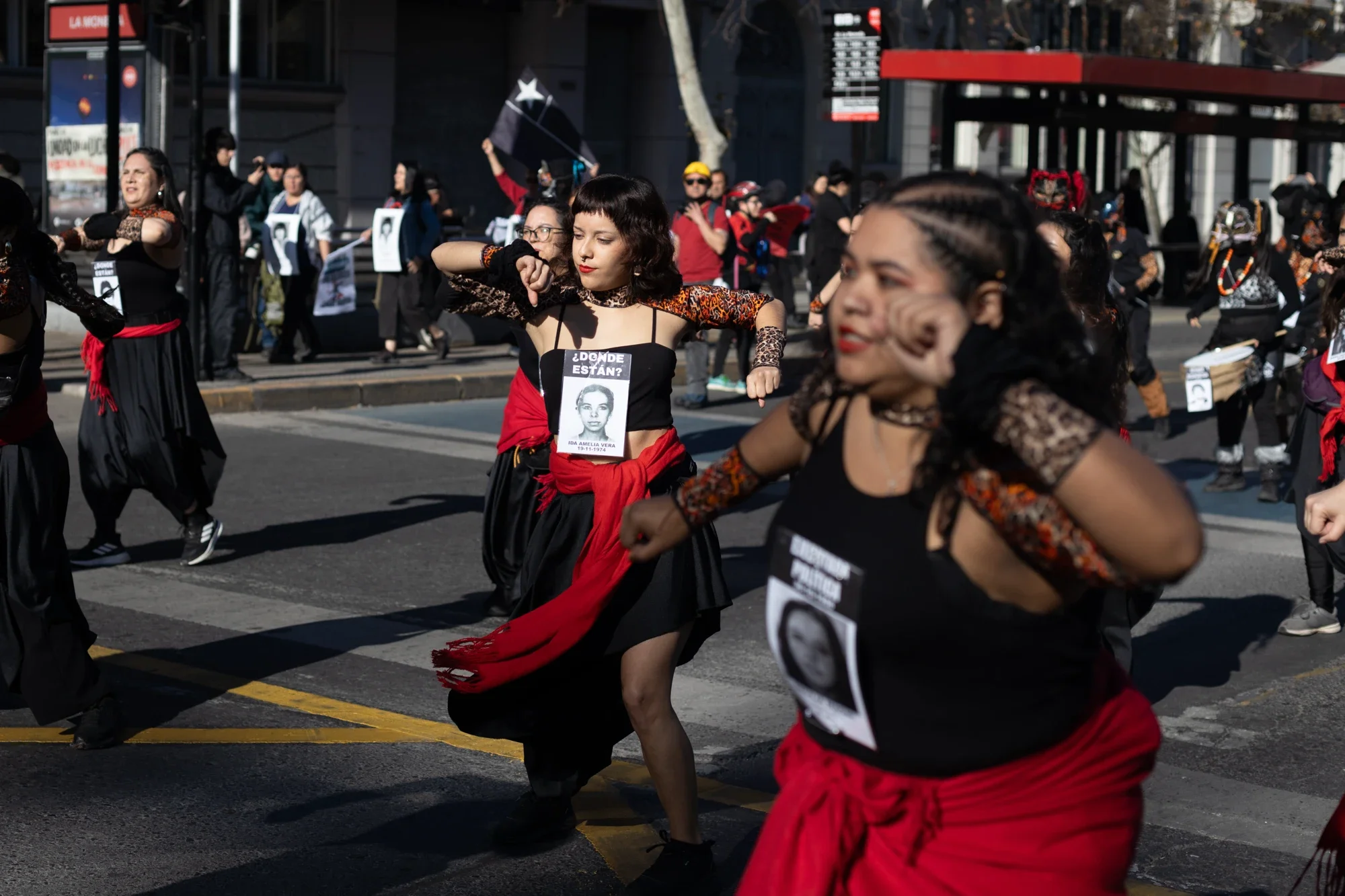
A group of dancers performs a piece featuring the faces of detainees who were forcefully disappeared during the dictatorship, in the procession to the General Cemetery in commemoration of the 1973 coup d’état, in Santiago, Chile, on September 6, 2026. Photo © Sofía Yanjarí.
Reportage • Yasna Mussa • September 25, 2026 • Leer en castellano
On the anniversary of the September 11, 1973 coup in Chile, José Antonio Kast’s administration performed indifference, but the streets told a starkly different story. On Sunday, September 6, thousands of people took part in the traditional annual procession through the streets of Santiago to the General Cemetery, a tribute to the thousands victims of Augusto Pinochet’s dictatorship.
Traditionally, the anniversary of the coup is dedicated to those who were detained and disappeared. Five decades later, their loved ones are still searching for them, and their absence remains one of Chile’s most painful open wounds.
Holding signs with photographs of their loved ones whom they never saw again and whom they have not yet been able to put to rest, participants chanted slogans, called out the first and last names of those who were disappeared or executed, and exclaimed: “Present! Now and forever!”
One group held a sign reading: “Kast’s regime = dictatorship and impunity. The people’s struggle continues.” Others wore carnations to lay at a memorial bearing the names of the disappeared, but not their remains.
This year, there were no government-led ceremonies or official statements, and human rights and grassroots organizations led the commemorations. Marches and rallies took place across the country, reaffirming the commitment to truth and justice, to ensuring such events never happen again, and to ending impunity.
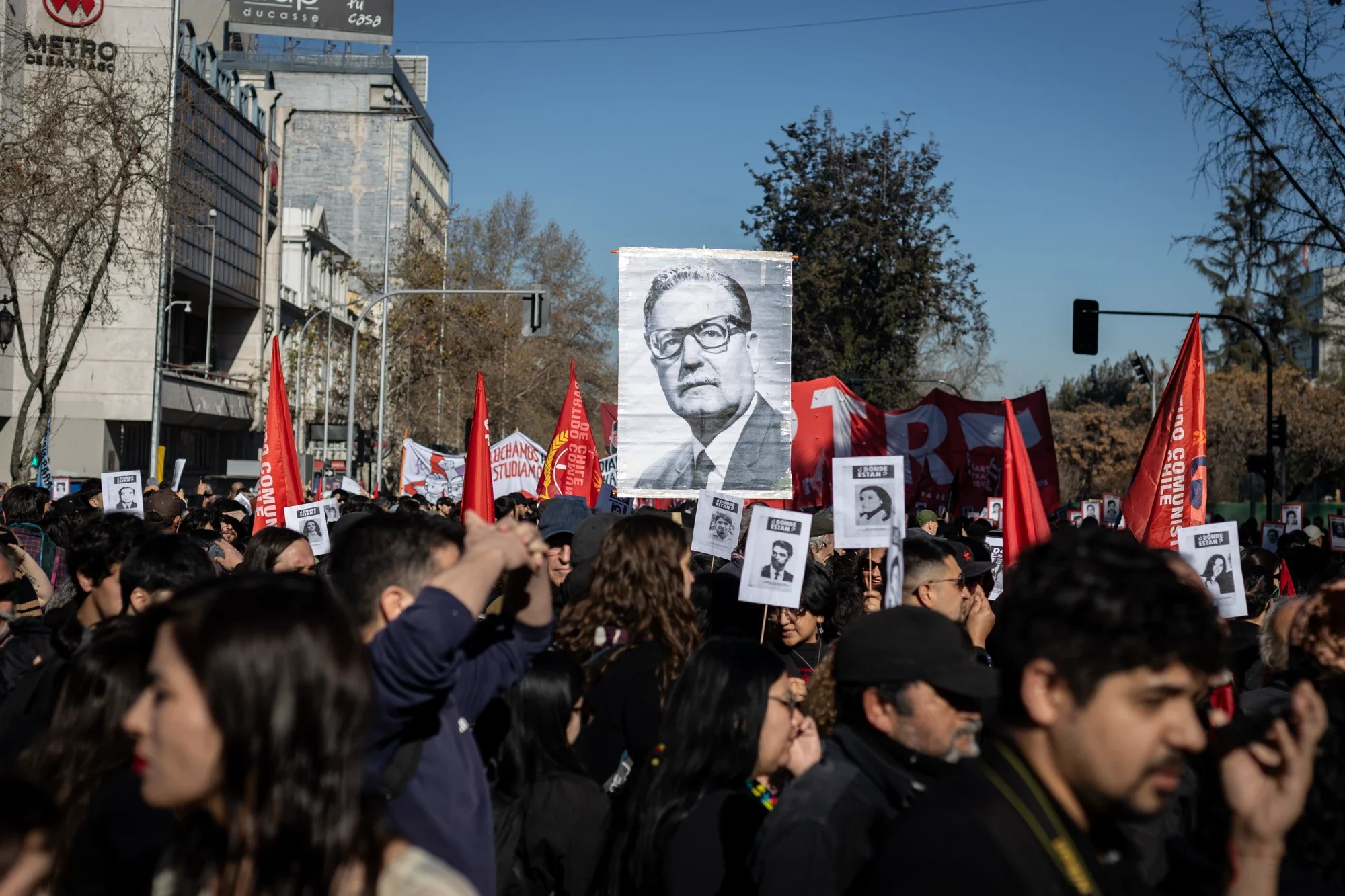
A banner bearing the face of Salvador Allende, amid hundreds of people and groups, in the procession to the General Cemetery to commemorate the 1973 coup d’état in Santiago, Chile, on September 6, 2026. Photo © Sofía Yanjarí.
During just six months in office, Kast’s far-right conservative government has advanced an ideological agenda that, according to Gloria Elgueta, a spokesperson for Londres 38, aims to dismantle Chile’s human rights infrastructure.
Londres 38 is a former clandestine detention, torture, and extermination center used by the National Intelligence Directorate (DINA) during the dictatorship. Today, it is a memorial site open to the community and operated by survivors.
“First, there’s the connection to the dictatorship held by the sectors currently in power. Particularly the president, who has made no secret of his historical allegiance. Even as a young man he backed the continuation of the regime by supporting the ‘Yes’ vote in the 1988 plebiscite,” said Elgueta, alluding to a referendum held that year to determine whether Pinochet would remain in power.
The president’s stance that human rights “limit freedom” has appeared in the administration’s policy decisions. In the economic sphere, according to Elgueta, “we’re taking a step backward with a tax policy that deepens inequality.”
Kast’s security policies are punitive, lacking a holistic understanding of security that acknowledges the importance of a fairer social security system that guarantees decent retirement benefits, among other things.
The government has fabricated a fight against terrorism and organized crime, Elgueta says, and is putting policy into place designed to restrict legitimate social protest.
Disappearing history
On March 31, during Kast’s first month in office, his administration announced a drastic change that also sent an unmistakable political message: it dismissed the leadership of the National Plan for Truth and Justice (PNB).
The PNB was launched by the Gabriel Boric administration in 2023, and consisted of a Ministry of Justice and Human Rights program to search for the disappeared. It succeeded, among other things, in compiling a single registry of victims of forced disappearance and a georeferenced map of their last whereabouts, consolidating all the information for the first time on a government website.
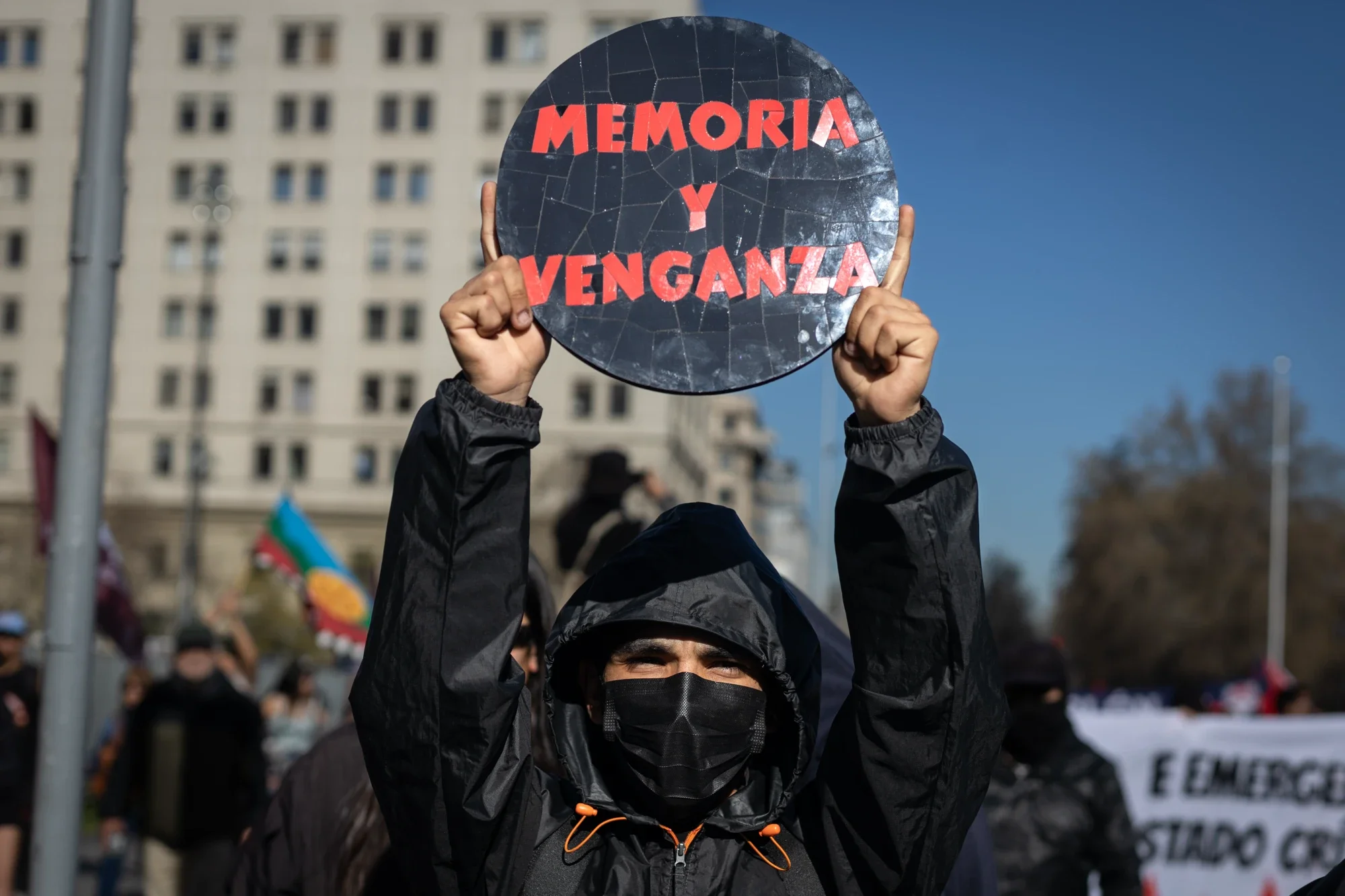
A man holds a sign reading “Memory and Revenge” during the commemorative procession to the General Cemetery to remember the 1973 coup d’état in Santiago, Chile, on September 6, 2026. Photo © Sofía Yanjarí.
The dismissed staff members, who have extensive experience in human rights, are attorney Paulina Zamorano, head of the Human Rights Program, attorney Marcela Garcés, who led the Search and Tracking team, and Tamara Lagos, a sociologist specializing in historical memory processes.
Although not without its critics, the PNB was celebrated by organizations representing family members and direct victims of the dictatorship. After 50 years, it was the first time a roadmap was announced that proposed a concrete strategy to find answers about the forced disappearance of people by the Chilean state.
Londres 38 was among those who criticized some of the decisions and the structure under which the PNB was launched, while acknowledging the importance of its creation.
“We faced many structural funding constraints in tackling the momentous task of searching for those who were disappeared and detained,” Elgueta said in an interview with Ojalá. “Time is working against us [and] the prospects for progress under this administration appear limited because it effectively dismantled the PNB’s experienced leadership.”
Elgueta pointed out that while the PNB remains leaderless, Kast appointed Fernando Rabat, one of the lawyers who defended Pinochet against charges of embezzlement cases and crimes against humanity, as Minister of Justice and Human Rights. For human rights organizations, his appointment is an affront to the memory of the victims and a way of legitimizing the dictatorship.
Also in the judicial sphere is the strategic use of “passive pardons,” or a deliberate omission by the state, through which the Ministry of Justice and Human Rights has reportedly instructed lawyers working in its Human Rights Program to stop intervening in court hearings where sentence reductions, prison benefits, or alternative forms of punishment for perpetrators of crimes against humanity committed during the military dictatorship are discussed.
“The latest information we have is that, systematically, in cases involving the enforcement of sentences under the Search Plan, no arguments have been raised in the appeals filed by convicted individuals seeking access to benefits including serving their sentences without being in prison,” said Elgueta.
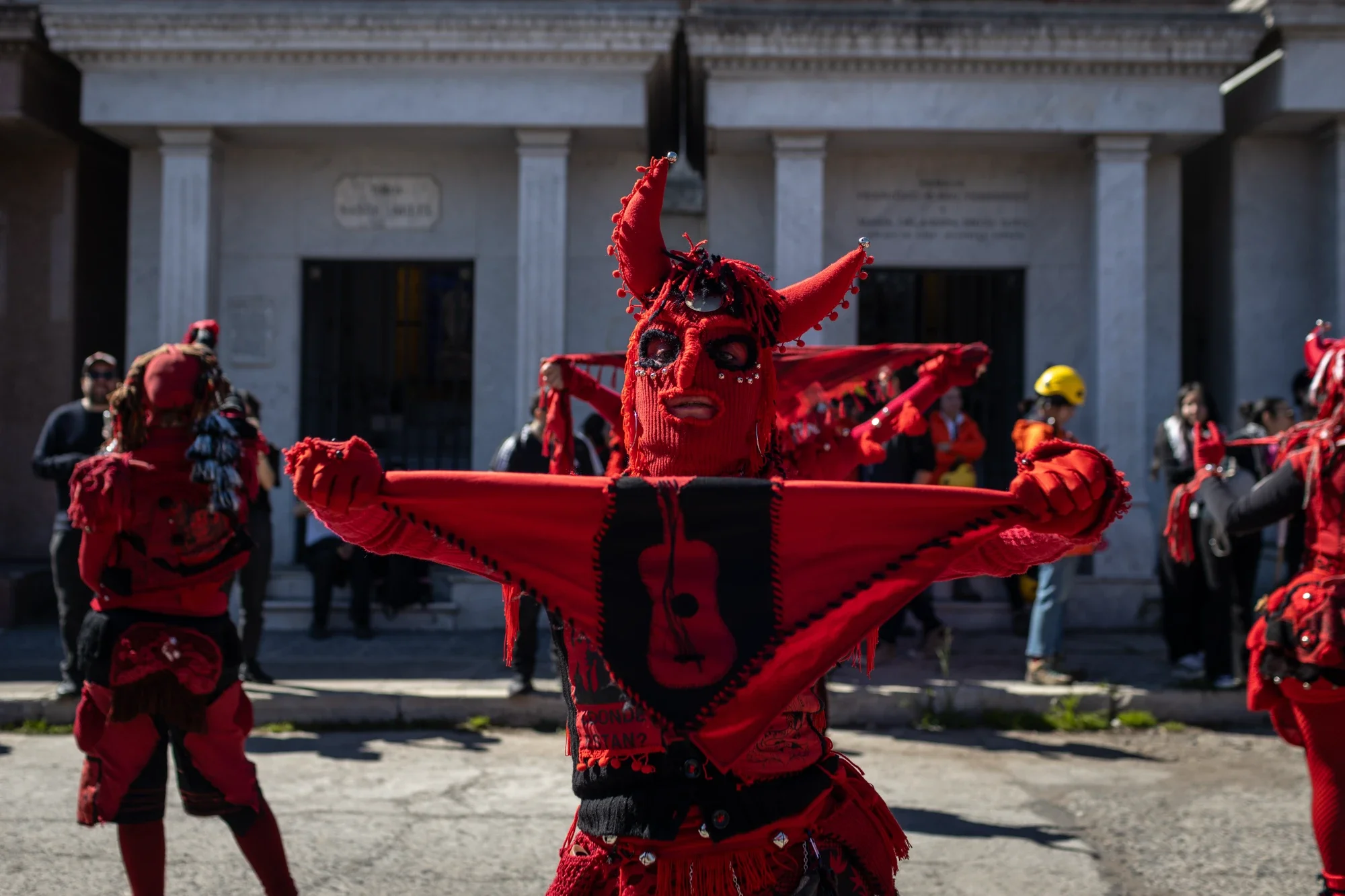
Víctor Jara’s Diablos Rojos perform at the General Cemetery during the procession commemorating the 1973 coup d’état in Santiago, Chile, on September 6, 2026. Photo © Sofía Yanjarí.
One of the most emblematic of these cases is that of César Manríquez, former head of the DINA Intelligence Brigade and the Villa Grimaldi torture center (now a memorial center). Manríquez was sentenced for 57 convictions by the Supreme Court in 2023. His crimes were perpetrated against 89 victims of the dictatorship: 86 forced disappearances, two cases of torture, and one murder.
In April of this year, the Appeals Court of San Miguel, a district in Santiago, granted his petition for constitutional protection on grounds of mental incapacity, in which he requested to serve his sentence at home. The Ministry of Justice and Human Rights did not appeal, even though a psychiatric report indicated that his mental state might be feigned. Regardless, Manríquez will be returned to his family’s custody and care.
Kast has also stated that he supports pardoning Miguel Krassnoff, a former military officer sentenced to more than 1,000 years in prison for kidnappings, torture, murders, and the forced disappearance of political opponents during Pinochet’s time in power.
Reclaiming memory
“What I find troubling is that, during 36 years of democratic rule, no search plan was ever implemented,” said Juana Aguilera, president of the Ethical Commission Against Torture. “Nothing that was accomplished during the most progressive democratic administrations was won without our struggle.”
Aguilera has a long history as an activist and rights defender. She was forced out of the country by the dictatorship in 1984 and her name later appeared on a list of people barred from returning. She managed to make it back in 1991, with the return of democracy. Since then, she has dedicated her life to raising awareness, speaking out, and advocating for the eradication of torture as a systematic practice of the state.
She directly experienced the persecution, detention, torture, and exile imposed by the dictatorship and later witnessed how every advance in human rights driven by civil society has required organization, resistance, and courage.
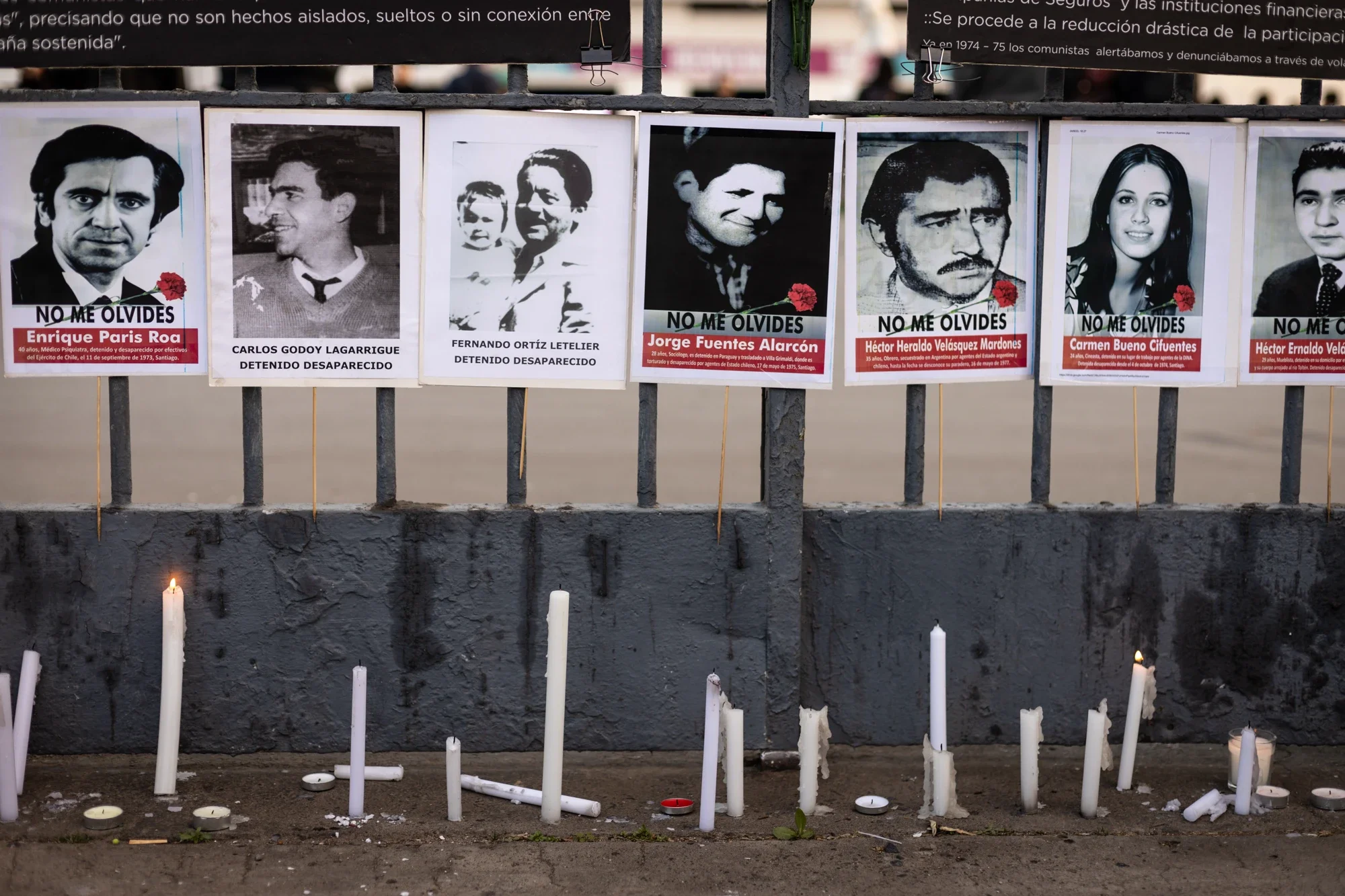
Candles and photographs of the detained and disappeared during the candlelight vigil at the National Stadium in Santiago, Chile, on September 11, 2026. Photo © Sofía Yanjarí.
This year, September 11 marked the 53rd anniversary of the civic-military coup. Aguilera was not surprised by President Kast’s decision to avoid holding any commemorative event. His is the first government to do so since the return of democracy. “Ever since the election campaign, he has shown himself to be a denialist, ” said Aguilera.
Members of the Ethical Commission Against Torture share a sense of injustice, noting that 11,925 criminal complaints have been dismissed by the Public Prosecutor’s Office without investigation. These are complaints that pertain to allegations of torture during the social unrest that began in October 2019.
“They involved the sexual assault of young people, abuse, and the infliction of torture in detention centers, police vans, police stations, and on the streets,” said Aguilera. “This is a grave failure on the part of the Chilean state. There is no exact figure because they do not want to keep accurate statistics, but at least 500 people suffered eye injuries, and thousands were wounded by rubber bullets.”
For the 69-year-old survivor, the Kast administration is not only attempting to erase Chile’s recent history. It also poses a threat to those who come after us.
“These are extractivist neoliberal policies that have no respect for life, for Indigenous peoples, or for nature,” said Aguilera. “It’s serious because entire regions are being turned into sacrifice zones. They are mortgaging the future of younger generations.”
