

Celebrating our wins: the fight for Karuzo Foro in Puebla
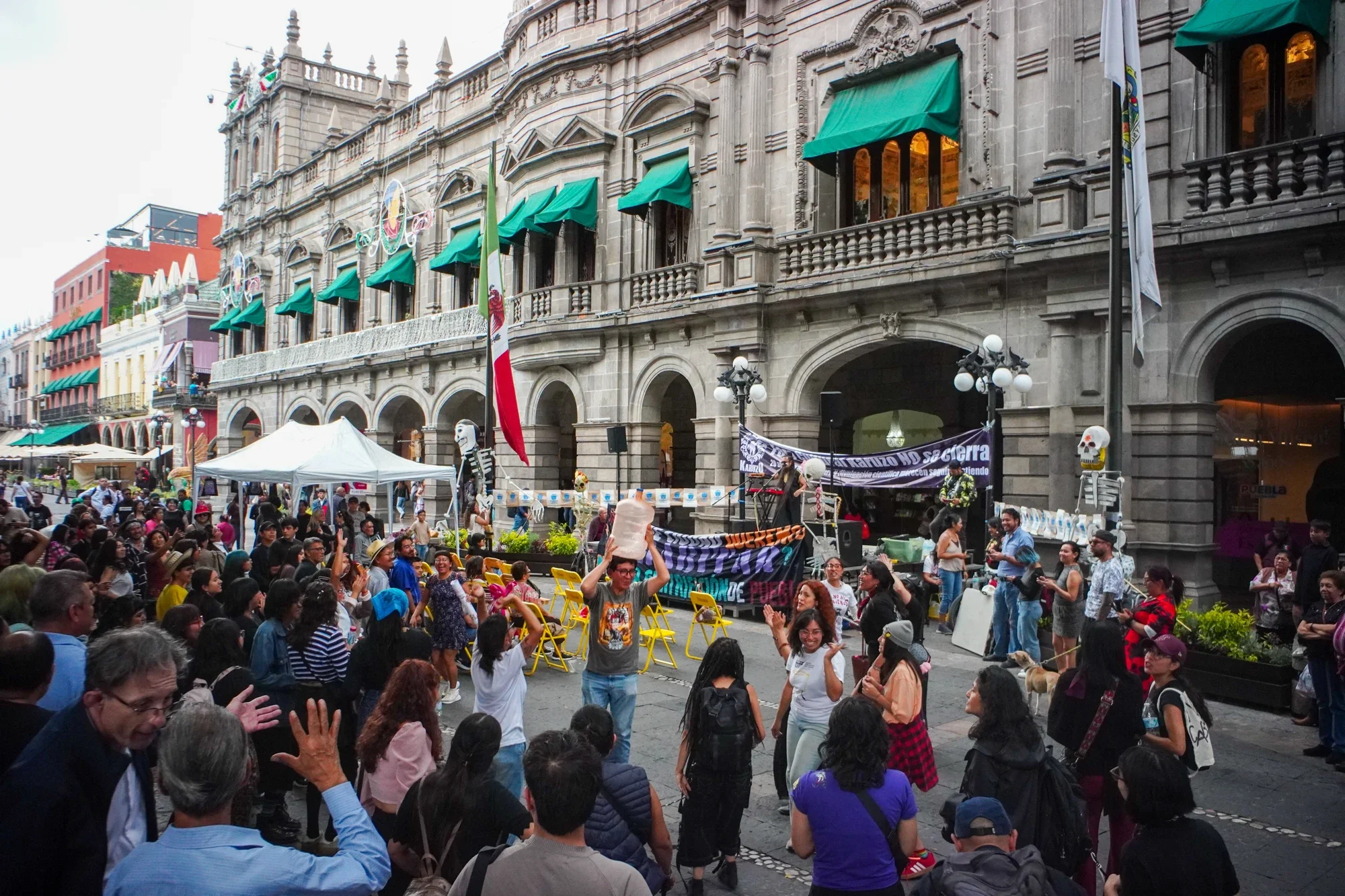
Mexican Rare Groove’s psychedelic cumbia got the crowd dancing on August 15, 2026, in Puebla, Mexico as part of the protest in defense of Karuzo Foro. Photo © Xosué Martínez/Labcdos.
Interview • Dawn Marie Paley • September 18, 2026 • Leer en castellano
It’s Friday night, and bodies are jammed together, coats off, as a live cumbia band plays one classic after another. There’s no space to walk, only to dance. It’s Tuesday evening, and patrons sit quietly, notebooks out, as scientists and academics share their findings. It’s Sunday afternoon, a couple with a caguama and a bowl of popcorn between them inch closer as day turns to night.
For the past 20 years, Puebla’s Foro Karuzo has played host to all kinds of encounters and events. Its programming reflects the pulse of local culture and organizing, with events that educate and mobilize around key issues in the city, which is Mexico’s fifth-largest.
The stage against the back wall has been used for press conferences, queer cabaret, stand-up comedy, horror movies, and book presentations. Posters on the walls demand the return of the disappeared, and remind of shows and gatherings past. Stickers coat every surface, and murals render homage to feminism, the Zapatistas, Palestine, and the spirit of rebellion. Singers, clowns, wrestlers, writers, activists, students, and workers come to share and exchange. This is Foro Karuzo.
Last spring, I joined dozens of others in helping Itzell Sánchez Martínez and Arturo Muñoz, who own the space, change locations. Gentrification in central Puebla was squeezing their rent upward, the lack of access to drinking water—a problem throughout much of the city—caused the move to a new space just a few blocks away.
Bigger and more prominent, the new Foro Karuzo launched in May on Puebla’s most important boulevard, named after the May 5, 1862 battle against the French Army. The new space is much bigger, with a proper kitchen and an ample bar. And the gamble was a big one: that Puebla and those of us who live here would step up in support of autonomous culture, art and education.
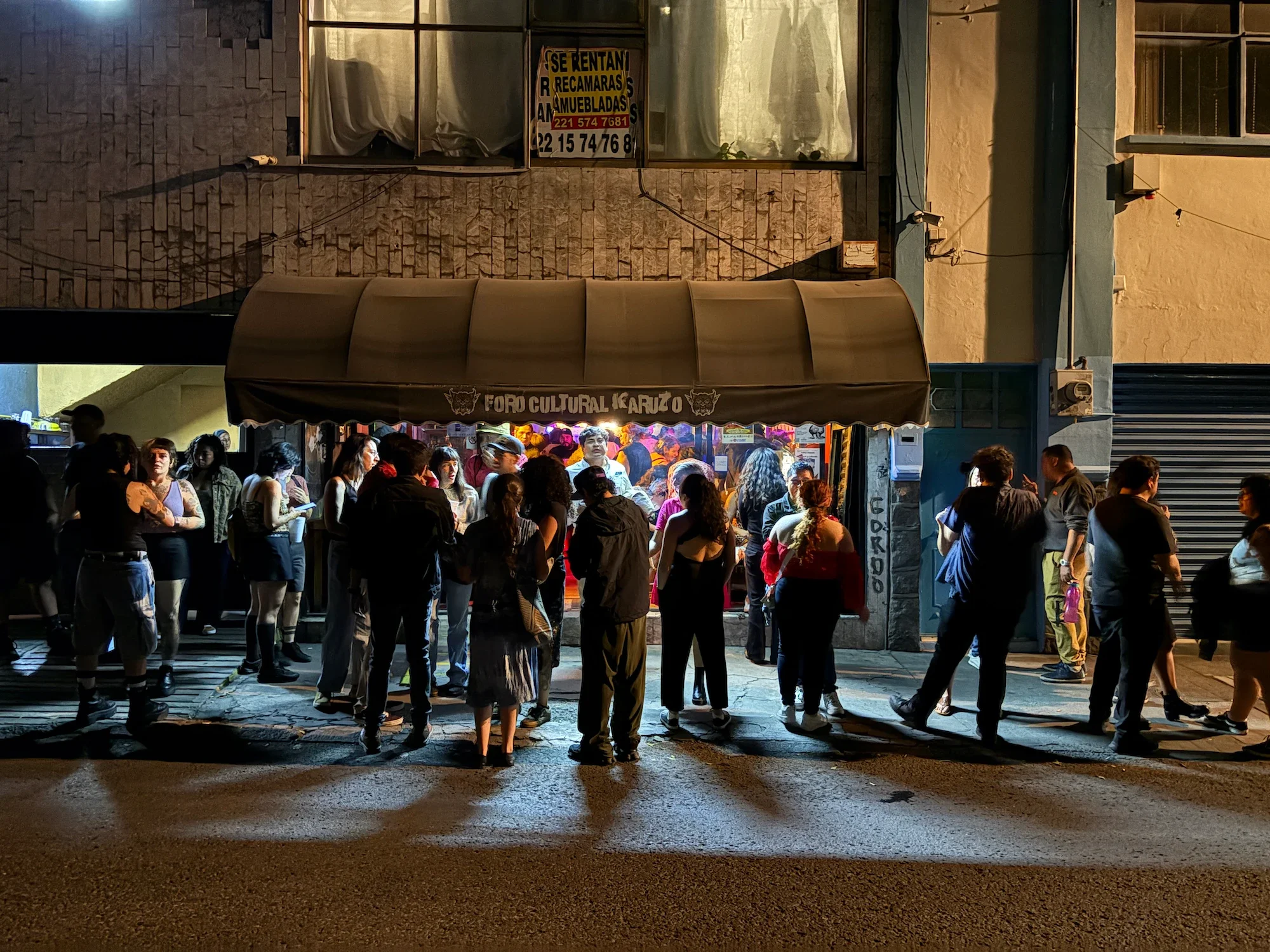
Revelers take a break from dancing during Foro Karuzo's farewell party at the last location on East 11th street in Central Puebla on May 2, 2026. Photo © Dawn Marie Paley.
What Sánchez Martínez and Muñoz didn’t foresee was an attempt to shut the new space down. The city government, led by José Chedraui (a former Institutional Revolutionary Party leader who is now with the Morena Party), denied them a key permit based on a technicality, forcing the space to shutter and sparking a series of protest actions.
An intense, two-week campaign in defense of Foro Karuzo led to a reversal of the decision by the Chedraui government, an exceedingly rare win. Last weekend I attended two events in the city where the struggle for Foro Karuzo came up, and the victory was recalled with whoops and applause.
Together with Sánchez Martínez, who is a dear friend, we decided it would make sense to share some of the learnings from the campaign with a broader audience. We spoke via WhatsApp on August 24, and our conversation has been translated into English and edited for clarity and length.
Dawn Marie Paley: I’d like you to give us a little background about Puebla, for people who aren’t from here or who aren’t familiar with the state.
Itzell Sánchez Martínez: The state of Puebla is known as a place where human rights defenders face political persecution; Pegasus [spyware] has been deployed in Puebla, and there’s a surveillance system in place. It’s a defining characteristic of the state.
We’re usually in the downtown area of the state capital, that’s where Karuzo has been located. We’ve had to move twice because of gentrification and efforts to turn downtown into a tourist attraction. Spaces like ours aren’t well-regarded because they take a critical stance.
There’s a water shortage in downtown Puebla. In fact, there’s a water shortage throughout Puebla State, and lots of industries, among them Volkswagen and Audi. And now there’s going to be a data center for artificial intelligence.
This time, after running a space for 14 years, we had to move because they wanted to raise our rent, and [the landlords] punished us by cutting off our water.
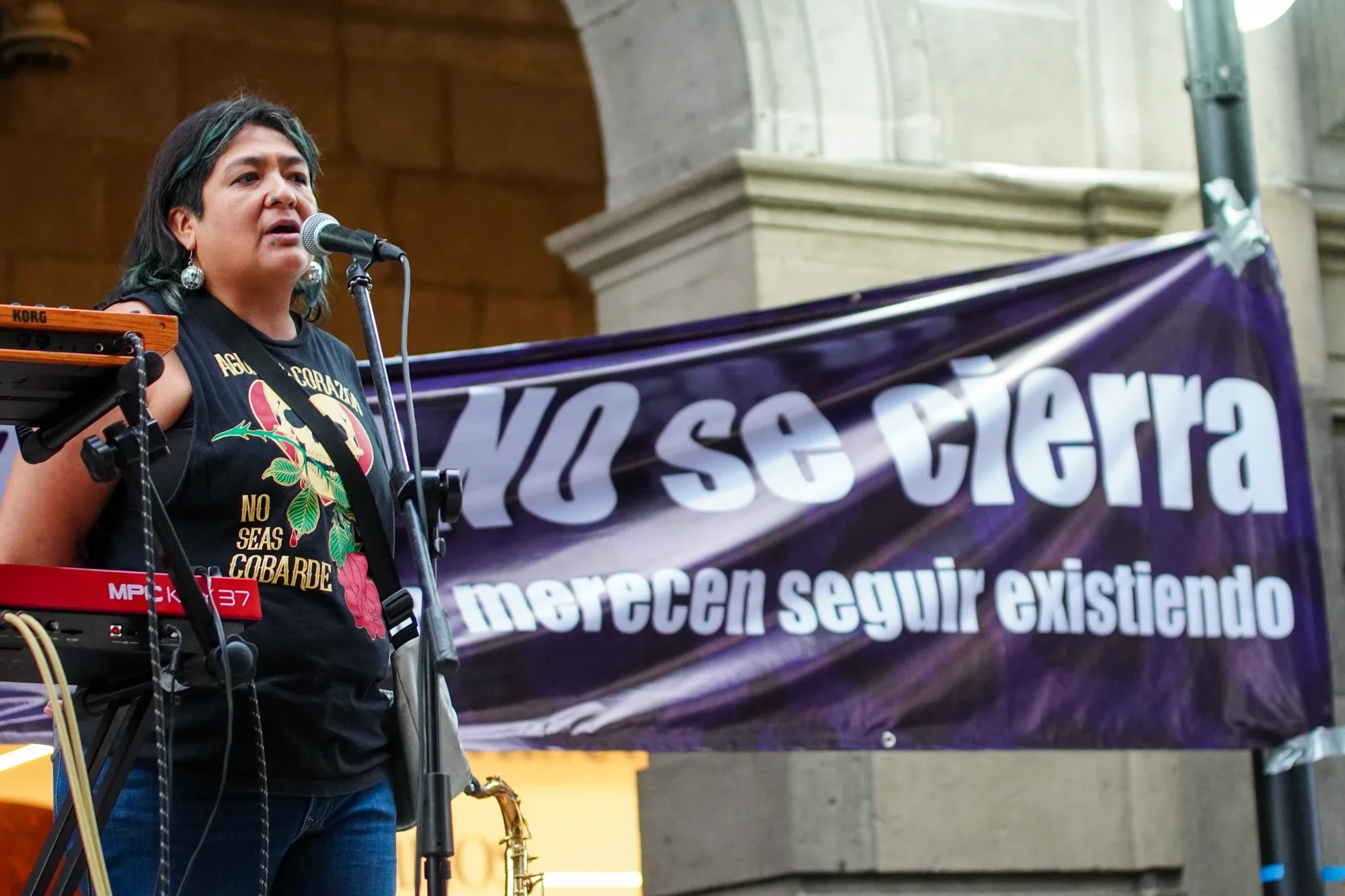
Itzell Sánchez Martínez speaks on behalf of Karuzo Foro in Puebla, Mexico, on August 15, 2026. She said cultural spaces in Puebla are forced to navigate complicated licenses in order to offer their programming. Photo © Xosué Martínez/Labcdos.
DMP: Tell us about what happened with the new Foro Karuzo.
ISM: Foro Karuzo has always, always—and this is important to emphasize—operated under a restaurant-bar license, because in Puebla, operating licenses for cultural spaces didn’t exist.
It wasn’t until about two years ago that an operating license as a cultural space appeared to become available, though in practice it doesn’t actually exist. It doesn’t allow us to sell anything [which means there is no way to generate revenue].
After the move, we had to go through a lot of red tape. The problem was the last bit of paperwork: changing the address on the operating license. On July 23, we were denied that address change on a license we already had, which was a very real threat of having to shut down.
Faced with this, we tried to meet with officials; we requested meetings. Almost all of them were denied, so we had to organize a protest, and it was a wonderful demonstration.
DMP: Tell us more about that, please.
ISM: First, we put out a communiqué explaining what was happening and asking for solidarity.
We organized a march on Saturday, August 15, and held a sit-in that lasted 26 hours. The most important thing was all the support we received from the community—not just from the cultural community, but from the people who come to Karuzo, the social movements we’ve been working with for a long time, and even collectives of mothers searching for their disappeared children.
Everything was well organized, and people spoke out on social media and showed up at the march and the cultural events we held in the street. We said, “If they’re going to take Karuzo from us, Karuzo will take to the streets.”
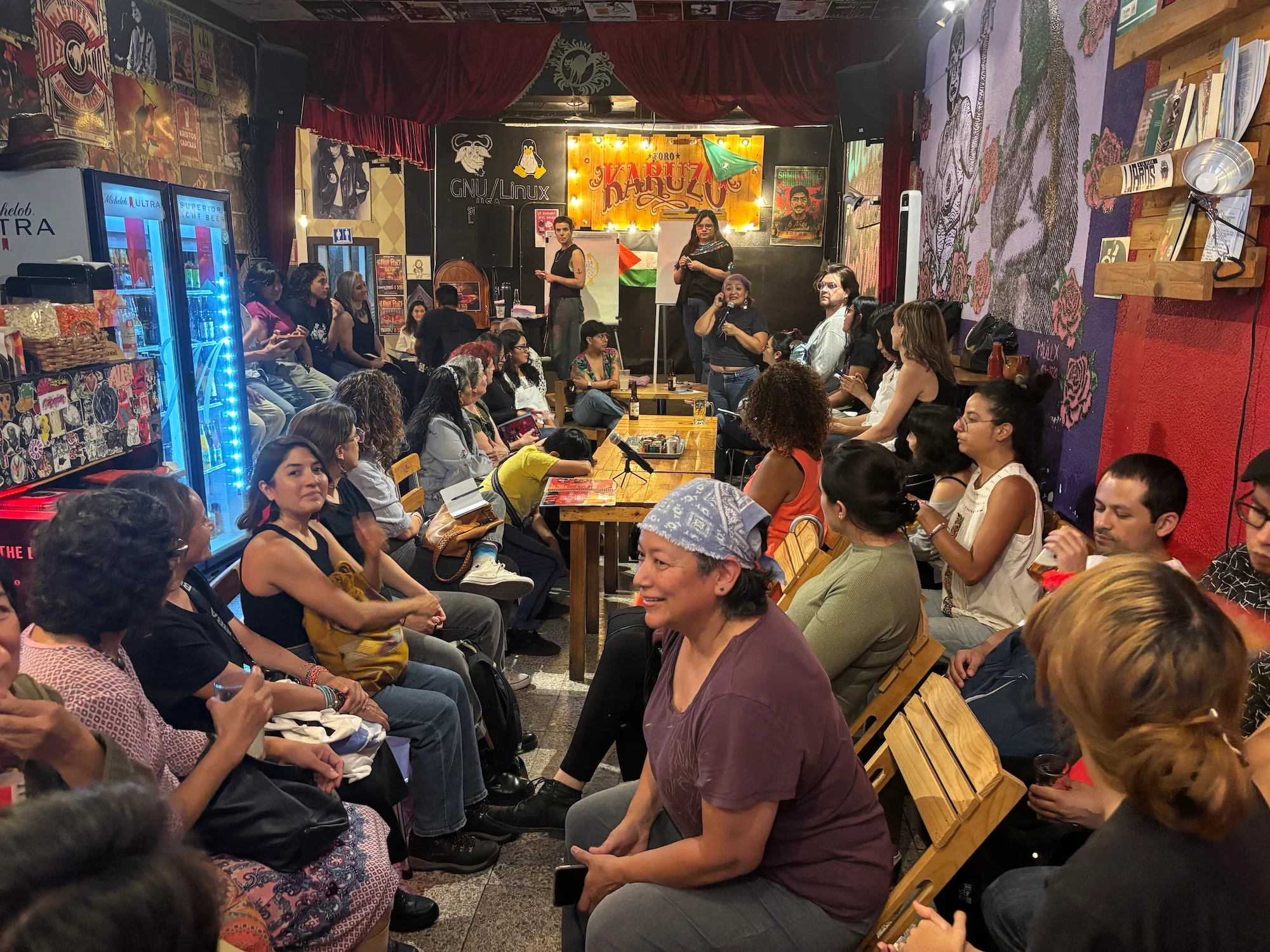
Patrons gather in Foro Karuzo for an event celebrating the work of Ojalá co-founder Raquel Gutiérrez Aguilar on May 30, 2025. Photo © Dawn Marie Paley.
They held the opening ceremony for the City Book Fair in the Zócalo [central square], and Arturo Muñoz went and confronted the mayor. I attended a meeting with the Federal Ministry of Culture and the State Secretary of Culture, where I took the floor and made our presence known with a banner. Several powerful acts of resistance were carried out on the very same day of the march.
It was very effective, we were really lucky that so many events and officials were present, allowing us to intervene politically.
We held a series of cultural events, and in the evening we were staying in the protest camp, when the Governance Secretary of the local government finally agreed to speak with us.
We got the missing permit on August 19 and reopened that same day.
DMP: What did this experience teach you about the political context in Puebla?
ISM: First, we found out from knocking on doors that Chedraui and the governor—Alejandro Armenta, also from Morena—are at each other’s throats. Even though both are wearing the Morena colors, they’re deeply at odds and aren’t working together.
It’s also worth noting that Chedraui’s grandson married the granddaughter of Carlos Slim, the richest man in the country. Slim just bought up Paseo de San Francisco, a commercial district made up of historic buildings which is located very close to the new Karuzo Forum.
We know Slim wants to push through very aggressive gentrification projects. And the mayor declared that no, Karuzo wouldn’t be opening.
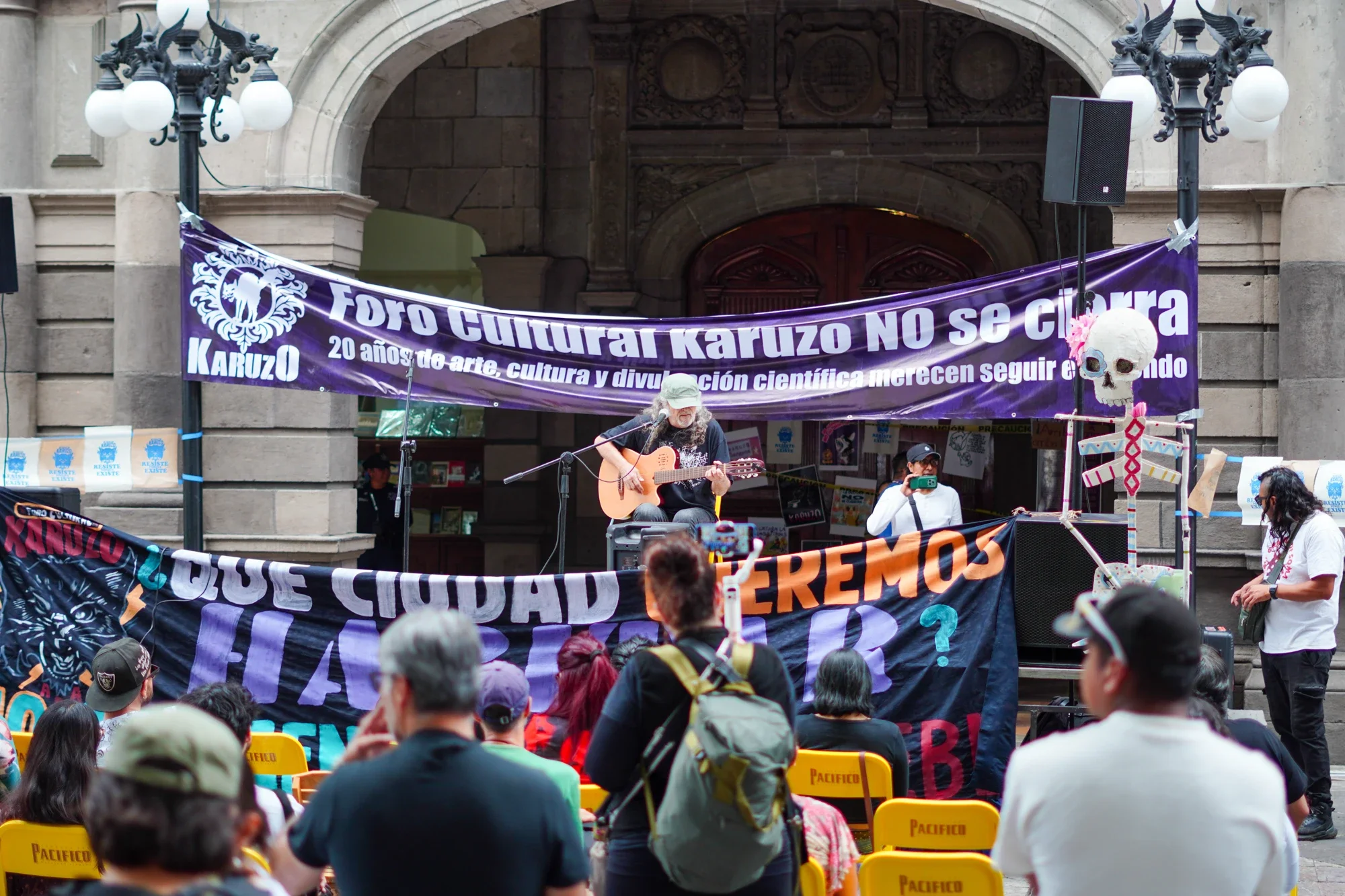
Francisco Barrios “El Mastuerzo” performs at a protest for Foro Karuzo in Puebla, Mexico, on August 15, 2026. Barrios uses his music to question how governments treat cultural policies as filler in their political platforms. Photo © Xosué Martínez/Labcdos.
DMP: Congratulations on reopening! What’s next for Foro Karuzo?
ISM: Because of what happened, the idea of pushing for a law on independent spaces has been floated. I’ve never liked the idea of working on legislation because it seems to me that it always end up making things more restrictive. But what we do see is that a law might be necessary to get the government to stop bothering us.
There’s a law in Mexico City that was championed by the Multiforo Alicia cultural center. So the idea is for us to push for something similar here in Puebla together with other independent spaces. We have to think this through; it does seem that it's something that could be useful for self-managed independent spaces.
I think it’s very important for people in Puebla to realize things can be achieved through organization and by respecting differences.
Now that we’ve been granted the license, everyone is really happy. People celebrated, and there were posts saying, “To those who say protesting doesn’t work, look—Karuzo secured its license.”
Right now in Puebla city, there’s a fight against a new cable car system. It’s a good time to say, “Now let’s take on the cable car, we’re going to get rid of the cable car.”
We’ve been told our victory has given a lot of hope. Even though it’s a small victory, I think it was an achievement for the entire community, not just the people from Karuzo.
Now we have to build more alliances. We have to make the most of this opportunity and keep nurturing our relationship with the community.