
Recipes for memory and connection
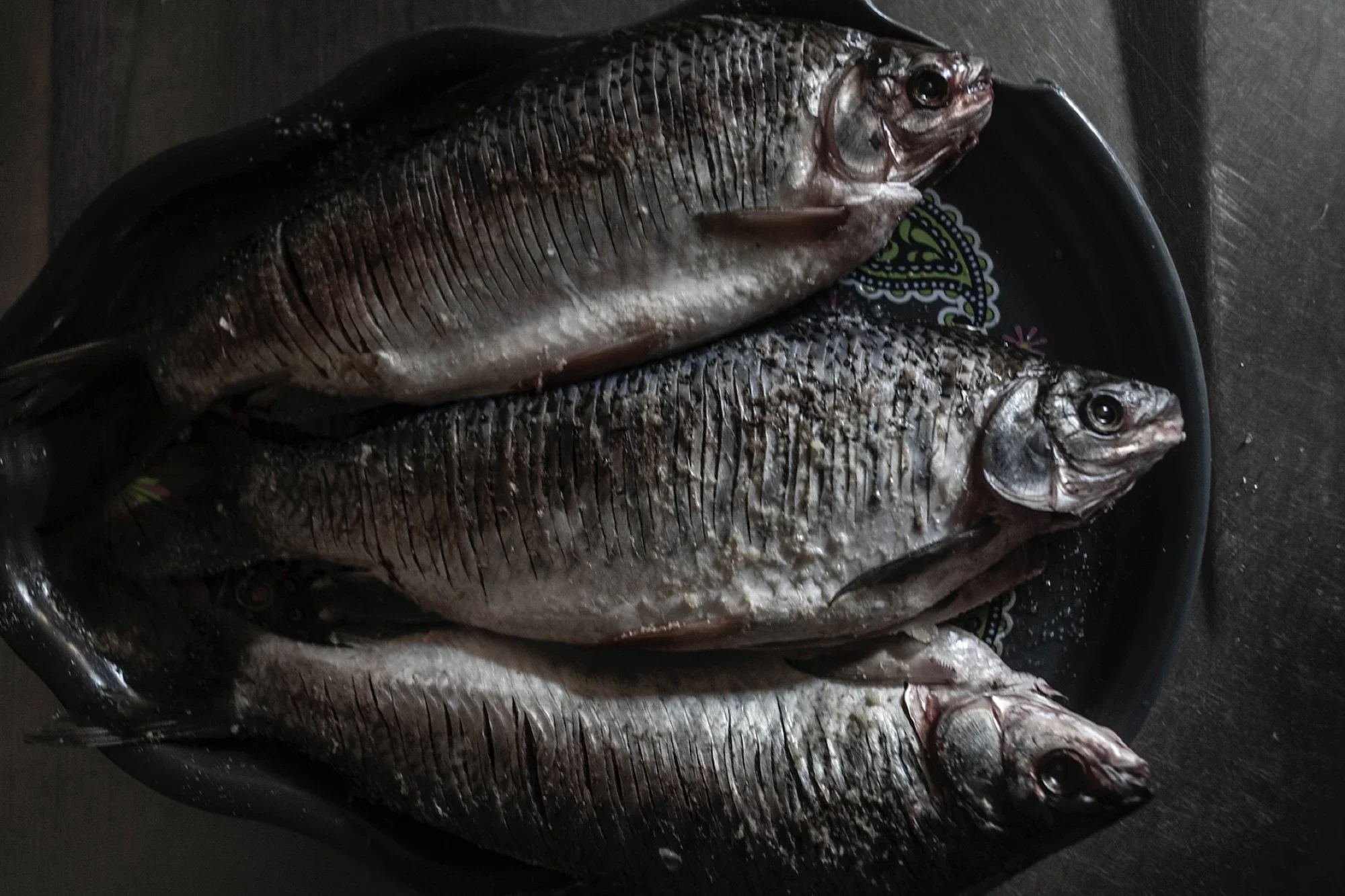
Bocachico for Hectór Jaime Beltrán Fuentes. Photo © Zahara Gómez.
Reportage • Isàlia McIntyre • April 16, 2026 • Leer en castellano
When Bibiana Mendoza prepared to cook her brother Manuel’s favorite meal for the first time since his 2018 disappearance, she braced for a fresh wave of grief. To her surprise, laughter and hope stirred inside her as she chopped maize and peeled chayote alongside other women searchers who gathered in a Guanajuato kitchen where she prepared pork spine stew.
The others, too, prepared the preferred dishes of their disappeared loved ones: mole for Christian, eggs with chili for Fátima, squash blossom quesadillas for Adán. Eventually, these and dozens of other recipes would form the second edition of The Recipe Book for Memory.
“It was very painful knowing [Manuel] could be going without food,” Mendoza told Ojalá in a telephone interview. “But The Recipe Book gave me joy.”
The project was born in 2019 out of a longstanding collaboration between photographer Zahara Gómez and the search collective Rastreadoras del Fuertein Sinaloa, Mexico. Journalist Daniela Rea and designer Clarisa Moura later joined the editorial team. The project expanded to Guanajuato in 2022 and Colombia in 2025, mapping individual stories onto a common landscape of collective grief and hope amid systemic violence.
From clandestine graves to kitchen tables
Mendoza’s brother Manuel is one of more than 130,000 people reported disappeared in Mexico, the majority since the onset of the so-called war on drugs in 2006. Near-total impunity reigns, with 99 percent of cases going unsolved and reports of state complicity.
It is family members, usually women, who scour the territory for clandestine graves and the remains of their loved ones. They do so in a climate of intimidation, stigma, criminalization, and violence. “We’ve been beaten and arrested for protesting,” Mendoza said. The normalization of these atrocities compounds the vulnerability of the searchers.
“How do you ask people not to be indifferent?” said Gómez in an online interview with Ojalá about the project’s inception. “It was about inviting people to the table. Let’s talk about this together, all of us.”
The Recipe Book for Memory exposes the enduring emotional toll of human absence, when the disappeared are often reduced to underreported statistics. For its creators, it is a means to “embrace amidst the horror,” according to Gómez. Disappearances fragment families and the social fabric, and food is a counterforce that forges community and bridges past and present.
When Mendoza started looking for her brother, there were no search collectives in Guanajuato. “Just like the rest of society, we believed the message that we didn’t deserve to be heard,” said Mendoza, who went on to establish an independent search brigade, which in 2025 located over 230 bodies in clandestine graves.
Their work to do so comes at tremendous personal risk. Guanajuato ranks among the most dangerous states for women searchers and leads the country in killings targeting them. A number of Mendoza’s colleagues have been disappeared.
Beyond picks, shovels, and forensic kits, the search for disappeared loved ones can assume many colors and shades, according to Mendoza. Some women pore over laws and push for reforms that would favor searchers, like establishing local search commissions. Others paint murals to keep their memory alive in public spaces.
“Sometimes we search with our voice, sometimes with our feet, sometimes with our heart, and sometimes by cooking, as with The Recipe Book,” she said.
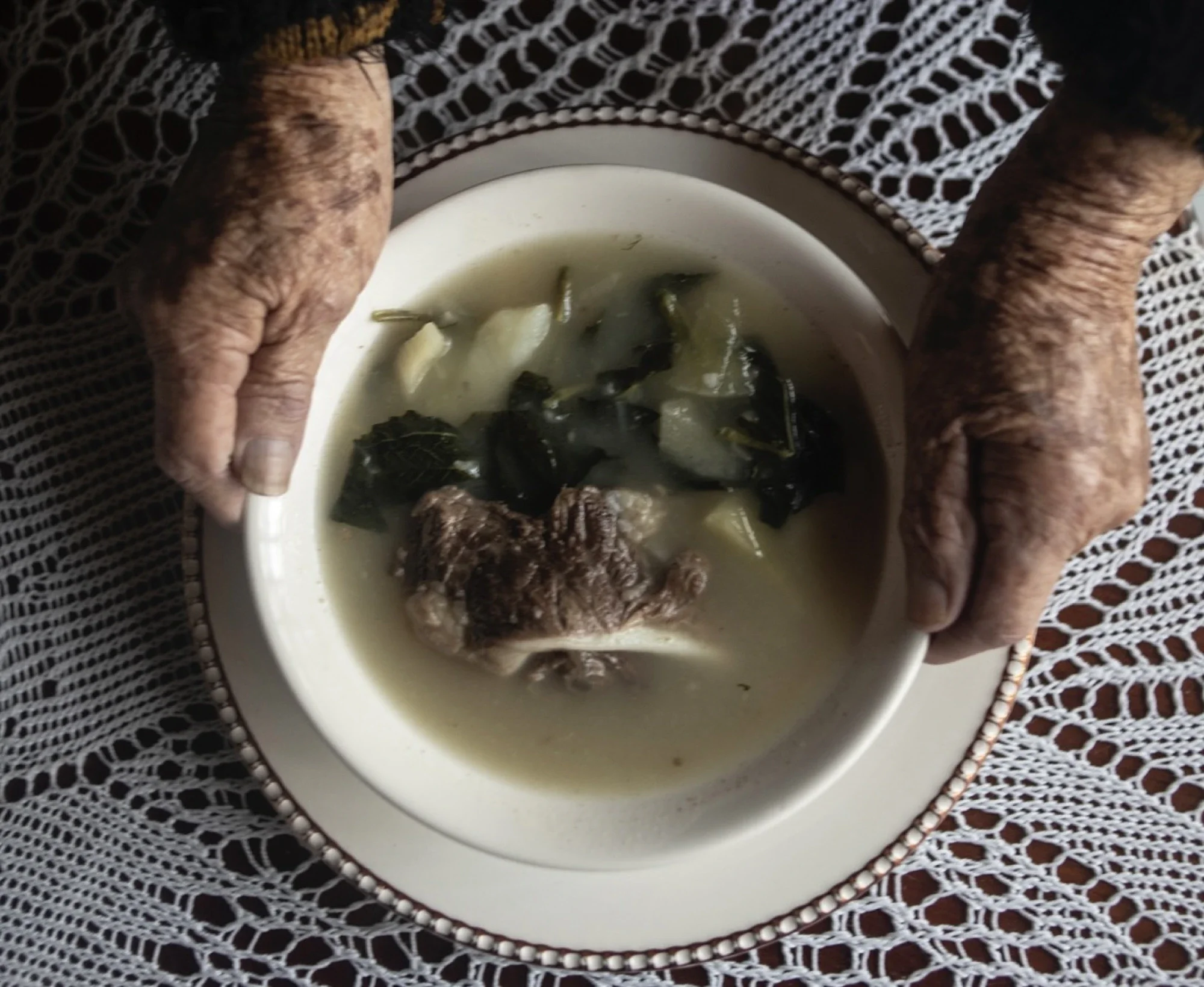
Potato soup for Olivia. Recipe Book for Memory, Colombia. Photo © Zahara Gómez
Food as memory from Mexico to Colombia
In 2025, the editorial team brought the project to Colombia, together with Mendoza and other Mexican participants.
In collaboration with organizations in Bogotá and Medellín, they created The Recipe Book for Memory’s third edition, connecting cases across borders and time. The latest edition features 44 recipes and stories spanning from the 1948 Bogotazo to mass demonstrations in 2021, tracing cycles of state violence. Since the 1960s, 135,000 people have been reported disappeared in Colombia.
María del Pilar Navarrete was 20 years old and a mother of four when her husband, Héctor Jaime Beltrán Fuentes, was disappeared during the 1985 Palace of Justice siege in Bogotá, when M-19 guerrillas stormed the Supreme Court in protest of then-president Belisario Betancur. The military counter assault left nearly 100 dead, and 11 disappeared, including Beltrán Fuentes, who worked in a café there.
“Fortunately, I managed to find some of his body parts eight years ago,” she told Ojalá, a grim reprieve to uncertainty’s corrosive grip on closure.
For The Recipe Book for Memory, Navarrete fried bocachico, a kind of fish, in memory of her husband, who was from the coast. It was her first time ever preparing it.
She served it with a full coastal spread of Héctor’s favorites: tomato-onion-avocado salad, rice, tamarind juice, and tangy suero costeño, a kind of fermented milk. Héctor used to prepare bocachicooften, but Navarrete had long avoided it.
“It’s a very special job, removing the scales, scoring the fish, cleaning it well, then getting the oil to the perfect temperature so it doesn’t stick. I was very worried,” Navarrete said, lighting up as she described the process and went into animated detail on the sides and their origins. She fried the bocachico to perfection. “Food allows us to intertwine memories, love, flavor, smells, and emotions.”
During our video call, Navarrete turned the camera to show me the colorful slogans invoking memory plastering her office wall. To her, memory is magical, a source of sustenance in the protracted search for justice. When memories are painful, “we allow ourselves to transform them in different ways, akin to kneading,” she said.
The Recipe Book for Memory is part of this alchemy. “It’s marvelous to be able to bring the person back to the real world this way, through food.”
Today, Navarrete is the national spokesperson for the truth and justice strategy of Colombia’s Movement for Victims of State Crimes, a grassroots coalition of organizations and individuals. As in Mexico, to report a disappearance in Colombia is an act of courage that comes with great risk, especially when state forces are involved.
Like in Mexico, Navarrete pointed out that migrants, women, and children are often excluded from official forced disappearance statistics, either for lacking legal standing or because they are dismissed as runaways.
In a context of shared horror, “The Recipe Book gifted us a different way of seeing ourselves, us, the searching women,” said Mendoza, the Guanajuato searcher. “We learned that we are not alone, that even though I don’t know all the faces or the names of the searching women in Colombia, they, from their territories, accompany me in my search.”
The support is mutual. Mendoza is also searching for Nataly Sáenz, a Colombian woman who disappeared in Guanajuato, on behalf of Nataly’s brother. Nataly’s favorite dish is chicken stew simmered with yuca, potatoes, and corn.
Recipes as resistance
The Recipe Book for Memory belongs to a growing genre of cookbooks that serve as living archives of resistance.
Cooking for them: memory, struggle, and hope in every dish published in 2024, pays tribute to femicide victims in Mexico through their favorite recipes.
The Raw, the Cooked, and the Finely Chopped: Flavors and bitter tastes of women in prison, a jailhouse cookbookfrom 2019, showcases the improvised recipes and deplorable conditions of women incarcerated in Santa Martha Acatitla prison in Iztapalapa, Mexico City.
And last year’s Indigenous Food Culture: Territory, tradition and transformation of food systems in the Americas shares a continent-wide struggle against industrial agriculture through dishes from 10 Indigenous communities.
In each of these cases, food-centered vignettes serve as tools to fight stigma. Kitchens become frontlines in broader struggles for dignity and justice, and food assumes its historical role as a vessel for living memory.
In times of systemic violence and social disconnection, The Recipe Book extends a compelling invitation to listen collectively. This work continues to grow and evolve through collaboration with collectives, communities, museums, and spaces of memory. Future editions are underway, with stories from two other Latin American territories also marred by forced disappearances.
“Sharing how you cook is telling people about your home, your family, how you live together,” said Mendoza, “like opening a window to everyone.”
For Gómez, The Recipe Book for Memory project provided that window, and became “a way to learn, to see oneself in the other.”
“With the love we have for each other, we’ve learned to de-territorialize the disappeared,” Mendoza said. “It doesn’t matter in what place, in what country, they disappeared, at this moment, they’re missing for us all.”