

Building a consensus against war
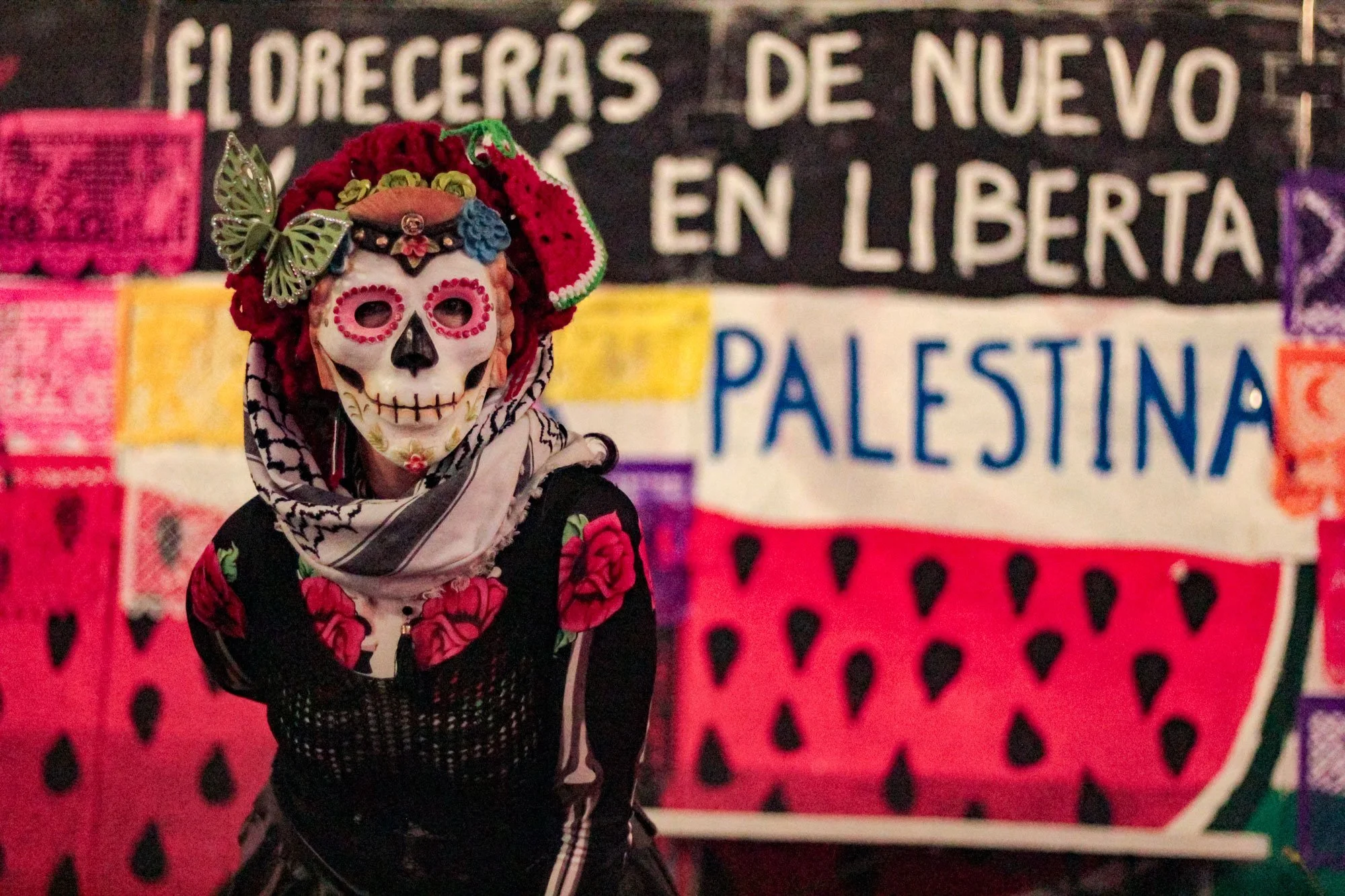
A massive offering in solidarity with the Palestinian people at Plaza Palestina Libre. October 31, 2025. Mexico City, Mexico. Photo © Elizabeth Sauno.
Opinion • Ojalá Editorial Collective • December 12, 2025 • Leer en castellano
Throughout this year, wars have continued to spread around the world, and have intensified in Latin America.
These include the brutal genocide in Gaza—still ongoing despite October's sham ceasefire—to the paramilitary war that has caused famine in Sudan and the unstoppable devastation of Ukraine, which is caught between the Russian invasion, European blackmail, and US maneuvers to ensure its plunder.
In Abya Yala, Donald Trump and his league of confessed murderers—including the sinister Marco Rubio—are ramping up threats to invade Venezuela. Intrusive US meddling into the internal affairs of other countries, including Argentina, Mexico, Honduras, Ecuador, and Colombia, is on the rise.
Within the US, there has been a relentless and cruel expansion of the policy of armed occupation of cities and territories by the National Guard, the army, and Immigration and Customs Enforcement (ICE) in which migrants and racialized people are treated as terrorists and domestic enemies.
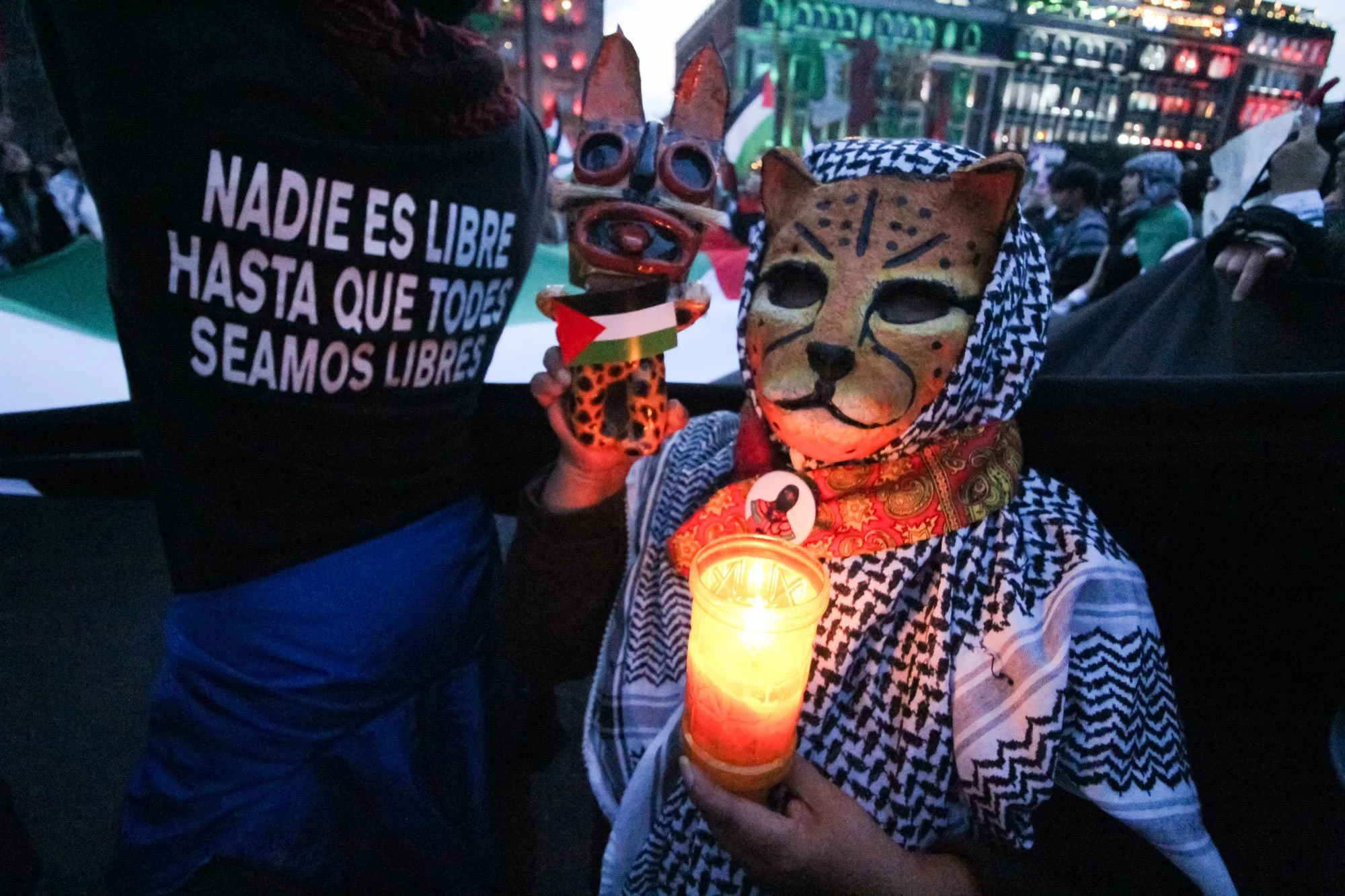
Protest in solidarity with the Palestinian people at a Residente concert. September 6, 2025. Mexico City, Mexico. Photo © Elizabeth Sauno.
Antimilitarism, inside and out
We must respond to direct threats of invasion against Venezuela by emphasizing an antimilitarist stance, without ever neglecting the right of peoples to self-defense. But we should also distance ourselves from anti-imperialist rhetoric that’s jingoistic and favors capitalism, because it only increases confusion.
It’s well established that war flattens all nuance when it comes to understanding political, economic, and social contradictions within each nation-state as well as across borders. It reduces conflict to a simple dichotomy of friends and enemies, or worse, good versus evil.
War also reshapes time: by asserting the urgency of “closing ranks” in defense of the threatened nation or fatherland, it demands unconditional loyalty, silences criticism, and postpones any other demands.
There is danger in getting caught up in discourse centered on clashing national blocs, which have also shifted throughout this past year.
The binary, polarized siege imposed on public discourse is a serious problem. In this context, only voices of unconditional support and loyalty to one side or the other are allowed. Everything else is vehemently silenced.
Political and propagandistic pressure is intensified, compelling every individual, organization, or movement within a given country to take a position within the self-destructive binary framework that demands unconditional allegiance.
This silencing has and continues to serve as the glue that holds together increasingly broad and dangerous patriarchal and capitalist military pacts.
The open hostility and aggression by the United States toward Venezuela and other peoples is clear. They are seeking to take territories and resources without blushing, or even donning the mask of legal justification.
Against the backdrop of threat and turmoil, we are also witnessing the resurgence of a self-serving anti-imperialist discourse. This rhetoric glosses over contradictions within nations and discredits the voices and communities that speak out against immense challenges.
It also pushes the entire population, especially young men—who are the sons, brothers, partners, or fathers to many others—to join military structures led by those who have failed to ensure the people can live with dignity.
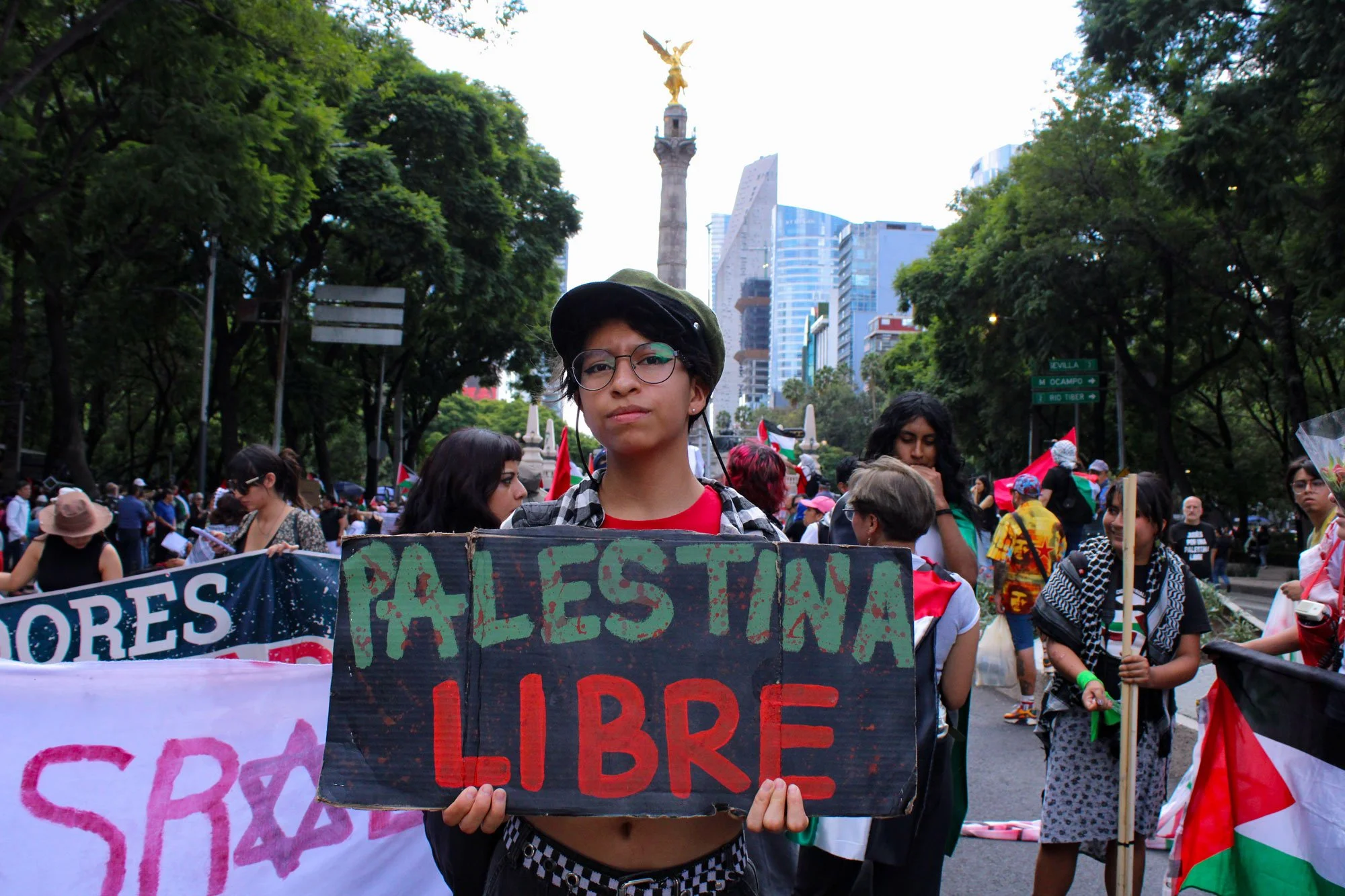
Global Day of Action against genocide in Gaza. August 17, 2025, Mexico City, Mexico. Photo © Elizabeth Sauno.
Building an anti-war consensus
Rhetoric centred on defending the fatherland or national sovereignty in times of war has historically been—and continues to be—another means of social control. It stifles dissent, silences criticism, and drags vast swathes of the population into unimaginable suffering.
To avoid getting caught up in the maelstrom of warmongering enthusiasm—in nations now threatened by imperial military intervention—we must maintain a clearly anti-war stance rooted in grassroots self-defence. We must exercise our voice and keep our eyes on what each side in any conflict hopes to achieve through war.
If we take Rosa Luxemburg's teachings from over 100 years ago and apply them to the present day, we can see that war is not the terrain of feminist movements fighting for their rights, or of social struggles for justice and the defense of life.
A coherent anti-war position condemns and opposes war as a business, revealing and boycotting the fallacious arguments put forward by any and all armies engaged in military conflict.
An anti-militarist stance rejects senseless armed conflict. It calls for an end to the ideology of securitization, and the immense and powerful military-industrial and political complex it demands.
There is a pressing need to build consensus on this matter, from the bottom up.
Absurd amounts of money are being spent on perfecting increasingly lethal weapons and seemingly omnipresent surveillance systems. In the long run, this military buildup will serve to give those who act as if they are kings of the world, owners of national budgets, and feudal lords over territories ever more sophisticated and complete control over anyone who disagrees with or rebels against their arbitrary decisions.
Weapons and surveillance systems are manufactured through processes that require the concentration of material wealth, surplus, and the savings of generations of current and past workers. These are resources that can’t be used to guarantee universal access to healthcare, education, drinking water, urban infrastructure, the production and distribution of healthy food, or cultural activities.
Those in power are strangling the reproduction of life, expanding military spending, and financing illegal interventions that serve the interests of unrestrained global elites and fragile, aggressive national governments.
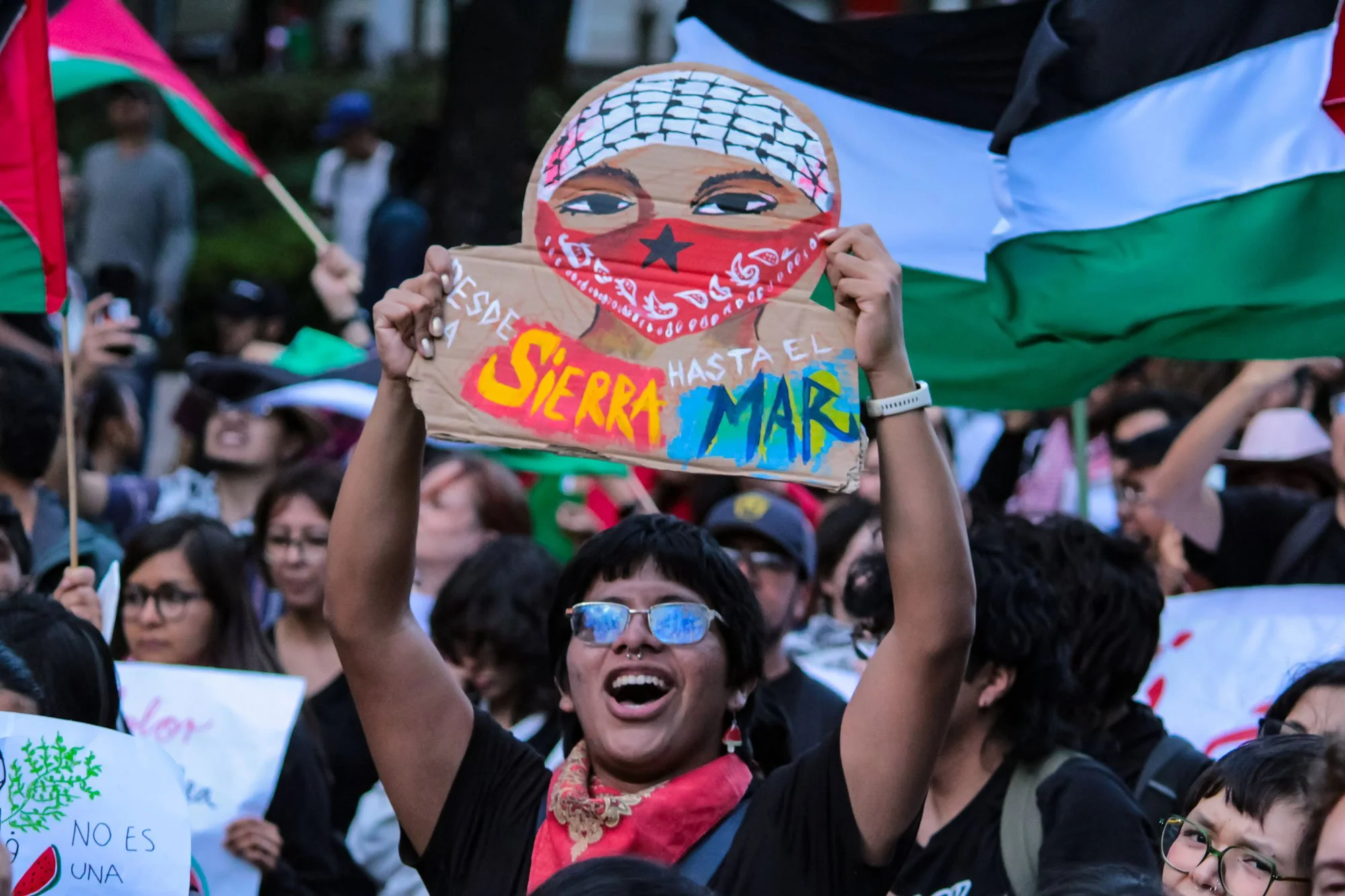
March in solidarity with Palestine two years after Israel's military escalation, October 7, 2025, Mexico City, Mexico. Photo © Elizabeth Sauno.
War on the people
Today, the so-called War on Drugs is once again being used as a pretext for the US military to attack Venezuelan workers who struggle to survive in very harsh conditions. Washington also uses this war to continue making threats against the governments of Colombia and Mexico.
Over 10 years ago, our editor Dawn Marie Paley published her book Drug War Capitalism, explaining how increased military action in the name of combating drug trafficking is, in reality, a war against the people, against women, and against shared and public goods. (In early 2026, Drug War Capitalism will be reissued by our dear friends at Bajo Tierra Ediciones.)
We are now seeing the same rhetoric and strategy reappear, intensified and more strident than ever. We need to nurture an anti-war position, an anti-militarism that refuses the same old excuses that hide the uncontrolled expansion of the most predatory and ultra-concentrated forms of capitalist expansion.
We cannot lose sight of the many expressions of dissent and daily resistance that challenge attempts at discipline in each country and also imperial aggression. We know that today, these words are necessary and strategic.
We've taken a stance that allows us to navigate the confusion of war and continue the fight against the mammoth military-industrial complex that seeks to dominate public imagination and saturate it with imminent threats and dangers. Today, more than ever, we must march to the beat of our own drum, and refuse to be swept away by imposed urgencies.
Taking a stand does not mean we understand every problem or are immediately aware of every nuance and distinction.
But it does mean we are steady in our determination to gather information and raise our voices: we reject war and those who profit from it. We condemn its atrocities and refuse to bow to the relentless logic of destruction and expansion of foreign interests.
At Ojalá, we are committed to continuing to cover acts of resistance to war and militarism that are emerging from a plurality of spaces. We’re interested in covering prisoner support initiatives, feminist movements that flourish against all forms of violence, land rights struggles, and the rejection of militarism—which we hope will continue to grow in the coming years—that has us tangled in its web of confusion, aggression, and fear.