

Transfeminist memory takes root in the streets of Mexico City
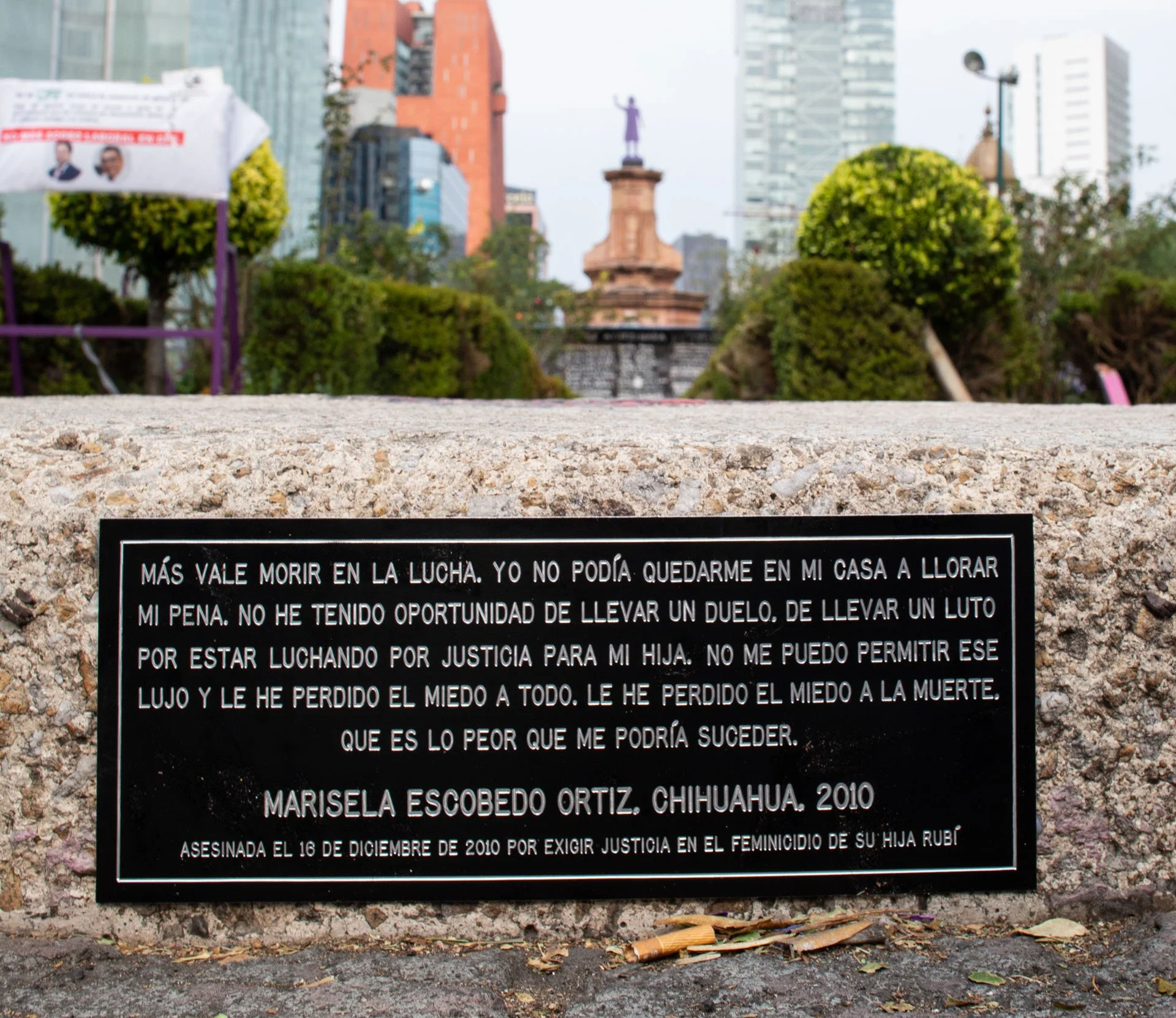
A plaque reads: “It’s better to die in the struggle. I couldn’t stay at home and cry in grief. I haven’t had the chance to grieve, to mourn, because I’ve been fighting for justice for my daughter. I can’t afford that luxury, and I’ve lost my fear of everything. I’ve lost my fear of death, which is the worst thing that could happen to me. Marisela Escobedo Ortiz, murdered on December 16, 2010, for demanding justice for the femicide of her daughter Rubí in Chihuahua, 2010.” This plaque was installed at the Glorieta de las Mujeres que Luchan in Mexico City and photographed on March 16, 2026. Photo © Natalí Olac Farfán.
Interview • Amalia De Montesinos • October 15, 2026 • Leer en castellano
Mexico City’s streets are filled with reminders of historical figures, events, and dates that tell History with a capital H. These signs and symbols are associated with the nation, the milestones that shaped modern Mexico, its symbols, and its official celebrations.
Those commemorated in them are mostly men: military leaders, liberal statesmen, presidents, and scholars. A new artistic project called Presentas has taken root on the same streets. Presentas is the feminine plural for ”present” or “here,” and through this project, artist Lorena Wolffer reminds us public space also belongs to women and gender dissidents. To all of us who have organized and left part of ourselves in the struggle to defend our lives.
Wolffer is a cultural worker born in Mexico City who specializes in social and transfeminist practice. She leads various educational and collective projects, including the Laboratoria de arte + género and DISIDENTA. Her work has been exhibited internationally and has won awards including the Hermila Galindo Medal (2019) and the Artraker Prize for Social Impact (2014).
Presentas consists of the installation of plaques, and sometimes posters, on which women and transfeminist collectives recount parts of their history, and which are affixed in public spaces across Mexico City. Wolffer meets with women and gender dissidents individually or in groups to reflect on their struggles, their achievements, and their challenges. The resulting commemorative markers, with quotes drawn from these stories, highlight the emotional and complex dimensions of fighting for their cause.
I first met Wolffer in 2019, when we stood alongside Araceli Osorio in her efforts to keep the memory of her daughter, Lesvy Berlín Rivera, alive. Lesvy was the victim of femicide on May 3, 2017, on the campus of National Autonomous University of Mexico in the city’s south.
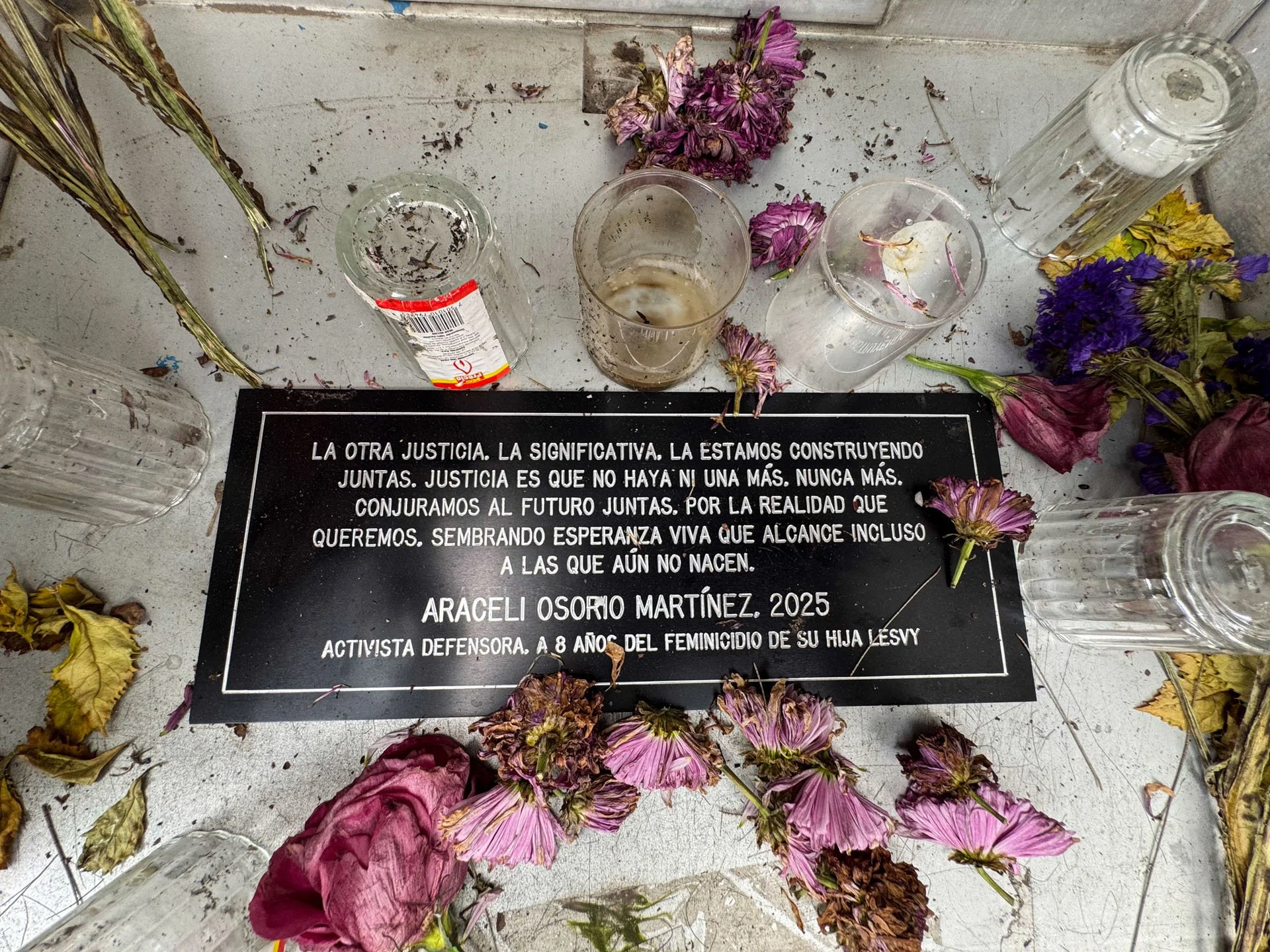
A plaque reads: “We are building another kind of justice, the one that really matters, together. Justice means no more [femicides], never again. We envision our future together, the reality we want, sowing living hope that can reach even those who have not yet been born. Araceli Osorio Martínez, activist and advocate, eight years after the femicide of her daughter Lesvy, 2025.” This plaque was installed on the UNAM’s main campus in Mexico City, and photographed on August 11, 2026 © Natalí Olac Farfán.
For the past year, we’ve been holding meetups with other compañeres in the struggle, once a month on Mondays, to discuss feminist political trust together.
On Wednesday, September 30, I sat down with Wolffer at her home to talk about Presentas, her commitment to honoring the struggles of organized women and transfeminist movements, what we have built, and the urgency of continuing to take to the streets—today more than ever.
Our conversation has been translated and edited for clarity and length.
Amalia De Montesinos Zapata: Why did you choose to use plaques, and what message does this approach communicate on the streets?
Lorena Wolffer: The idea came from the plaque honoring Marisela Escobedo outside the Government Palace in Chihuahua, the very place where she should have been supported and welcomed, but where she was murdered.
Plaques are a way to highlight our victories, name our own and acknowledge our processes. They offer alternative forms of reparations that call for honoring our compañeras, ourselves, and our work.
I began by acknowledging that we have been fighting against femicide for more than 30 years and recognizing the need to shift our focus to those who fight back.
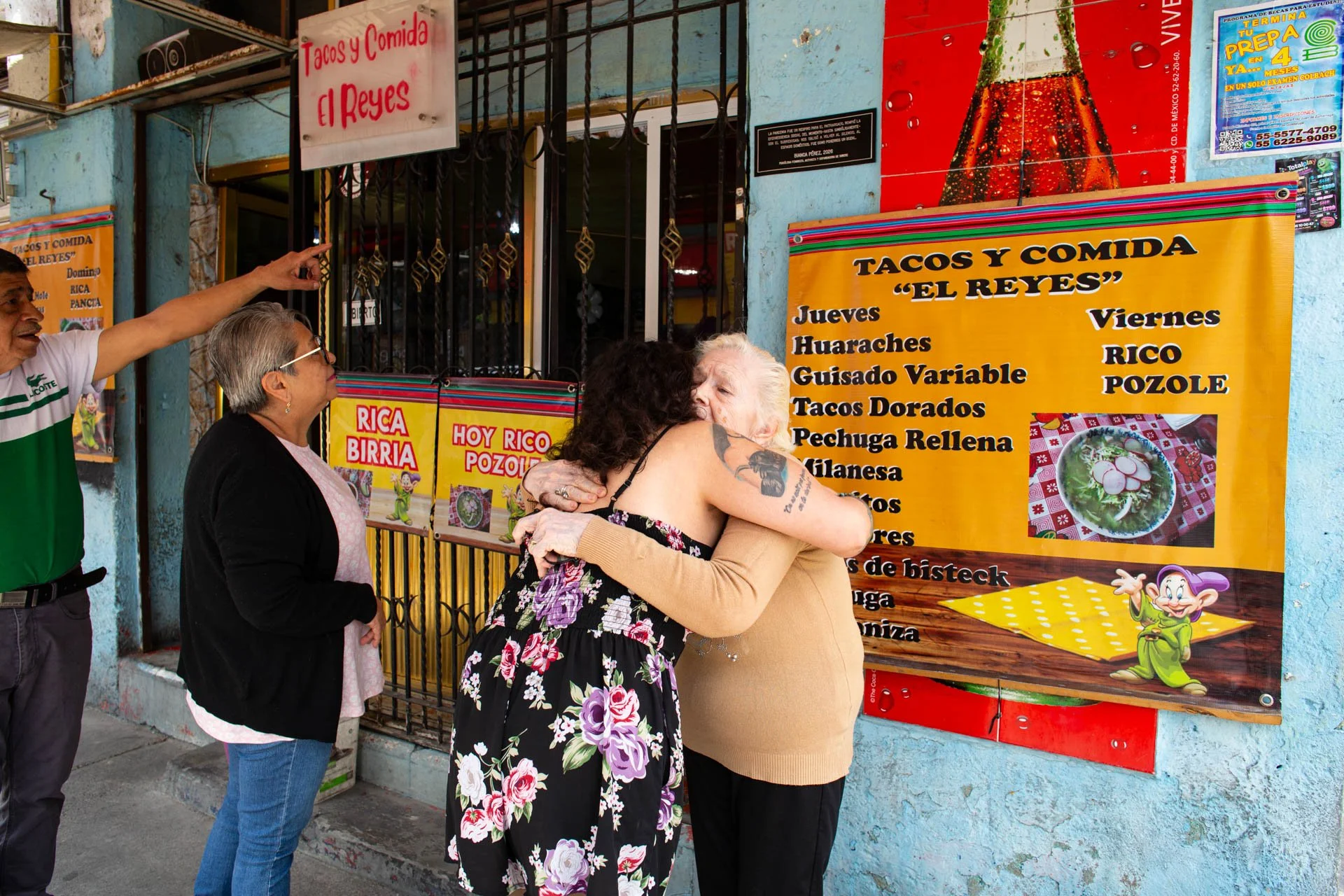
A plaque reads: “The pandemic was a breather for patriarchy; it shattered the social effervescence of the time, even symbolically through the face mask: it forced us back into silence, into the domestic sphere. It was like putting a muzzle on us. Bianca Pérez, feminist psychologist, activist, and co-founder of Sorece, 2026.” The plaque was installed at her grandmother’s restaurant in the Guerrero neighborhood, Mexico City, and the photo was taken on September 9, 2026. Photo © Natalí Olac Farfán.
I asked myself: What does it mean to sustain our struggles? How can we document and honor them? That’s where Presentas comes in, as an archive and a record of our daily battles, an exercise we rarely undertake but one that we need to strengthen and bring to the streets.
ADMZ: What was the process like with the compañeras who currently make up the Presentas archive in terms of sharing their stories and placing the plaques?
LW: Every process is different. The conversations with each of the women who participated in recounting their stories, which were then turned into plaques, took different paths. They all have different ways of expressing themselves, different languages, different perspectives on their own histories, and different political contexts. Above all, each woman’s work is unique and documented in its own way.
For each compañera, I had to recount her work in defense of life, affirming her history, her political stances, and her questions about the future. Part of my work is to create a space where these stories can exist in the public sphere. Listening to them was thrilling and transformative, I learned what happens outside, or behind, the public spaces where we usually meet.
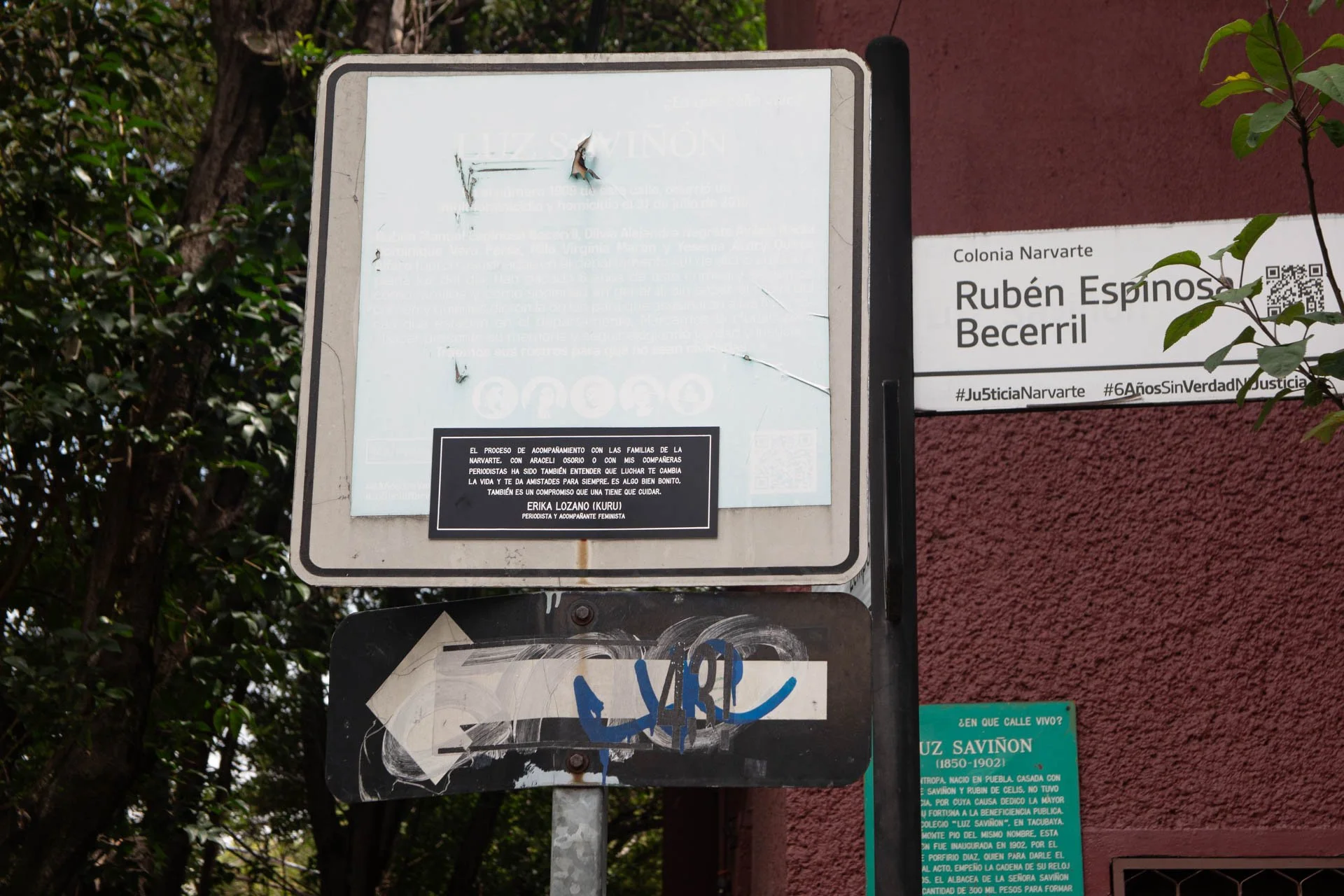
A plaque reads: “The process of supporting the Narvarte families, Araceli Osorio, or my fellow journalists, has also meant understanding that, yes, struggling changes your life and creates friendships that last forever. It’s something truly beautiful, and it’s a commitment one must nurture. Erika Lozano (Kuru), journalist and feminist advocate, 2026.” This plaque was installed at the Narvarte Memorial in Mexico City and photographed on August 31, 2026. Photo © Natalí Olac Farfán.
We installed the plaques in locations that hold material significance for each story. First, we selected quotes from their accounts of their journeys and statements; then we determined the ideal location for each plaque, which varies depending on their paths and the duration of their activism.
For example, Araceli Osorio and Las Siemprevivas placed their plaques in the phonebooth at the Jardín de la Memoria, reflecting a process of love and solidarity. Erika Lozano (Kuru), by placing her plaque at the Narvarte Memorial, evoked the struggle against being forgotten and the failure of justice. Bianca Pérez, outside Sorece, highlights what it takes to uphold this space.
It is incredibly powerful that the stories of women and collectives in struggle occupy and exist on the walls of this city. Although some have already been removed, their presence bears witness to women's diverse journeys in this city and how they have sustained the collective struggle.
ADMZ: What lessons have you taken from this process?
LW: Learning the stories of what it means to sustain each woman’s struggle has been fundamental. We never fully appreciate what our bodies and lives have sacrificed to sustain these struggles. Recognizing what photos don’t capture—what traditional representations leave out—was profoundly transformative for me. It also gave me the chance to acknowledge what being part of transfeminist struggles has meant for my body and my life.
It reaffirmed my conviction that art from a transfeminist perspective is vital. Not as an elitist space, but as a tool for recording, creating, documenting, and collective recognition—one that demonstrates how our stories have shaped the history of the city and the country.
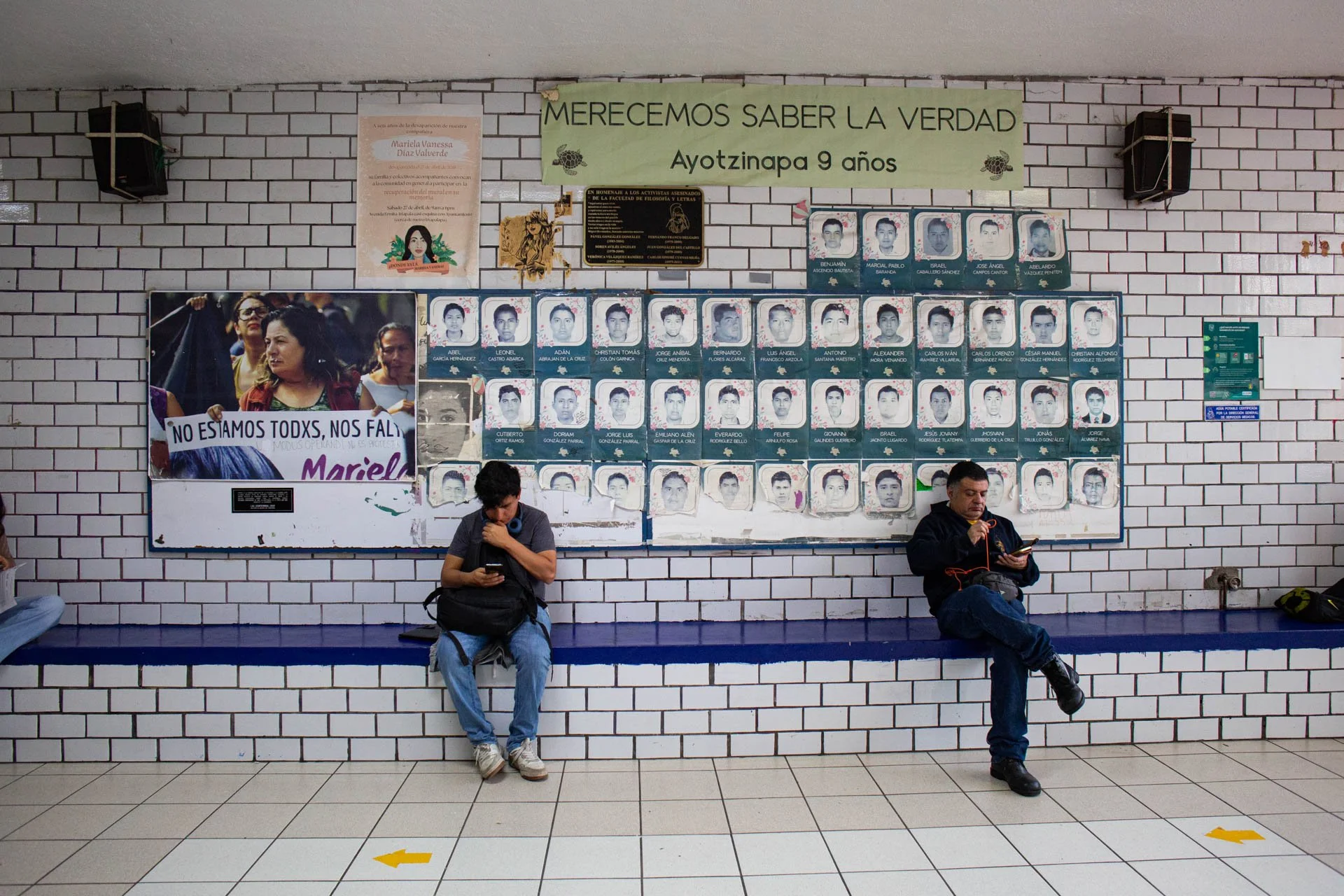
A plaque reads: “In the face of the immense cruelty of violence and war, the scope of which we often fail to grasp, we choose political action to rally together against fear and evil. Above all, we rally around hope, because we are convinced that hope is the only thing that restores our humanity. Las Siemprevivas, a collective that accompanies, 2026.” This plaque was installed on the main campus of the National Autonomous University of Mexico, Mexico City and photographed on August 11, 2026. Photo © Natalí Olac Farfán.
ADMZ: What’s next? What does the future hold for this project and for the broader transfeminist struggle?
LW: The Presentas project will continue. We plan to keep supporting women and collectives as they tell their stories, recognize themselves, and articulate the processes of organizing and sustaining feminist struggle in the city. This project is based in Mexico City because that is the territory from which I politicize and embody these artistic and organizational processes.
We must return to our own archives—to what we have built, what we have been able to bring to life, and what we must protect and place at the center. Our stories, our steps, and our marks are, continue to be, and always will be. They are not ephemeral like these plaques we have installed—they have left their mark on us, on others, and on the spaces we have inhabited.