
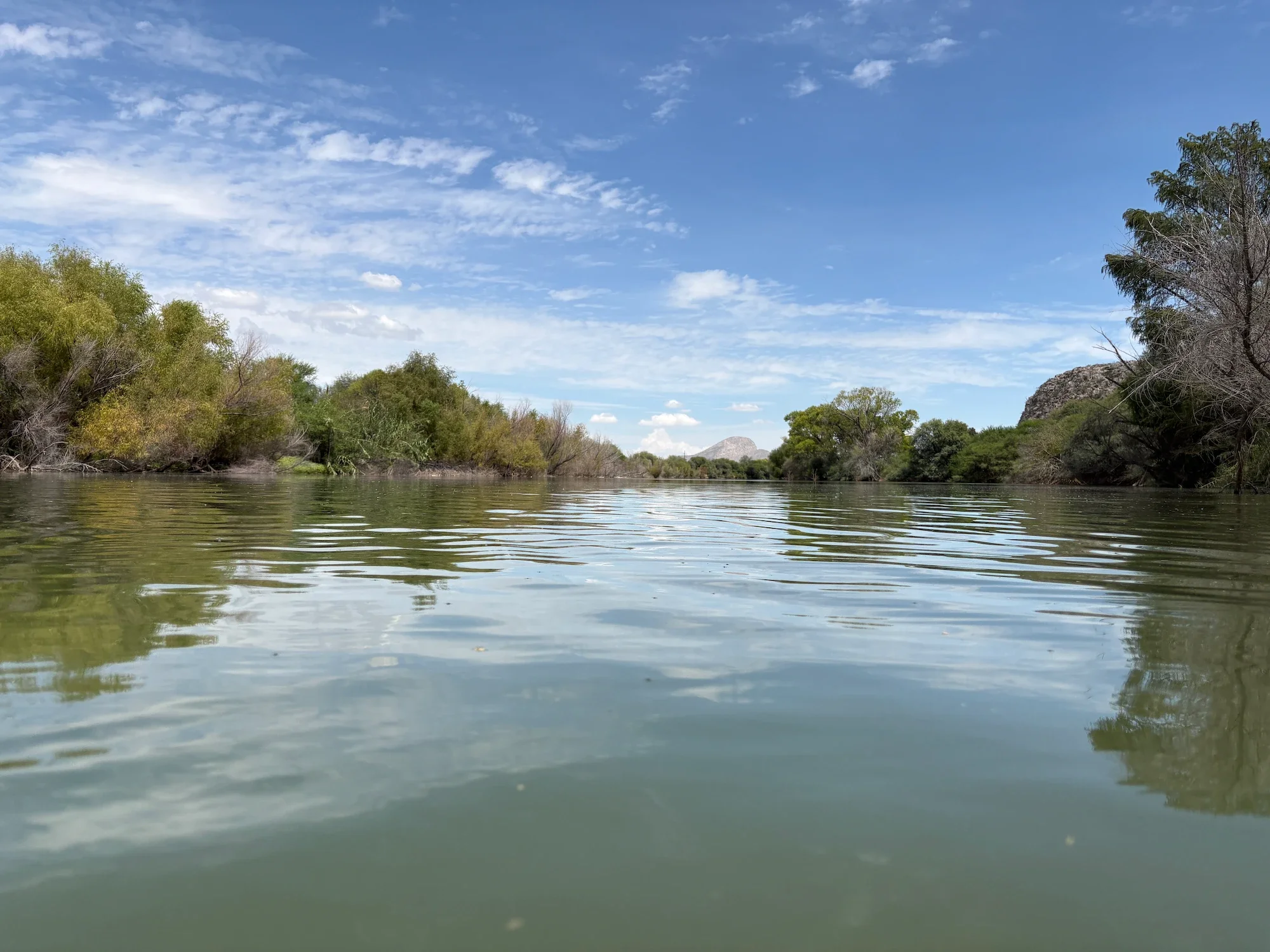
A view from the middle of the Nazas River in the Fernández Canyon in the municipality of Lerdo, Durango, on September 27, 2026 © Dawn Marie Paley.
Opinion • Dawn Marie Paley • November 6, 2026 • Leer en castellano
In late September I swam—for the first time—in the Nazas River. I waded in across its muddy bottom, its waters silty, slow-moving, and cool. I stood, immersed up to my shoulders, watching birds along the shore. In the deepest parts, I dove down, unable to touch the bottom. The Nazas moved imperceptibly, holding me nearly still. Here, in the Fernández Canyon, in northeast Mexico, the river’s wide expanse is edged by massive ahuehuete trees, ancestors and witnesses to so much change.
My friends brought their dog in, and we spent hours soaking and floating in the river. I was floored, having previously only experienced the absence of the Nazas in the dry riverbed that demarcates the Mexican states of Coahuila and Durango.
I recalled some of what I’d learned about the Nazas over the years I spent researching in the region: instead of flowing into the sea, it is an allogenic river that spilled over into a system of lakes and lagoons called the Mayrán. These seasonal floods once irrigated tens of thousands of square kilometers, fertilizing the soil with rich nutrients.
Control of the Nazas River, which takes its name from the fishing weirs used by semi-nomadic Indigenous groups who lived here for thousands of years, was contested by landed elites and defended by rural residents at every step of conquest and settlement.
The push to expand cotton growing and stabilize the river’s flow at the outset of the last Century was part of a broader effort to discipline and control local populations. Following sustained popular organizing seeking to consolidate the gains of the Mexican Revolution, land was collectivized throughout the region, which is known as La Laguna.
In 1936, construction started on the first major dam on the Nazas River. Today there are 12. In Mexico, the word for dam is presa. It also means prisoner. That is exactly what the Nazas became. The other major river in the region, called the Aguanaval, met a similar fate.
But my fieldwork wasn’t about rivers. Rather, I was accompanying family members who were searching for their loved ones in a context marred by thousands of disappearances, most of which took place following the renewal of the war on drugs in Mexico almost exactly 20 years ago.
And though academic specialization and silos encourage us to fragment struggles and geographies, I found the connections between the disappearance of the Nazas river and of local residents apparent and unavoidable.
It was in the bone-dry riverbed where the Nazas River once flowed that seven bodies were dumped in early 2008. What few could have imagined was that that brutal act would mark the beginning of an unprecedented process of killings and disappearances in the region, or that, nearly two decades later, searches for clandestine graves would be ongoing in the dry ejidal lands that had been irrigated by the Nazas for millennia.
On dry land, we search
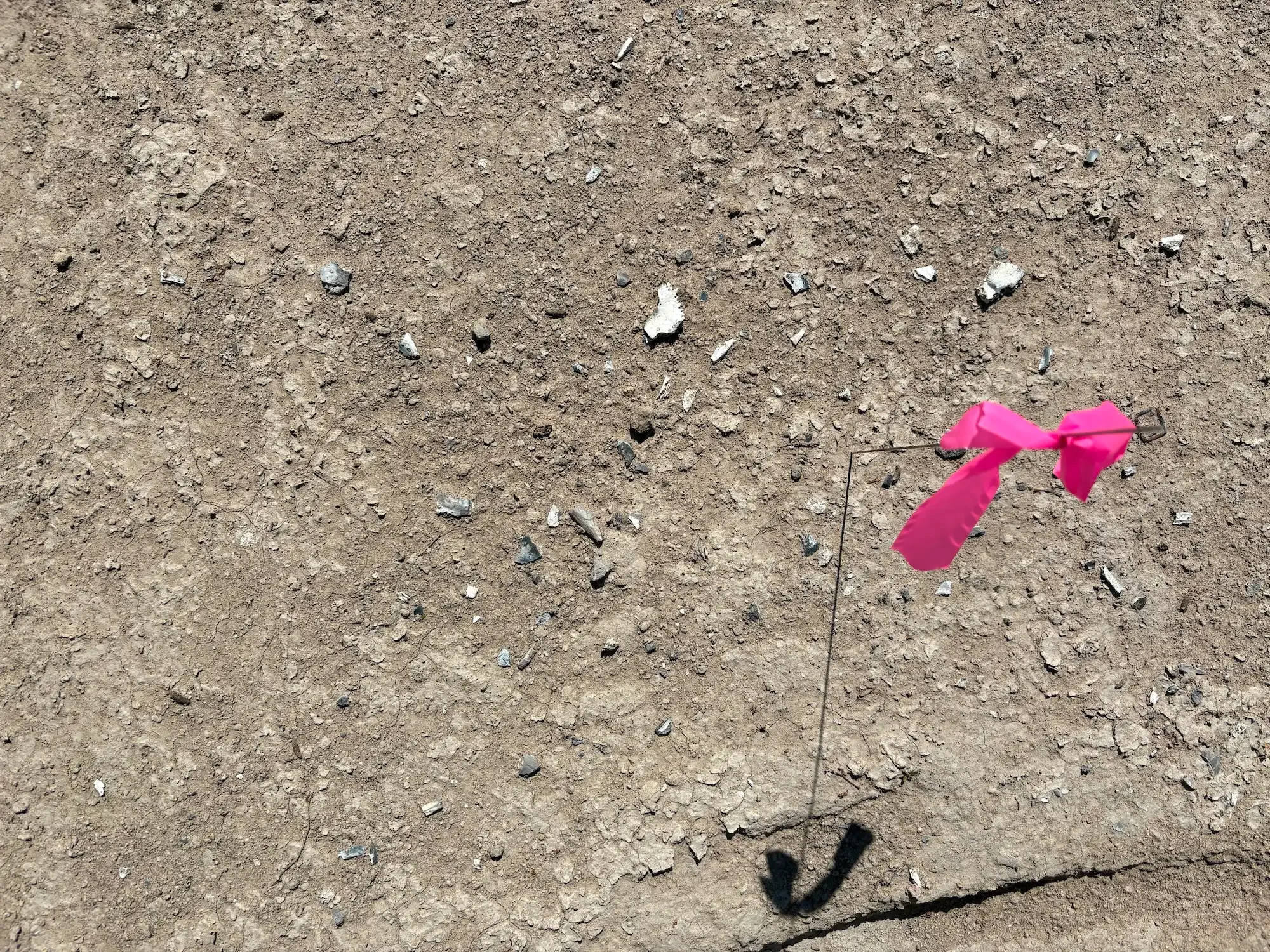
A small pink flag marks the presence of bone fragments in Ejido Salitrillo, in the municipality of Viesca, Coahuila, on September 30, 2026 © Dawn Marie Paley.
A few days after swimming in the Nazas, I stepped out of a truck that was part of a search led by Victims for our Rights in Action (Grupo VIDA). Before the dams, water would have filled lagoons here, in the municipality of Viesca. But that was generations ago.
The dusty grey earth underfoot was covered with burned bone fragments, apparent to the naked eye. Pink plastic tape on makeshift wire posts stood above the human remains encountered here in weeks prior.
I began walking with María del Rocío Hernández Romero, who has been with Grupo Vida for 11 years. She is searching for her brother Felipe Hernández Romero, who was disappeared April 2, 2011, in Torreón, the largest city in La Laguna.
“I’ve only got a high school education. And the authorities would come up with all kinds of things, at first they would make fun of us too, because we didn’t know how,” to search or how to follow up on the investigations, Hernández Romero told me.
As we walked, Hernández Romero scanned the ground and the low bushes nearby. She spotted some bone fragments, and what looked like part of a human skull, pulling fluorescent tape out of her bag of tools to mark the spot. It was one of ten potential graves the collective had found in Ejido Salitrillo in the month previous.
She said years of searching have made her aware of the extent to which the government acts like it is responding to disappearance, when in fact it’s doing the very least.
“Most of the equipment I’m carrying, I’ve bought myself,” she said. “Neither the state prosecutors nor their experts, not even the expert investigators, have the bare minimum supplies, so you as a family member have to provide them.”
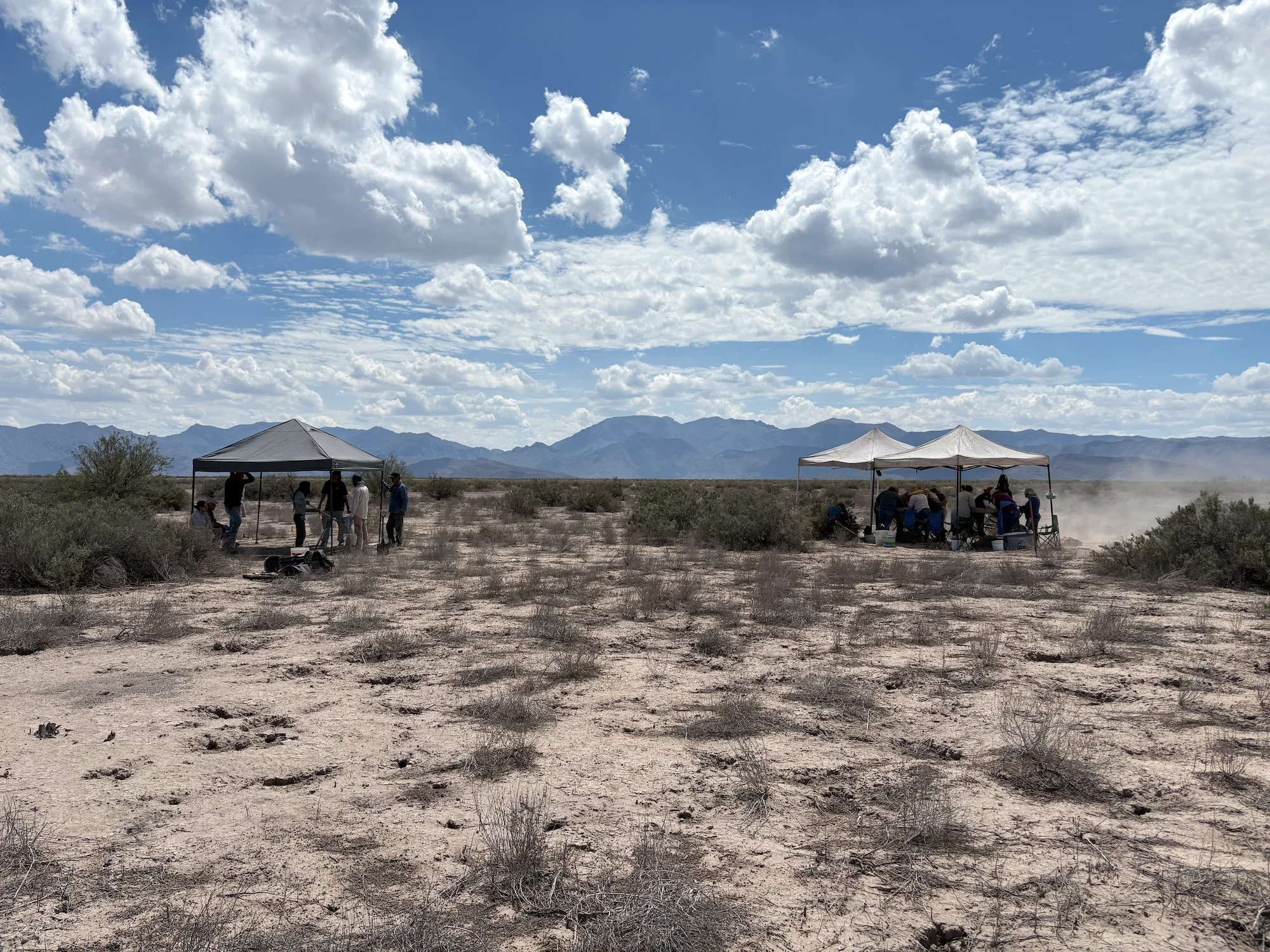
Searchers work under shade tents in Ejido Salitrillo, in the municipality of Viesca, Coahuila, on September 30, 2026 © Dawn Marie Paley.
Closer to where the trucks were parked, three white shade tents were erected. Under one, a group of mostly men was gently digging and sweeping earth mixed with bone fragments and putting them in buckets. A young man, barely out of high school, was ferrying the buckets to the other tents, under which a group of mostly women was using sieves and filters to separate bone fragments from the dusty earth.
Huddled in the shade under one of the tents, I spoke with Oscar Sánchez Viesca, whose daughter Silvia Stefania “Fanny” Sánchez Viesca de Ortiz was disappeared in Torreón on November 5, 2004, when she was 16 years old. The scope of their struggle is long: yesterday, the family marked 22 years without Fanny with a search, a press conference and a Catholic mass in Torreón to pray for her return. Sánchez Viesca founded Grupo Vida with his wife Silvia Ortíz, in 2014, a decade after Fanny was disappeared. The group started land searches the following year.
“In January we marked 11 years of working in clandestine graves in the entire Comarca Lagunera, mostly in Coahuila,” Sánchez Viesca said, an olive green keffiyah draped over his shoulders. His great-grandfather, Andrés Saturnino Viesca, was governor of Coahuila state and repelled French invaders seeking to enter the region in 1866, giving his name to the land upon which we stood.
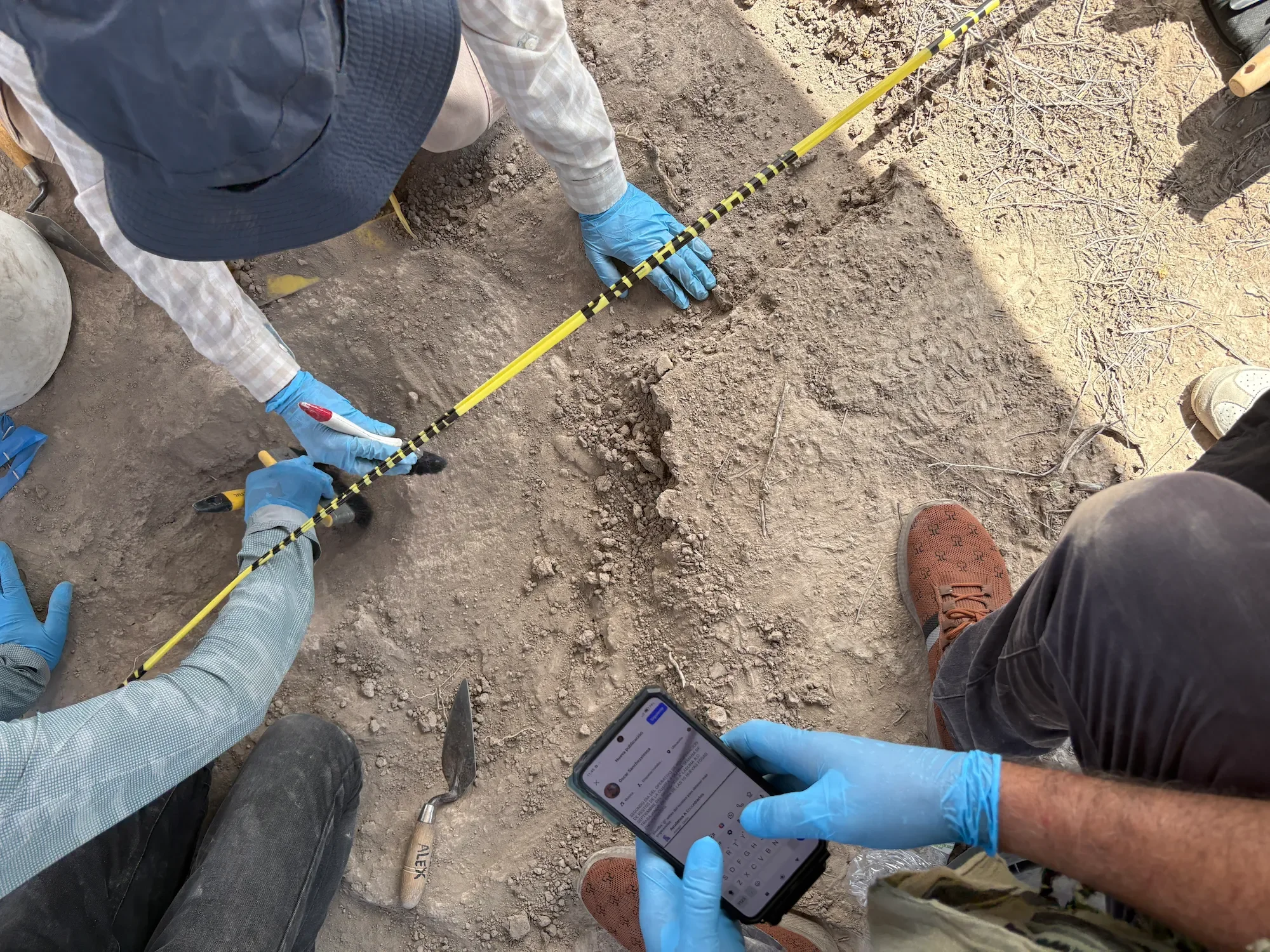
Searchers lift bones from the ground under a shade tent in Ejido Salitrillo, in the municipality of Viesca, Coahuila, on September 30, 2026 © Dawn Marie Paley.
The tiny neon flags marking the exhumation in front of us flapped as the wind came up. Over 11 years, Grupo Vida has discovered 29 places where there are clandestine mass graves in the region, of which 10 are considered extermination sites. Among the most notorious is Patrocinio, which is among the largest known extermination sites in México.
In Coahuila, land searches by collectives and the exhumations of common graves carried out by authorities have allowed for the identification of 182 victims of disappearance through DNA matching.
Twenty five of those matches, which allow family members to be reunited with and mourn their disappeared loved one, were made possible through Grupo Vida’s work. One of the matches made from remains found in Patrocinio was the son of a member of the collective.
As one of the youngest searchers carried buckets of dirt and bones to the other tent, Sánchez Viesca shook his head. “This is never going to end,” he said.
In this water-starved plain, the drug war isn’t an abstract concept or a distant wrong. It’s the motor of the violence that took thousands from their families.
Refusing the erosion of hope and memory
Ten years ago, when I began going on searches with Grupo VIDA, there were usually a couple of truckloads of soldiers in tow. When I went with them in September, there were just two state police toting long guns and walkie-talkies.
The killing fields that Grupo Vida is combing today date from between 2008 and 2016, when the now-extinct paramilitary group known as Los Zetas expanded throughout Coahuila and much of Mexico’s northeast. Initially composed of former elite special forces, the presence of Los Zetas was sanctioned by brothers Humberto and Rubén Moreira, who ran the state on behalf of the Institutional Revolutionary Party (PRI) between 2006 and 2017.
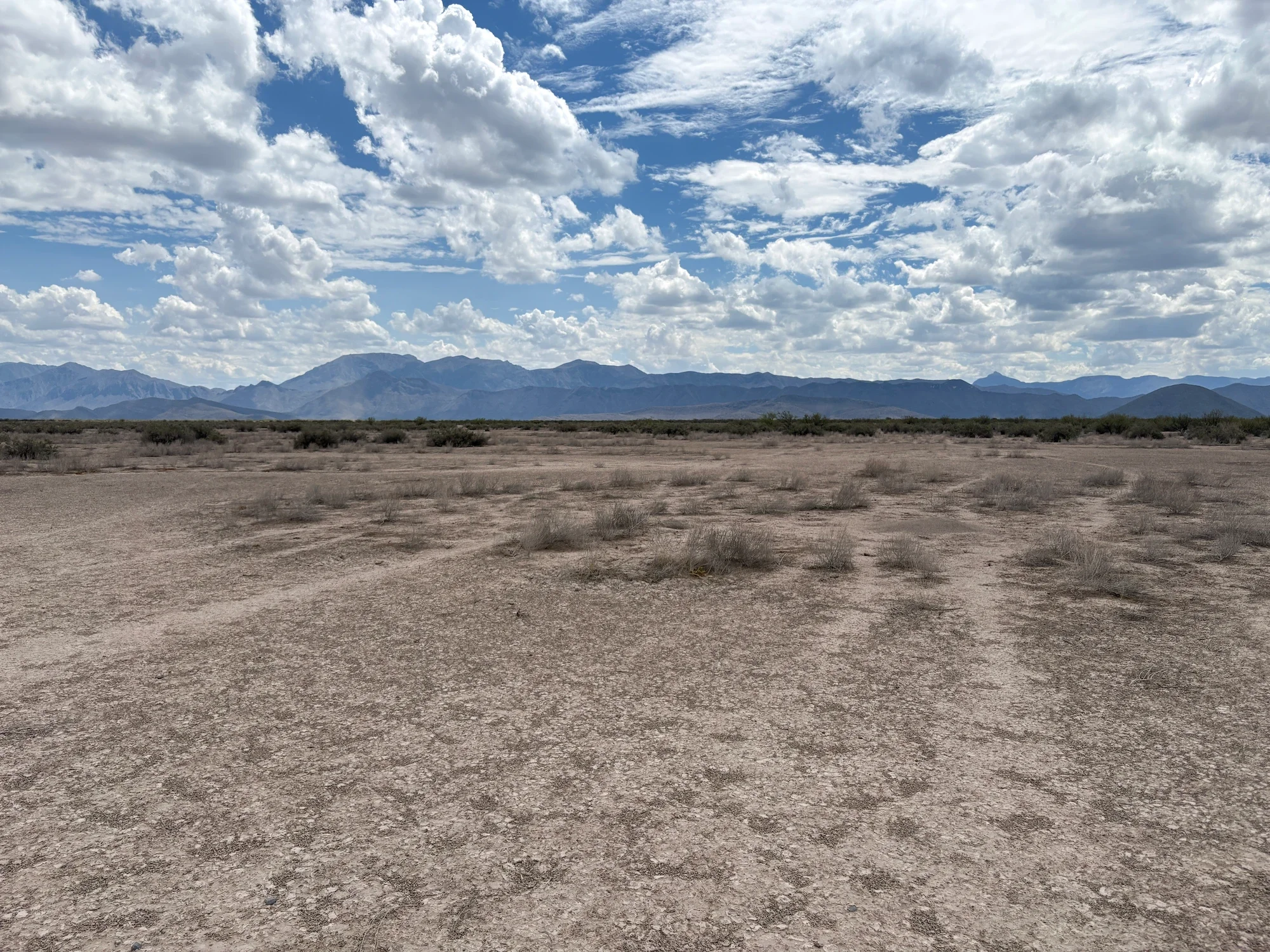
Looking toward the mountains from Ejido Salitrillo, in the municipality of Viesca, Coahuila, on September 30, 2026 © Dawn Marie Paley.
Multiple sources I spoke with in September suggested there is no longer cartel activity in Coahuila. One told me to look up a since-deleted article from El Universal that describes why: trafficking in Coahuila has been brought under the control of elite state police forces. Today, Coahuila is the last bastion of uninterrupted rule by the PRI.
But a drop in violence doesn’t mean an end to disappearance.
Hernández Romero told me that last year, her cousin’s daughter was disappeared after traveling to Jalisco state on the promise of employment as a security guard. When she was later found alive by police—handcuffed and showing signs of abuse—she was incarcerated in Zacatecas state, where she remains.
On September 2, 2026, Eduardo Alejandro Rodríguez was disappeared, his last known whereabouts were in Torreón. His father and his sister have since connected with Grupo Vida. Without grassroots support and collective organizing, navigating bureaucracy and official disinterest from within a sea of grief threatened to drown them.
Land defense, in spite of it all
I want to end this story where I started it: immersed in the current of the last living section of the Nazas river. This area, known as the Fernández Canyon, is in the municipality of Lerdo, in Durango state, and is made up of over 16,000 hectares of wild areas along both sides of the river. It has been federally protected under the International Convention on Wetlands since 2008.
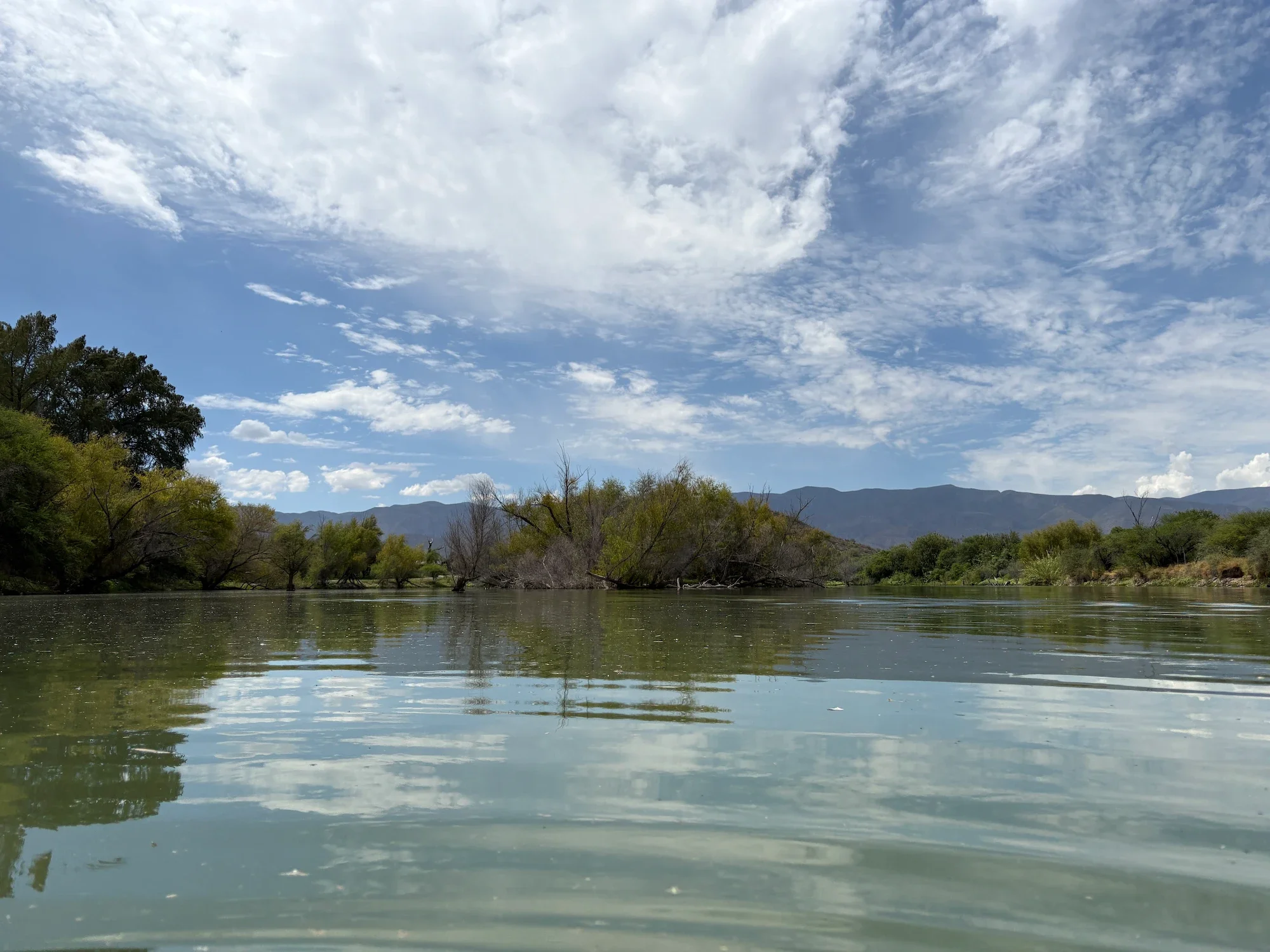
A view from the middle of the Nazas River in the Fernández Canyon in the municipality of Lerdo, Durango, on September 27, 2026 © Dawn Marie Paley.
The evening before we swam in the Nazas, I learned that a massive new ammonium plant is slated to be built adjacent to the Fernández Canyon. Mexican company Fermachem is planning a $1.6 billion investment and claims it will produce a million tons of granulated urea for fertilizer every year.
Details on the proposal are sparse. The company highlights rail connectivity to ports and the Mexican and US markets, as well as the availability of natural gas, as key reasons to set up in the area. It can’t hurt that the government of Durango appears to have given 150 hectares to Fermachem.
The stakes for those who protest are high: 28 people are currently imprisoned in Durango after supporting a protest camp against a DuPont Chemicals-owned cyanide plant planned in the nearby municipality of Gómez Palacio.
Even so, a group called La Laguna Sin Amoniaco began to mobilize immediately, already having gathered over 180,000 signatures on a petition to stop the build. I spoke to a member of La Laguna Sin Amoniaco in October, who told me irregularities in the Environmental Impact Assessment abound, and that locals weren’t consulted.
Instead, they learned of the project in June after reading media reports about a closed event to kick off construction. The group has branded their resistance to the plant “Aquí Tampoco (Not Here Either),” a reference to the movement against an ammonium plant in Topolobampo, Sinaloa, known as Aquí NO (Not Here).
“We chose ‘Not here either’ because the struggles are very similar, so are the quantities of ammonium they want to produce,” the representative of Laguna Without Ammonia told me. “Fernandez Canyon is not a sacrifice zone, and we won’t allow it to become one.”
Sapioriz, where the plant would be based, is perhaps best known for the Cardencheros de Sapioriz, whose song comes out of the efforts their ancestors made to keep a tradition of haunting acapella storytelling alive. One listen makes clear their roots to the territory run no less deep than they do in Mexico’s south.
I asked the representative of Laguna Sin Amoniaco what the living section of the Nazas River means to them. “The hope that we can continue living in this region,” they said.