
Terricide and the struggles ahead
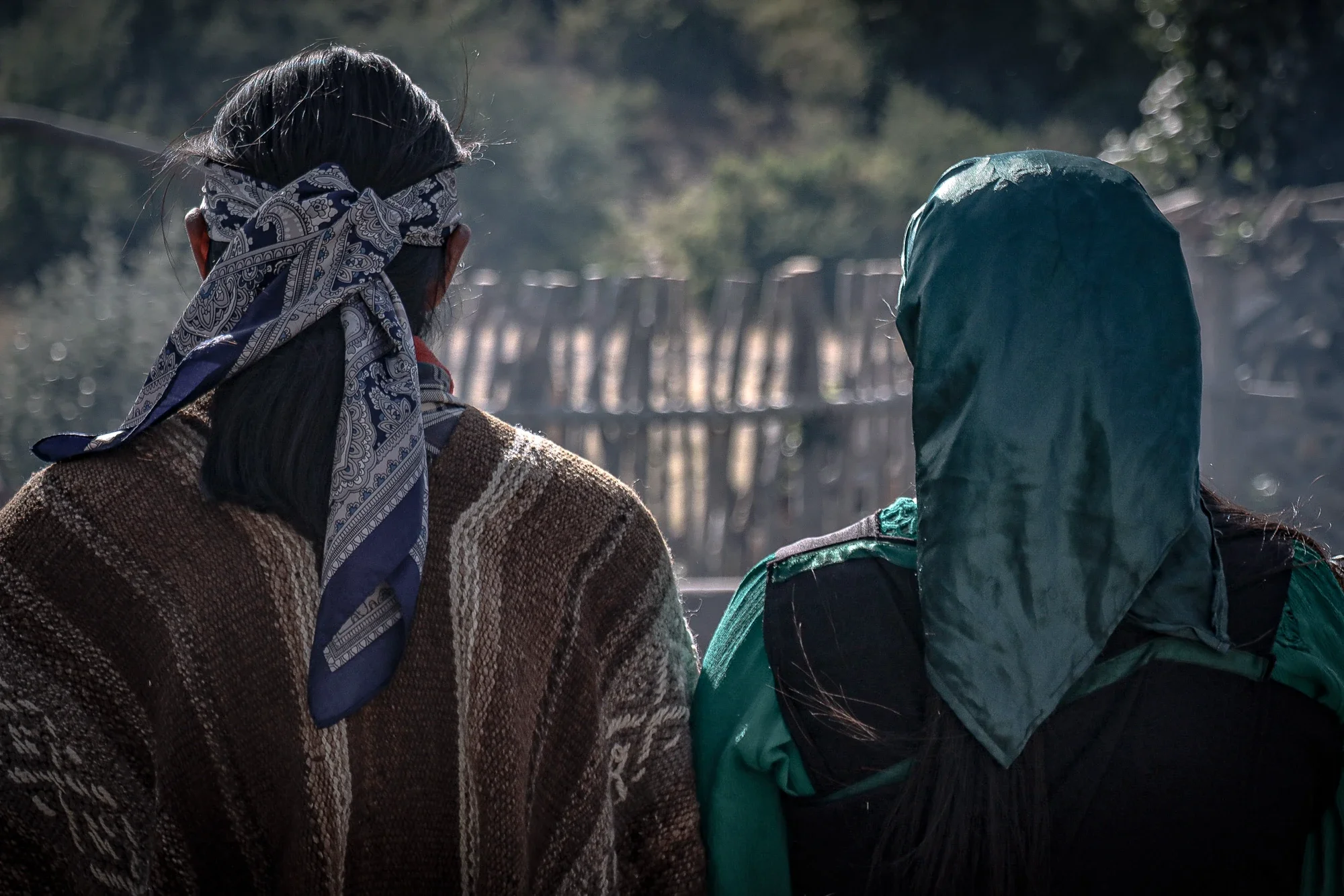
Indigenous Mapuche people during a ‘trawn’ (gathering) at the Pillañ Mawiza lof, Chubut, Argentina. February 16, 2025. Photo © Lizbeth Hernández.
Book excerpt • Moira Millán • April 24, 2026 • Leer en castellano
Moira Millán, a Mapuche woman and defender of Patagonian territory, guardian of life and of the Mapu, was in Mexico in March to present her book Terricidio: Ancestral Wisdom for an Alternative World.
Published by Bajo Tierra Ediciones, the book traces the threads of Millán’s life as she recounts how she initially “did not know her roots,” having been born into the second-class citizenship the Argentine state began forcing on Indigenous peoples after the so-called “Conquest of the Desert”—a genocidal military campaign of territorial occupation that took place in the last third of the 19th century.
After reclaiming land in an area southeast of Esquel, in the province of Chubut, Millán began working with other inhabitants of the region. Their aim was to transform those lands into a living territory and to promote the revival and flourishing of Mapuche ways of life, resistance, and production.
Although telling a first-person story about a life of struggle and effort is valuable in and of itself, Terricidio is not strictly testimonial. It is also a theoretical analysis of colonial dispossession and death, and of the work of those who refuse to accept the fate imposed upon them from above.
Millán’s theoretical prowess is evident in the excerpt we’ve selected below, in which she reflects on the violence of the colonial gender binary and shares alternative ways of thinking about gender dissidence, or what she calls gender diversity.
Her visit to Mexico, as well as the publication of her book, was organized through a collaborative effort involving various independent bookstores and social centers, public universities, and grassroots organizations.
One of the most memorable events was the dialogue between Millán and Mixe linguist Yásnaya Aguilar at the National Autonomous University of Mexico. We highly recommend listening to this conversation, which offers rich insights into the sharp thinking of two Indigenous women from different parts of the continent —Eds.
Relmü, Rainbow
They took away Sweetie, the sweetest travesti who grew up among the Chaguancos, she is Indigenous. She used to play on the hill by the river, building worlds from fallen branches, painting colors like a rainbow, weaving stories of thousands of butterflies and dreams of freedom. That night, six sentinels took her, stripped her of her clothes. Six, nine, twelve, nine hundred and seventy-six passed, and the pain in her body etched sensations into her memory, never to be forgotten.
—Pía Ceballos, trans sister, Guaraní Aba, activist, and poet
Indigenous peoples who existed prior to the emergence of Creole nation-states have always recognized two-spirit people—those who did not fit into binary categories—and most had a word for them. In the Mapuche world, they were called weye, meaning someone who did not conform to male-female roles.
These peoples are beginning to recover the memory of those who have been erased by the church, education, and other instruments that promote collective amnesia so that we do not remember the importance and naturalness with which we once lived and wove community.
History is often a moral reading of the past. Shielding truth from the constant manipulation of lies by the state and the system would be a major help in restoring a sacred bond—our own—with memory and with the daughters, sons, and children of the diverse communities of our peoples.
All of them played different roles in their communities, at times they were channels for healing powers that could ward off illness.
We Indigenous women and people of diverse genders and sexualities, who are committed to the Good Life, are aware that our daughters, sons, and children suffer terrible nightmares from the unraveling of community fabric due to gender or sexual identity. This has forced them to leave their territory, distance themselves from their identity, and assume a hybrid, borrowed, and alien identity in order to survive in this binaried, earth-destroying society.
Far from offering a solution, wingka [white] society—from which we have inherited lesbophobia, homophobia, and transphobia—expels them into lethal marginality, condemning them to death. With every travesticide, every murder, genocide is being committed. Our Indigenous sisters and brothers, and siblings of diverse experiences find no refuge in the very place that should embrace them: their community.
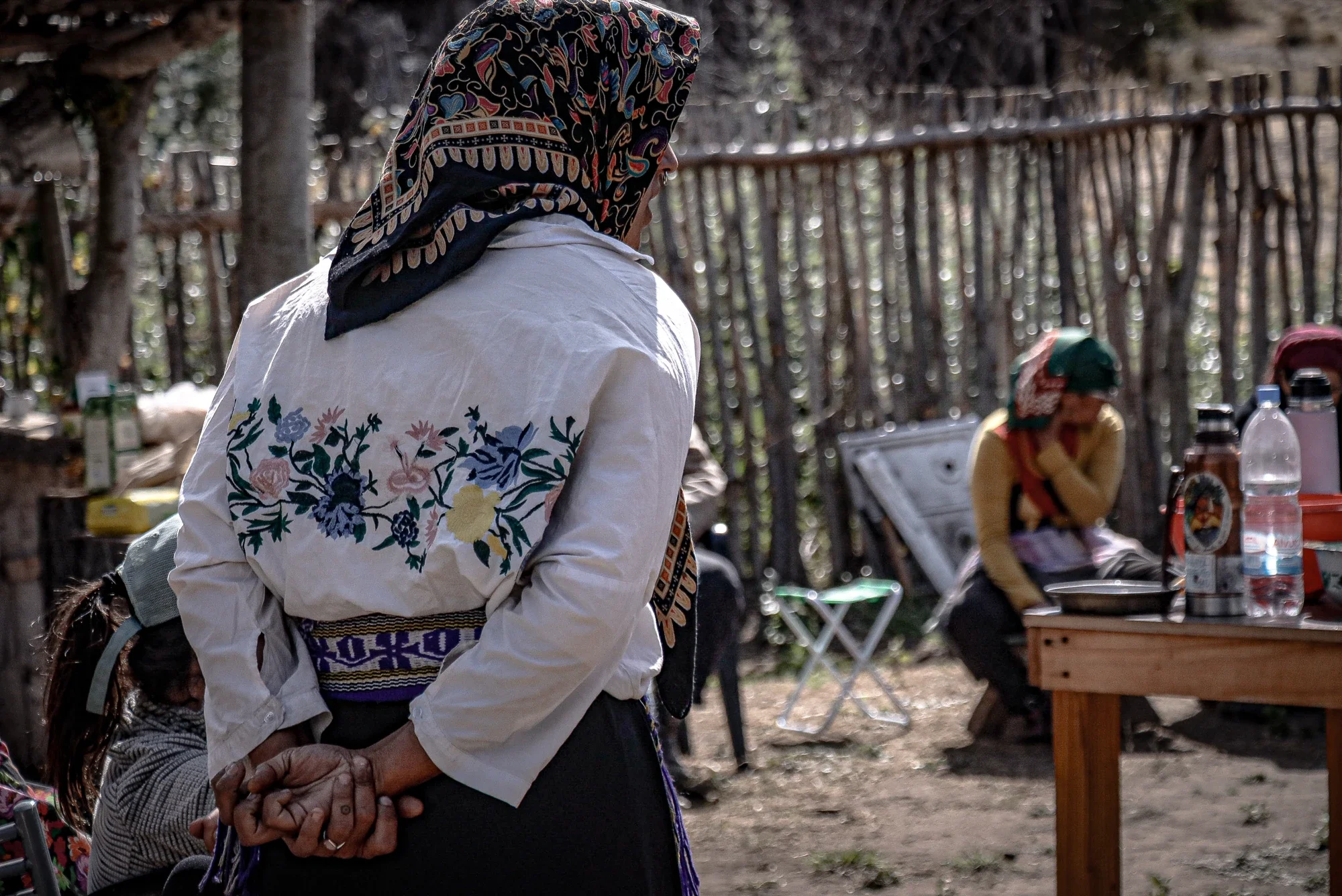
Listening during a trawn (encounter) in the Pillañ Mawiza lof (territory), Chubut, Argentina, February 16, 2025. Photo @ Lizbeth Hernández.
Why do I speak of diversity and not of dissent?
In our philosophy, worldview, and spirituality, there are powerful forces that dwell in the rivers, the mountains, the jungle, and the lakes. Those powers also, at times, dwell within people, that is why we have diverse identities. In addition, every one of us from ancestral Indigenous nations are dissidents against imposed cultural hegemony.
We do not construct our identity based on dissent from the system; rather, we are defined by our ancestral and earthbound identity. It is the system’s denial of our identity that leads us to reaffirm diversity against the imposition of monocultural and biologistic hegemony.
Our sisters, brothers, and siblings of diverse backgrounds have always been here; their powers and spirits complemented ours; this is not a trend, nor is it colonialism, deviation, demonization, or madness.
No mother enjoys the grief and contempt her children are subject to, so why don’t we oppose this abuse?
The mere contemplation of these injustices remains a heavy burden on our journey toward freedom and equity. Diversities do not rise out of suffering and humiliation on their own; they have been awakened by the Earth. It is, without a doubt, a seismic awakening.
The Earth speaks to us through the bodies inhabited by diverse spirits. They are bearers of a fragile and wonderful spiritual ecosystem, who come to fulfill a purpose that transcends us, and that we cannot explain.
It is also true that, in response to demands from this sector, the system turns them into a dumping ground for precarious social policies and programs, confining them and even convincing them that their struggle be restricted to particular civil and sexual rights.
What we must make clear is that the annihilation of our diversities is another part of the Terricide that seeks to disintegrate bodies in order to disintegrate peoples. We are all the colors of the relmü, the rainbow, each color represents a vital strength.
Life, in all its diversity, germinates in the territories, alongside memory and dignity. Our daughters, sons, and children are embarking on the return home, to the territory, to identity. We welcome them because we love them, and need them to prevail.