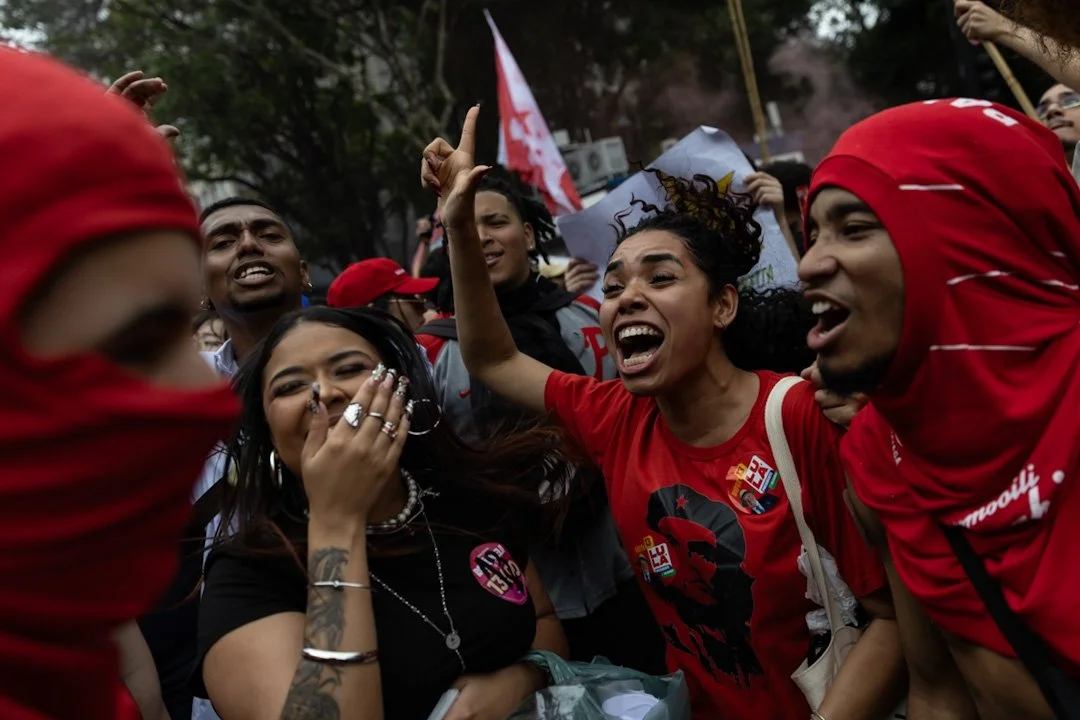
A group of young people participate in the March for Democracy on Paulista Avenue in São Paulo. Organized by grassroots groups and fan communities, the October 11 demonstration brought energy from social media to the street in support of Luiz Inácio Lula da Silva’s presidential candidacy in the runoff election. October 11, 2026. Photo © Bia Borges.
Reportage • Bia Borges • October 23, 2026 • Leer en castellano
The battle over Brazil’s future is spilling onto the streets of São Paulo, Latin America’s largest metropolis, where the concentration of wealth creates and perpetuates deep inequalities.
On October 4, Senator Flávio Bolsonaro, son of former President Jair Bolsonaro, won the presidential election against President Luiz Inácio Lula da Silva by just 1.87 percent (2.2 million votes), with a record level of abstention.
Ahead of the runoff election scheduled for this Sunday, rallies in support of both candidates were held on Paulista Avenue, the city’s main thoroughfare, which became the stage for the two competing political agendas.
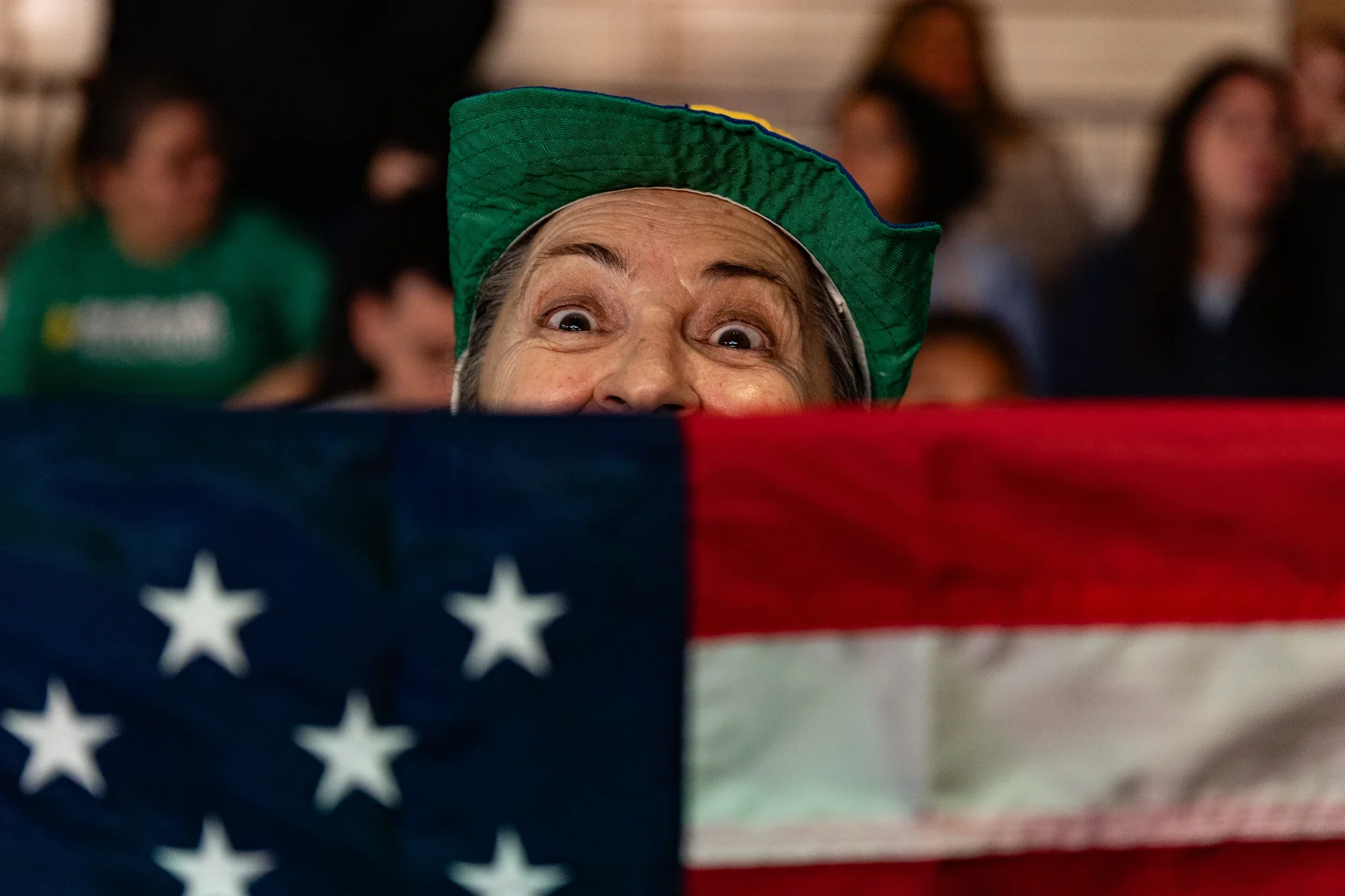
A Bolsonaro supporter peeks out from behind a U.S. flag during the Liberal Party convention when Senator Flávio Bolsonaro’s presidential candidacy was officially launched on July 25. Photo © Bia Borges.
Following the first round of elections, fandoms—communities of young people formed around pop culture artists—stepped up and began organizing political mobilizations on digital platforms.
Fandoms bring together fans of artists like Beyoncé, Anitta, and K-pop groups. Well-versed in coordinating online campaigns, producing content, and mobilizing communities on the internet, the election cycle became a new realm for them to take action.
Their novelty lay not only in their ability to mobilize people. There was also the autonomy of a generation that decided to put its own organizational structures at the service of a political cause, without guidance from political parties.
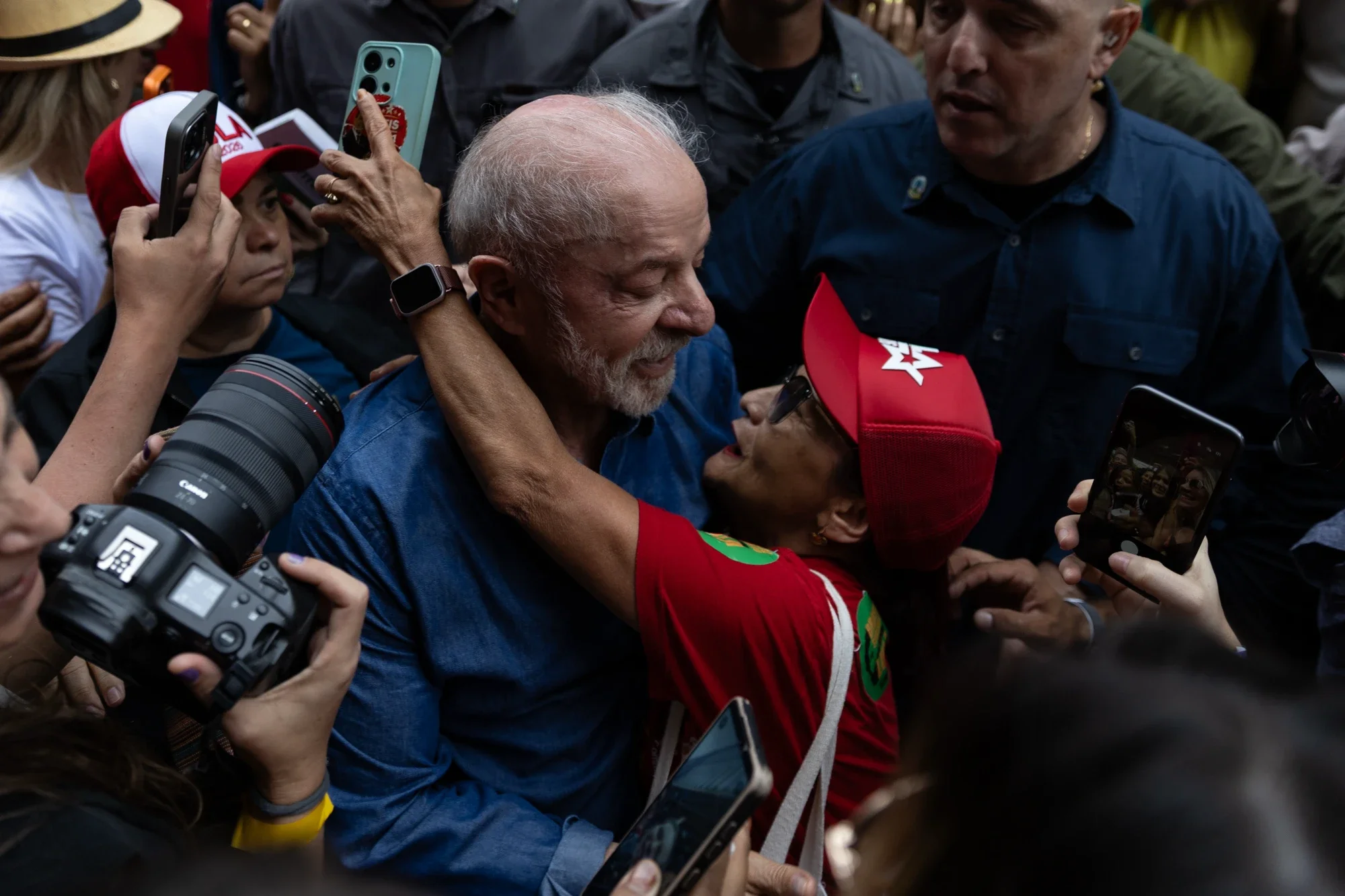
Luiz Inácio Lula da Silva embraces a supporter during the March for Democracy on Paulista Avenue in São Paulo on October 11, 2026 Photo © Bia Borges.
The emergence of fandoms highlighted a paradox: while sectors of the traditional left struggled to regain a daily presence on the streets, communities born out of music demonstrated the ability to turn virtual connections into collective action.
Breaking out of the digital bubble, however, also signified breaking with the limits imposed by the platforms themselves.
An investigation published by Folha de São Paulo revealed internal messages from Meta employees acknowledging restrictions on Instagram that harmed Lula’s campaign, while Bolsonaro’s profile received an undue number of algorithmic recommendations.
On October 9, Lula’s account was unable to promote certain posts for nearly 24 hours. His campaign estimated that 1.3 million people stopped receiving those ads.
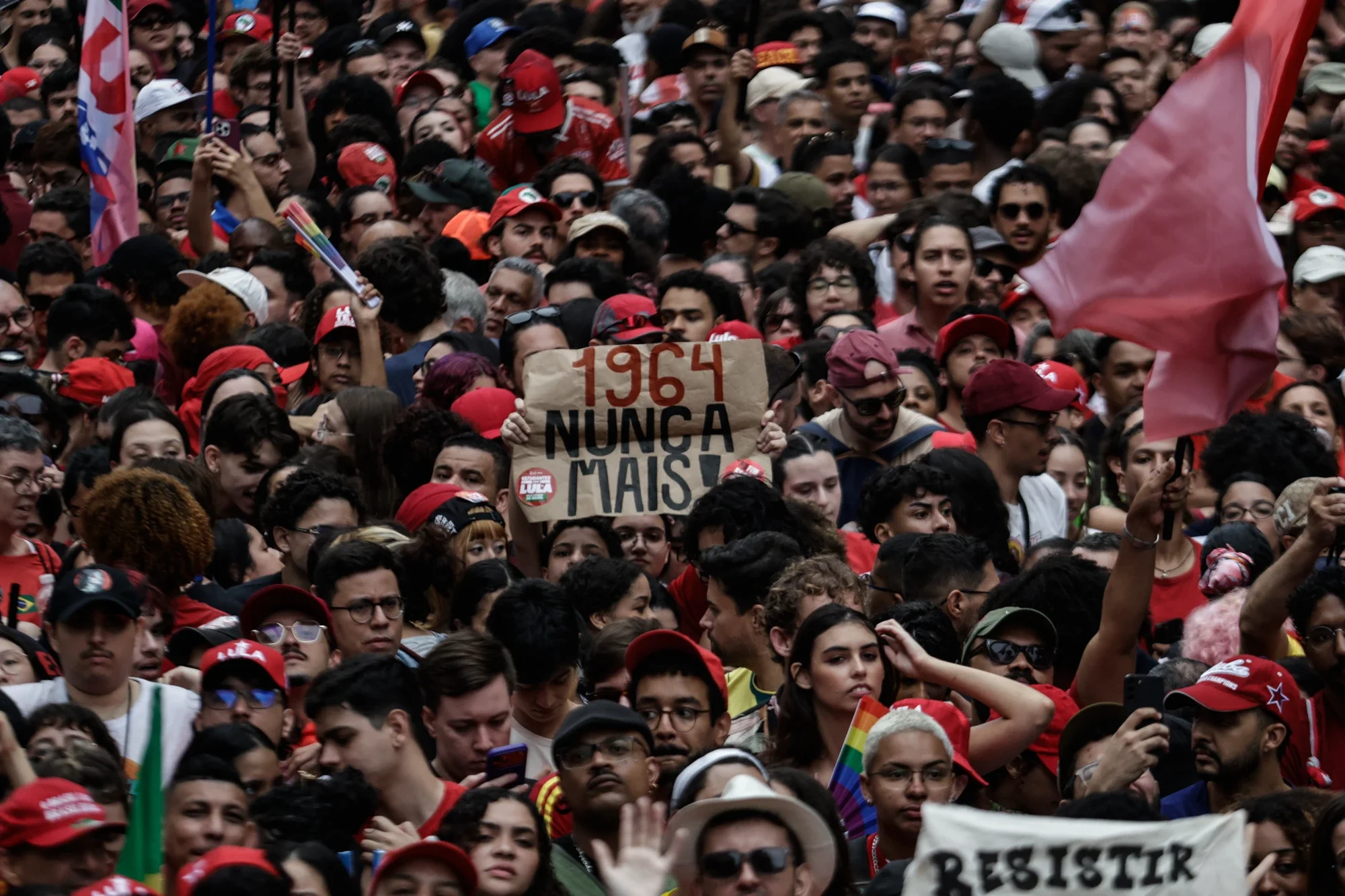
A crowd wearing red clothing and accessories fills downtown Paulista Avenue in São Paulo while displaying a banner with slogans such as “1964 Never Again,” in reference to the coup that led to Brazil’s military dictatorship. The demonstration, held on October 11 by the March for Democracy and fandoms, linked support for Lula to the historical legacy of the struggle for rights and the preservation of the constitutional order. October 11, 2026. Photo © Bia Borges.
The company attributed the incidents to technical glitches and denied any intention to favor a particular candidate. However, the documented irregularities led the Superior Electoral Court to demand equal treatment for all candidates. The case exposed the extent to which the flow of public debate depends on decisions made by private corporations.
On October 11, the March for Democracy brought that call to life on Paulista Avenue. Organizers estimated attendance at approximately one million people. Young people mingled with activists, workers, and grassroots organizations.
A week later, on October 18, the same avenue hosted the Bloco do 22 (Block of 22), the name Bolsonaro’s campaign gave to its traveling campaign rallies across Brazil. The format combines political speeches, music, and trios elétricos, large trucks equipped with sound systems commonly used at Brazilian street festivals.
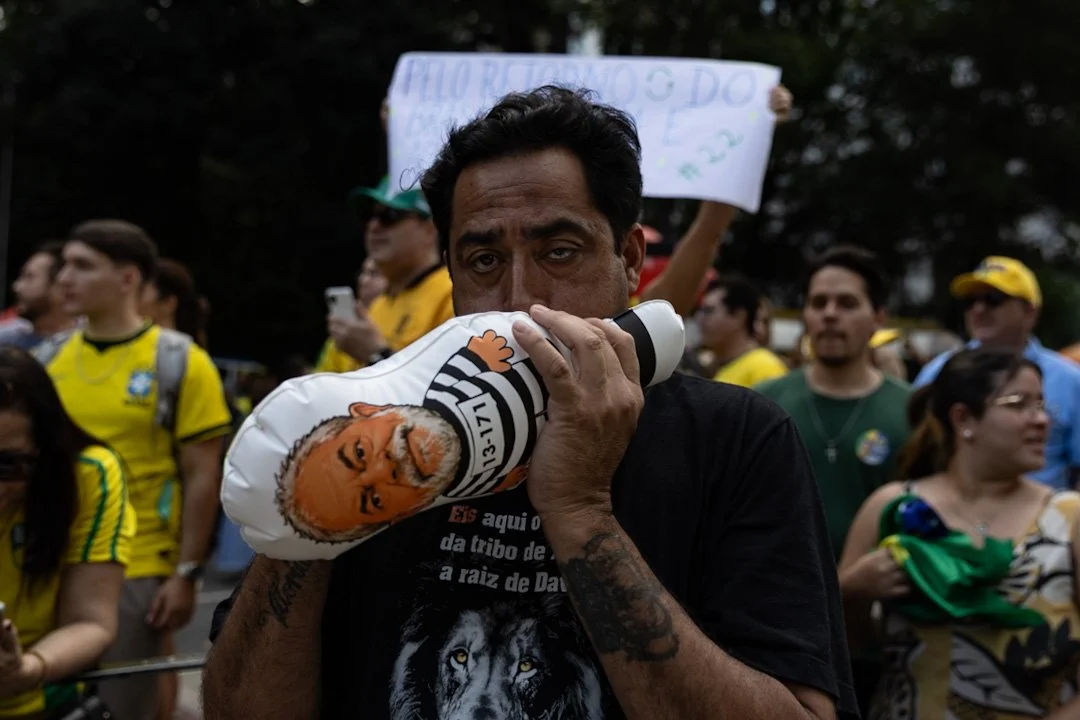
A vendor inflates a “Pixuleco” Lula blow-up doll, popularized in 2013 during opposition protests, during the “Bloco do 22” rally organized by Senator Flávio Bolsonaro on Paulista Avenue. The blow-up doll represents the visual agitation and confrontational rhetoric promoted by conservative grassroots groups. October 18, 2026. Photo © Bia Borges.
In São Paulo, the rally drew more than 70,000 people and demonstrated the ability of Bolsonaro’s movement to maintain a national mobilization structure centered on Jair Bolsonaro’s heir.
The rallies revealed distinct ways of contesting public space. Behind Lula were young people who brought their digital organization to the streets, alongside social movements and grassroots organizations. And Bolsonaro’s far-right campaign sought to preserve and expand a political identity built over the past decade.
As the campaigns draw to a close, Brazilian society is deciding not only who will govern from the Planalto Palace, but also under what framework of guarantees and freedoms the country will live in the coming years.