

Energy beyond extraction in Argentina
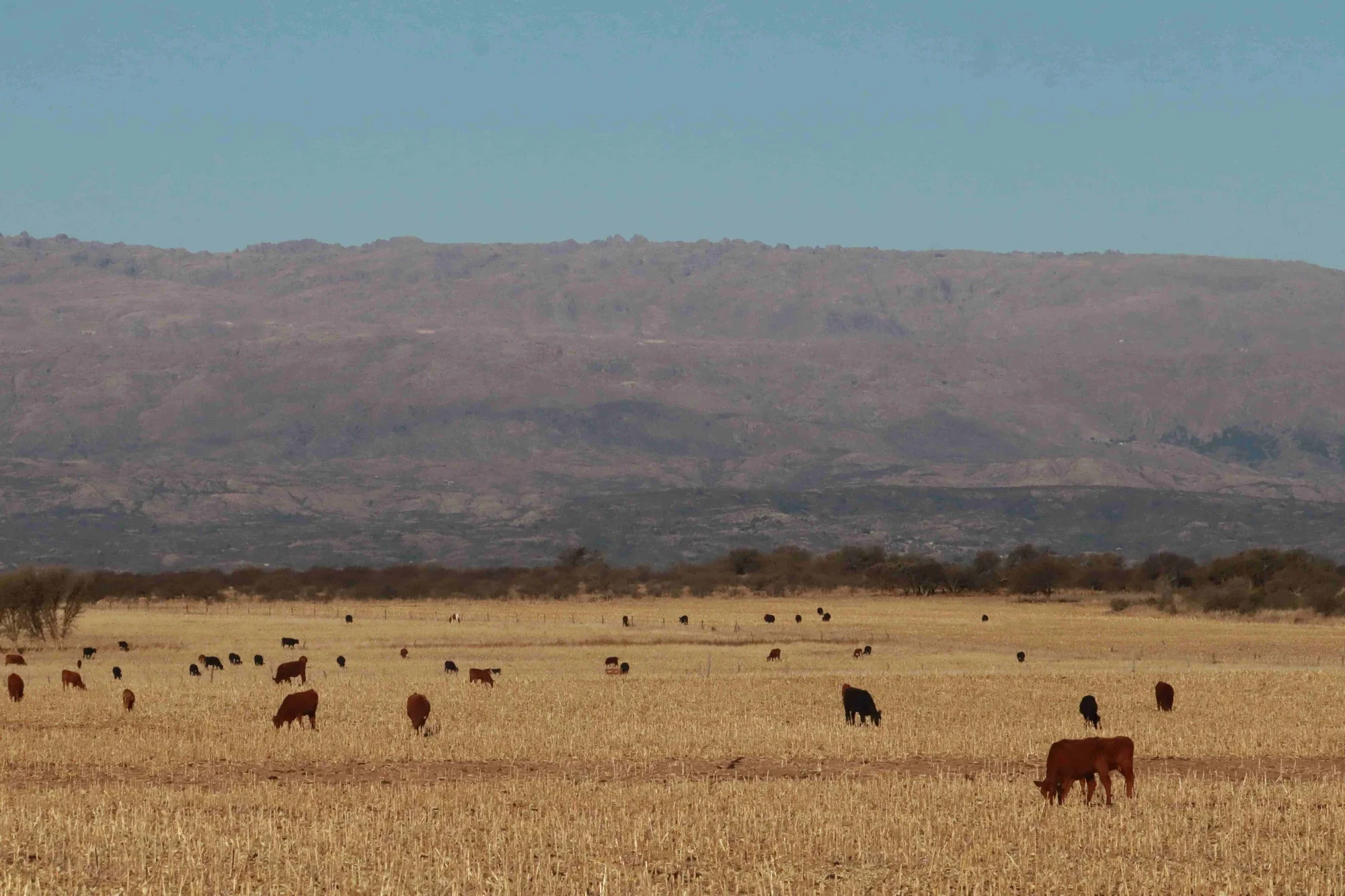
A view of a ranch in Pampa de Pocho, Argentina. Photo © Daniela López.
Reportage • Natalia Concina & Daniela López • May 14, 2026 • Leer en castellano
Pampa de Pocho is a rural area in the province of Córdoba, in central Argentina, with no piped gas or electricity. Women wash clothes by hand, gather firewood, and keep the fire burning to heat their homes and cook.
These essential tasks for living in dignity and for the reproduction of life are often overlooked in discussions about power and energy. That’s especially true with regard to the search for alternative energy sources like solar and wind power that can help address the climate crisis.
“There’s no electricity here, [so energy is an] issue connected to the simple need to have even a little bit of light,” Romina Soria told Ojalá. She’s a 32-year-old farmer living in the Pampa de Pocho grasslands, where temperatures drop in the winter, there’s little rain, and strong, year-round wind and sun.
A small solar panel in her home provides enough light to brightern the dinner table and charge their cell phones. The fridge and stove run on gas from a cylinder, but bread is baked over a fire that is constantly tended, and is also used to heat water for yerba mate. To draw water from the well, she uses a fuel-powered generator.
Soria used to gather wood from the surrounding area, but it has become scarce and now it must be purchased. Gasoline, which costs 20 percent more here than it does in Buenos Aires, must be bought in nearby towns.
“The towns are 17 or 20 kilometers from here, so we spend a lot on fuel; that’s why we take advantage of every trip to bring things back for our neighbors,” said Soria.
In this context, she raises her children, takes them to school, tends the garden, feeds the animals, and works at a grocery store.
When asked to list all the forms of energy she uses—including her own physical energy—Soria answers easily. Her awareness is the result of collective work she and other rural women and academics have carried out over four years using the framework of Energías Vivas (Living Energies), a project designed to highlight unequal access to energy and its impact on the lives of rural women.
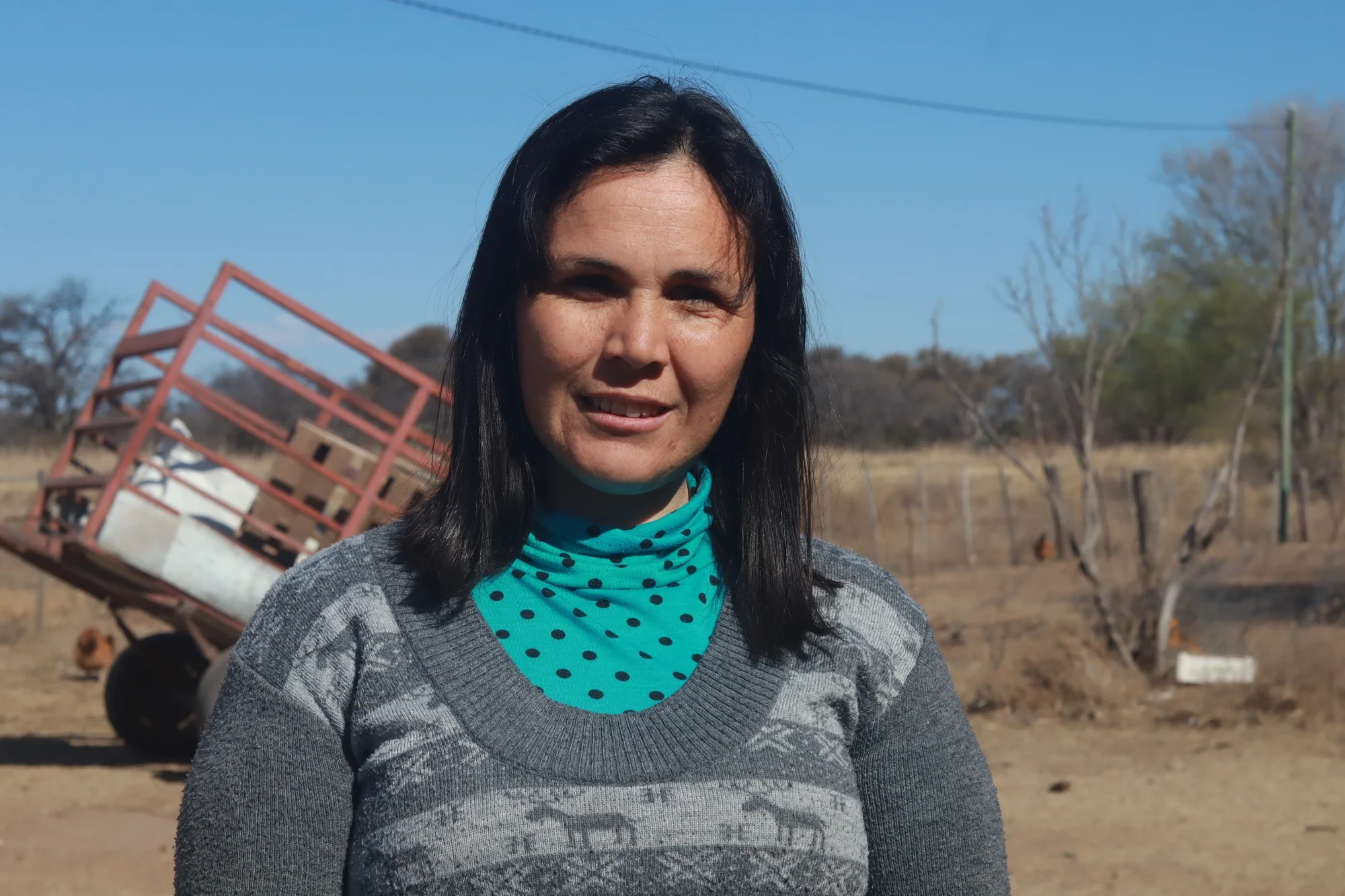
Romina Soria manages energy use in her home in Pampa de Pocho, Argentina, a common task shared by rural women in the area. Photo © Daniela López.
Life over profit
In 2022, researchers from the Rural Habitat Studies Network in the province of Córdoba launched a research project in collaboration with Nuestras Granjas Unidas (NGU), an organization to which Soria belongs.
“The goal was to rethink how access to new energy sources affected the daily lives of women in rural areas,” Guadalupe Huerta, a social worker and researcher, told Ojalá. “It was difficult [at first] to get rural women to talk about energy, but at the same time, energy concerns are a daily reality in rural areas; people are constantly thinking about how to heat their house, wash their clothes, charge their cell phones and so on, tasks that tend to fall on the shoulders of women and feminized bodies.”
During workshops with academics and local women identified a variety of individual strategies—like when to wash clothes so they dry without getting covered in dirt, to how many animals can be kept per hectare to prevent soil degradation—as well as collective strategies, like planting crops with other families or taking advantage of trips to town to bring back supplies for others.
Their conclusions went beyond the publication of academic papers, leading to the formation of a collective and a concept: Living Energies.
“We live in an energy-devouring world which consumes energy in a predatory way because it preys on territories and it preys on bodies,” said Huerta. “Thinking about living energies means putting life at the center. It means looking at energy not from the perspective of profit and how we can keep consuming, but rather to care for life and the conditions that sustain it. And, in the case of our project, life in rural areas.”
One of the first initiatives of Energías Vivas was to create a booklet that, using simple questions, encourages dialogue about the local energy matrix. The group continues to produce outreach materials and hold training workshops that aim to create a space for rural women in narratives surrounding the energy transition.
Fields of change
Nora del Valle Nievas is 58 years old. She’s spent her entire life in the Pampa de Pocho, near a lake where she raised her children. When she was a girl, farm work was done manually.
“My dad would pull the plow with horses or mules, and my siblings and I would walk behind him with handfuls of corn seeds and scatter them into the furrows,” Nievas said.
As in much of Latin America, the fields of northwestern Córdoba, where Pampa de Pocho is located, underwent a major transformation beginning in the 1990s.
Glyphosate-tolerant genetically modified soybeans—approved in Argentina in 1996—spread through the region, colonizing and displacing other crops and native vegetation. This led to the concentration of agricultural production in the hands of new players: from seed pools, to groups of investors who leased land and farmed it using machinery to increasingly sophisticated production units.
In order to survive while maintaining mixed farms where small-scale agriculture and ranching could coexist, as on Nievas’ plot, communities had to organize.
“NGU emerged 14 years ago out of the need to help one another,” said Soria of the collective’s origins. “At one point, we planted together with shared machinery, and when we harvested, we made small silo bags [airtight storage systems for dry grains and forage].”
Nievas, who is also a member of NGU, said the organization was originally made up of 12 families, but today there are nine because three have migrated. According to Huerta and her team, outward migration is driven by the loss of access to basic resources like water and firewood.
Deforestation has been compounded by the closure of rural roads, the disruption of water basins, and the impact of pesticides on community health.
Over decades in Córdoba and across Argentina, state policies fostered an environment conducive to the agribusiness model. This situation was worsened by the Javier Milei administration’s move to eliminate key social programs for family farming in rural areas.
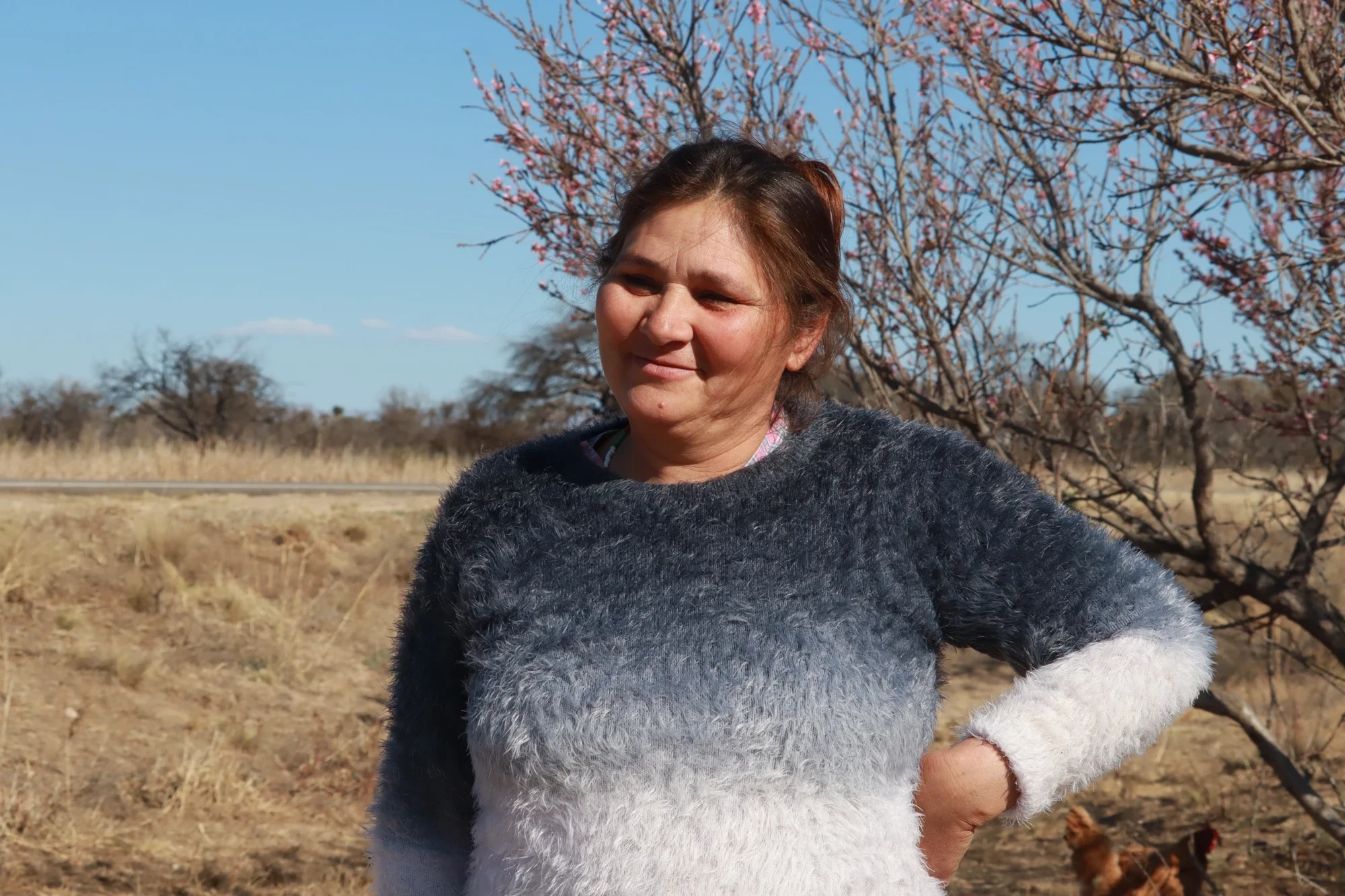
Nora del Valle Nievas has lived in Pampa de Pocho her whole life. She’s spent the last 14 years working with other women to build a mutual aid network. Photo © Daniela López.
Resisting dependence and disenfranchisement
“In rural areas, it’s the women who know if they’re running low on gas, firewood, or kerosene because they’re the ones running the household,” said Nievas. Women are also the producers of the primary source of human energy: food.
Even so, local electricity cooperatives are dominated by men and focused on large-scale agricultural production.
Energy-intensive practices like mechanized irrigation drain the grid, leaving nearby communities without power—but few question the system or consider improving access to electricity for households.
Globally, much of the energy debate—involving governments, researchers, and business leaders—is focussed on concepts like “green economy, sustainable development, and technological innovation, which are rooted in a commodified view of the environment and energy,” explained Huerta.
“What we see is that the energy transition is not being conceived from the perspective of bodies and people,” said Huerta. “The question is whether the goal is truly to care for the planet or whether it is merely to obtain more energy for production in the face of rising costs and fossil fuel scarcity.”
In contrast, projects like Energías Vivas are focussed on the reproduction of life. The experiences of Mayan women in the municipality of Ixil, in Mexico’s Yucatán Peninsula, show that grounding the energy transition locally can lead to the adoption of technologies that can help with land defense.
The women from Ixil began using solar panels to power their own pumping systems for growing flowers and vegetables. They succeeded in reducing dependence on expensive fossil fuels and in building technical expertise and economic autonomy that strengthened their political presence in the face of real estate encroachment in the area.
“Integrating a local perspective from the outset of an energy transition project is critical to its success,” said Alejandra Vega Camarena, a researcher at the Institute of Geosciences at the National Autonomous University of Mexico, who worked alongside the women in Ixil.
“Community-controlled energy transitions led by Indigenous women offer transformative pathways for climate adaptation that prioritize social justice, cultural continuity, and territorial sovereignty,” said Vega Camarena.
These efforts in Mexico, Argentina and elsewhere are crucial to ensuring energy management and technology benefits those who need it most.
“In the end,” concluded Huerta, “envisioning a just, situated, and feminist energy transition means considering for whom and for what energy is for; placing life at the center; and ensuring that access to quality energy that enables the reproduction of life and a life of dignity is accessible to all.”